
Alternative pain relief for dogs is defined as any non-pharmaceutical method used to reduce pain, ease inflammation, and restore mobility in canines. The American Veterinary Medical Association recognizes integrative approaches as legitimate components of veterinary care, and multimodal pain management, which combines two or more low-risk therapies, is now the clinical standard for chronic canine pain. If your dog is slowing down on Florida’s morning walks or struggling to rise from a cool tile floor, these therapies offer real options beyond a prescription bottle.
What are the main types of alternative pain relief for dogs?
Non-pharmaceutical canine pain management falls into three broad categories: physical therapies, natural supplements, and home-based methods. Used together, they form a multimodal care plan that targets pain from multiple angles without stacking drug risks.
Physical therapies include:
- Acupuncture for dogs: Fine needles stimulate specific points along the body’s Meridians, the energy pathways described in Traditional Chinese Veterinary Medicine (TCVM), to release endorphins and reduce inflammation.
- Laser therapy (photobiomodulation): Red and near-infrared light penetrates tissue to decrease inflammation and stimulate healing at the cellular level.
- Canine massage therapy: Manual pressure increases circulation, loosens tight muscles, and calms the nervous system. Many Florida pet owners use massage between professional sessions to maintain comfort.
- Physical rehabilitation: Structured exercise programs, underwater treadmills, and balance work rebuild strength and range of motion in injured or arthritic dogs.
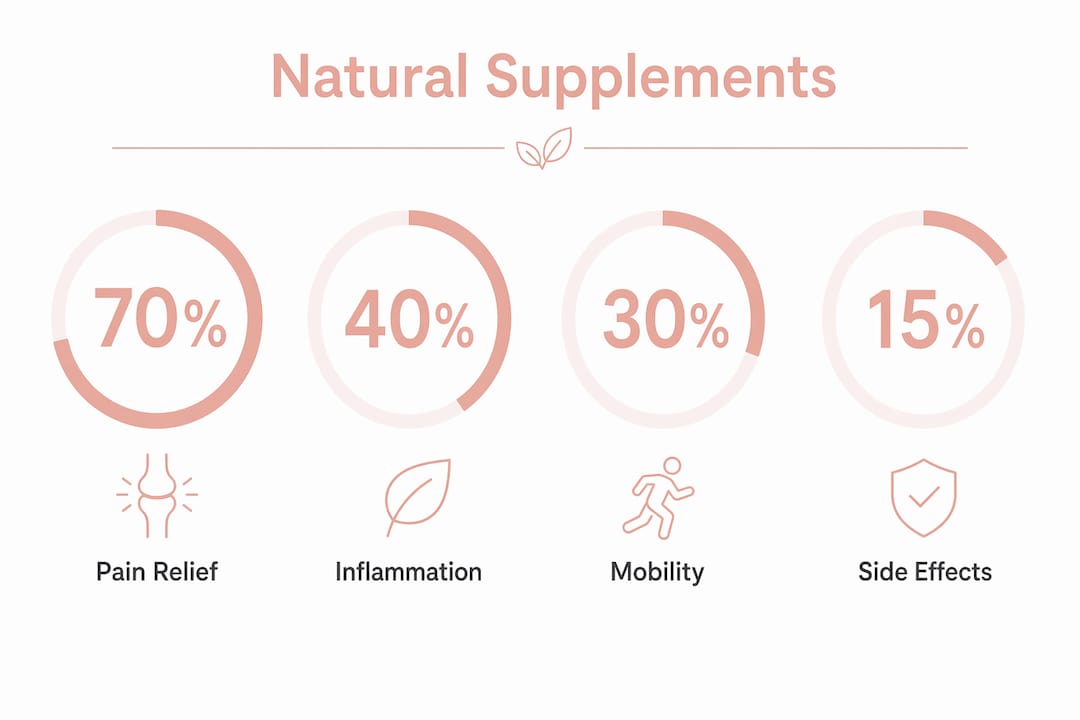
Natural supplements include omega-3 fatty acids, turmeric, boswellia, and green-lipped mussel extract. Each targets inflammation through a different biochemical pathway, which is why combination supplements outperform single-ingredient products.
Home-based methods include cold packs for acute injuries, heat therapy for chronic stiffness, orthopedic bedding, ramps, and weight management. These are the lowest-cost tools in your kit and the easiest to start today.

Multimodal pain management stacks non-competing, low-risk therapies rather than escalating a single drug dose. That approach is both safer and more effective for most dogs with chronic pain.
How effective are acupuncture and laser therapy for dog pain relief?
Acupuncture and laser therapy both produce measurable results, and they work faster than most owners expect. Initial results appear within 2–4 sessions for both therapies, though the full benefit builds over time.
Acupuncture works by stimulating points along the Meridians to release the body’s natural pain-relieving chemicals. Think of the Meridians as a highway system for Qi, the body’s vital energy. When traffic flows freely, the body heals. When it stalls, pain and stiffness set in. Acupuncture benefits are cumulative, meaning each session builds on the last, and the therapy works best as an adjunct to rest and other treatments rather than a standalone cure. For dogs recovering from thoracolumbar intervertebral disc events with intact deep pain perception, acupuncture has been shown to shorten recovery timelines when used alongside conventional care.
Most dogs tolerate acupuncture remarkably well. Needles cause minimal discomfort, and many dogs relax or fall asleep during treatment. That calm response matters, especially for senior dogs who already find travel stressful. Practitioner qualification is non-negotiable: always choose a certified veterinary acupuncturist, not a human practitioner working on animals.
Laser therapy, or photobiomodulation, takes a different route. Red light and near-infrared wavelengths decrease inflammation, increase blood flow, and support tissue repair, making it particularly useful for arthritis and post-surgical recovery. Sessions are short, painless, and can be combined with acupuncture in the same visit. You can also explore dog laser therapy at home as a complement to in-clinic sessions.
Pro Tip: Ask your veterinarian whether your dog qualifies for a combined acupuncture and laser session. Pairing the two therapies in one visit targets pain through both neurological and cellular pathways simultaneously, which often produces faster comfort than either therapy alone.
What natural supplements and herbal remedies support canine pain management?
Natural supplements are the most accessible entry point into canine pain management, but they require patience. Fish oil and glucosamine need 4–6 weeks of consistent daily use before therapeutic levels build in the body. These are maintenance therapies, not quick fixes.
The table below summarizes the most clinically supported options.
| Supplement | Primary benefit | Key consideration |
|---|---|---|
| Omega-3 fatty acids (fish oil) | Reduces systemic inflammation | Most proven supplement for inflammation; dose daily with food |
| Turmeric and boswellia | Targets joint inflammation via complementary pathways | Combine for broader anti-inflammatory effect |
| Green-lipped mussel extract | Supports joint lubrication and reduces swelling | Effective at ~77 mg/kg daily |
| CBD oil | Reduces arthritis pain signals | 80% of dogs showed pain reduction in arthritis studies; no FDA-approved OTC dog pain medications exist |
Omega-3 fatty acids are the most research-backed supplement in this group. They reduce the production of inflammatory compounds at the cellular level, which is why vets recommend them as a foundation for any natural pain management plan. Turmeric and boswellia work through different biochemical pathways, so combining them covers more ground than either alone.
Green-lipped mussel extract deserves more attention than it typically gets. At the clinically supported dose of approximately 77 mg/kg daily, it provides both omega-3s and glycosaminoglycans, the building blocks of cartilage. That dual action makes it especially useful for dogs with joint degeneration. For a deeper look at dog herbal remedies specific to South Tampa’s climate and lifestyle, Pawvetpractice offers tailored guidance.
Always consult your veterinarian before starting any supplement. Some herbal treatments interact with medications, and dosing errors can cause digestive upset or worse in small breeds.
How can home remedies and environmental modifications help reduce dog pain?
Your home is one of the most powerful tools in your dog’s pain management plan. Simple changes to your dog’s environment and daily routine can reduce pain signals, prevent flare-ups, and support every other therapy your vet recommends.
Cold and heat therapy are the two most accessible home remedies for dog pain:
- Cold therapy: Apply an ice pack wrapped in a thin towel for 10–15 minutes after acute injuries or post-exercise swelling. Cold constricts blood vessels and slows the inflammatory response.
- Heat therapy: Use a warm (not hot) pack for 15–20 minutes on stiff joints before activity. Heat increases blood flow and relaxes tight muscles, which is especially helpful on cool Florida mornings.
Environmental modifications make a significant difference for dogs with mobility challenges:
- Place orthopedic memory foam beds on the floor to reduce pressure on joints during sleep.
- Add non-slip mats on tile and hardwood floors, which are common in Florida homes and treacherous for arthritic dogs.
- Install ramps or steps to sofas, cars, and beds to eliminate painful jumping.
- Keep food and water bowls at elbow height to reduce neck strain in large breeds.
Weight management is one of the highest-impact changes you can make. Every extra pound adds stress to already-painful joints. Your vet can calculate your dog’s ideal body weight and recommend a calorie target. For a full breakdown of at-home pain strategies, Pawvetpractice has a dedicated resource for South Tampa dog owners.
Pro Tip: Never apply ice or heat directly to skin. Always use a cloth barrier and check the area every five minutes for redness or discomfort. Dogs with nerve damage may not react to temperature the way healthy dogs do.
When should you integrate alternative therapies with veterinary treatment?
Alternative therapies work best alongside veterinary care, not instead of it. Replacing prescribed medications without guidance puts your dog at risk, especially if the underlying condition is progressive.
Here is a practical framework for integration:
- Get a diagnosis first. Pain has many causes, from arthritis to disc disease to cancer. Knowing the source determines which therapies are safe and appropriate.
- Discuss your goals with your vet. Tell your veterinarian you want to reduce pharmaceutical dependence where possible. Most vets welcome this conversation and can help you build a multimodal plan.
- Start with the lowest-risk additions. Omega-3 supplements, orthopedic bedding, and weight management carry almost no risk and can begin immediately.
- Add physical therapies progressively. Introduce acupuncture or laser therapy once your dog is stable. NSAIDs remain the cornerstone of arthritis treatment, but stacking low-risk alternatives reduces the dose and duration needed, protecting kidneys and liver in senior dogs.
- Monitor and adjust. Keep a simple pain diary: note your dog’s willingness to walk, play, and rise from rest. Share this with your vet at each visit to guide adjustments.
Realistic expectations matter. Physical rehabilitation typically requires 4–6 weeks before owners see consistent improvement. Supplements need the same window. Acupuncture and laser therapy move faster, but even they require a series of sessions. Patience is not optional. It is part of the treatment.
For dogs with hip pain specifically, the dog pain relief hips guide from Pawvetpractice walks through how to layer these therapies safely.
Key takeaways
Multimodal pain management, combining acupuncture, laser therapy, targeted supplements, and home modifications, is the most effective and safest approach to alternative pain relief for dogs with chronic conditions.
| Point | Details |
|---|---|
| Start with a diagnosis | Know the cause of pain before choosing any therapy to avoid masking serious conditions. |
| Supplements need time | Fish oil, glucosamine, and green-lipped mussel require 4–6 weeks of daily use to reach therapeutic effect. |
| Acupuncture is cumulative | Results build across sessions; expect 2–4 treatments before judging effectiveness. |
| Home changes matter | Orthopedic beds, non-slip mats, ramps, and weight control reduce daily pain load significantly. |
| Combine, don’t replace | Alternative therapies reduce pharmaceutical dependence but work best alongside veterinary oversight. |
What I’ve learned after years of watching dogs respond to integrative care
The most common mistake I see is owners expecting one therapy to do everything. A dog with severe hip arthritis does not get better from fish oil alone. What actually works is the combination: a good omega-3 foundation, a few acupuncture sessions to calm the nervous system, laser therapy to reduce joint inflammation, and a home environment that stops making things worse.
The second mistake is giving up too early. Owners try acupuncture twice, see modest improvement, and conclude it does not work. Acupuncture is cumulative. The third and fourth sessions often produce the clearest change. I tell owners to commit to at least four sessions before evaluating.
I also want to be honest about CBD oil. The research is promising, and the 80% pain reduction figure in arthritis studies is real. But product quality varies enormously. Dose matters. And not every dog responds the same way. Always use a veterinarian-formulated product and start low.
The dogs I have seen thrive are the ones whose owners treat pain management as an ongoing practice, not a one-time fix. They adjust the plan as their dog ages, they stay curious, and they keep their vet in the loop. That consistency is what separates the dogs who age gracefully from the ones who suffer unnecessarily.
— Monica
How Pawvetpractice brings integrative pain care to your home
If your dog is dealing with chronic pain or mobility challenges, getting to a clinic can feel like the hardest part of getting help. Pawvetpractice changes that equation entirely.
Pawvetpractice is a mobile veterinary clinic serving South Tampa that brings acupuncture, laser therapy, rehabilitation, and herbal treatment directly to your home. Your dog stays calm in a familiar environment, which makes every therapy more effective. The practice combines integrative veterinary care with conventional medicine, so you get the full picture, not just one piece of it. Whether your dog needs a first acupuncture session or an ongoing rehabilitation program, Pawvetpractice builds a plan around your dog’s specific needs. Book a visit through the mobile veterinary clinic page and bring expert care to your front door.
FAQ
What is the most effective alternative pain relief for dogs?
Multimodal pain management combining acupuncture, laser therapy, omega-3 supplements, and environmental modifications produces the best outcomes. No single therapy matches the effectiveness of a well-designed combination plan.
How quickly does acupuncture work for dog pain?
Most dogs show initial improvement within 2–4 sessions, though benefits continue to build with each treatment. Committing to at least four sessions before evaluating results gives the therapy a fair chance.
Are natural supplements safe for dogs with kidney disease?
Omega-3 fatty acids are generally considered safe and may actually support kidney function, but always consult your veterinarian before starting any supplement. Dogs with kidney disease require individualized dosing and monitoring.
Can I use heat and cold therapy at home safely?
Yes. Apply cold packs for 10–15 minutes after acute injuries and heat packs for 15–20 minutes to ease chronic stiffness, always with a cloth barrier between the pack and your dog’s skin. Check the area every five minutes for any sign of irritation.
Does CBD oil actually help dogs with arthritis pain?
Vet-formulated CBD oil reduced arthritis pain in 80% of dogs studied, making it one of the more promising natural options. Product quality and dosing vary widely, so use only a veterinarian-recommended product and start with the lowest effective dose.