You may be reading this because your cat isn't acting like themselves, but nothing looks dramatically wrong. They still eat a little. They still come out for attention sometimes. Yet they've stopped jumping onto the bed, or they hesitate before using the litter box, or they stiffen when you touch their back.
That quiet change matters.
Cats rarely announce pain in obvious ways. In practice, I see far more cats who look “subtly off” than cats who cry, limp, or make a scene. For families in South Tampa, the safest approach is to think about cat pain relief at home as a short-term comfort plan, not a substitute for diagnosis. The right home steps can reduce strain, improve rest, and make a sore cat feel safer. The wrong steps, especially human medications, can become an emergency fast.
This guide is built around a simple decision process. First, notice the signs. Next, make your home easier to get around. Then use gentle, vet-approved supportive care. And if your cat crosses the line from sore to struggling, bring in veterinary help without delay.
Is Your Cat Silently Asking for Help
A common story starts with a bookshelf, a windowsill, or the foot of the bed.
A cat who used to leap up in one smooth motion now pauses, looks, and walks away. Another starts sleeping in lower places. A friendly cat becomes touchy when picked up. An older cat misses the litter box, not from spite, but because climbing in hurts. Owners usually notice the pattern before they understand the reason.
That instinct to pay attention is often exactly right.
I want worried owners to hear this clearly. You don't need dramatic symptoms to take discomfort seriously. Small changes in movement, grooming, posture, and social behavior are often the first clue that a cat is hurting. If you've been second-guessing yourself, that concern is worth honoring.
Cats often ask for help quietly. The change is usually in routine, not volume.
Most home care should start with comfort and observation. Reduce physical effort. Avoid forcing activity. Keep notes on what changed, when it started, and what seems to make it worse. If you need help recognizing whether those shifts point to pain, this guide on signs of pain in a senior dog or cat is a useful companion.
What Home Care Can And Can't Do
Home care can make a painful cat more comfortable today. It can help them rest, move with less strain, and avoid unnecessary aggravation.
What it can't do is diagnose why the pain is there. Arthritis, dental disease, injury, constipation, urinary trouble, spinal pain, and abdominal disease can all change behavior in similar ways. That's why the safest plan always combines comfort at home with a low threshold for veterinary involvement when the pattern persists or worsens.
Decoding Your Cat's Secret Language of Pain
Cats are built to hide vulnerability. That's one reason pain gets missed so often at home.
A key point from a veterinary review is that most cats instinctively hide pain as a survival mechanism, which leads owners to underestimate discomfort. The same review notes that effective home management should include physical rehabilitation such as stretching, massage, and controlled exercise because these methods have been proven to improve mobility and reduce pain in appropriate cases (veterinary rehabilitation review).

Behavior Changes That Matter
Pain often shows up as a change in personality before it shows up as a limp.
Watch for patterns: one odd day may mean very little. Several small changes in the same week deserve attention.
Here are the signs I tell owners to track:
- Reduced grooming. A greasy coat, small mats, or an unkempt back end can mean bending and twisting have become uncomfortable.
- More hiding or isolation. Cats in pain often choose tucked-away places where they won't be disturbed.
- Less interest in play. A cat who used to chase a wand toy but now watches from a distance may be guarding sore joints or muscles.
- Touch sensitivity. Pulling away, tail flicking, or swatting when you pet a certain area often tells you more than vocalization does.
- Appetite changes. Eating less can reflect pain anywhere from the mouth to the abdomen to the spine.
If you're trying to decide whether your cat is still enjoying daily life, this page on pet quality of life can help you organize what you're seeing.
Mobility And Posture Clues
Cats don't need to limp to be painful.
Some of the most telling movement signs include:
- Reluctance to jump
- Hesitation with stairs
- Taking a longer route instead of a direct leap
- A hunched posture
- Lowered head carriage
- Moving stiffly after rest
- Avoiding favorite high spots
These signs often appear in osteoarthritis, soft tissue soreness, and back pain, but they can also show up with internal illness.
Litter Box And Social Shifts
Owners often misread these changes as behavioral problems.
- Accidents outside the box may happen because the box is too high-sided or too far away.
- Straining or frequent trips can signal pain that needs prompt veterinary evaluation.
- Becoming grumpy when handled doesn't mean your cat is “mean.” It often means handling hurts.
- Seeking unusual closeness can also be a pain sign. Some cats withdraw, others become clingy.
A useful rule is simple. Don't ask whether a behavior is “bad.” Ask whether it is new.
Creating a Comfortable Haven for Your Aching Cat
At home, comfort starts with reducing effort. If your cat is sore, every extra jump, slippery turn, and awkward step can add strain. I tell South Tampa cat owners to make the house easier before they ask the cat to do anything more.

Start With Access, Not Activity
A painful cat does best in a setup that asks less of the body.
Move the basics closer together. If stairs seem difficult, keep food, water, bedding, and a litter box on the same level. Cats often hide discomfort until the trip to the box or the food station becomes too hard to ignore.
Small environmental changes can make a real difference:
- Use a low-sided litter box. High edges can be hard on sore hips, knees, and backs.
- Add traction on slick floors. Yoga mats, runners, and rubber-backed rugs help prevent slipping and the muscle tension that comes with trying not to fall.
- Make resting spots easier to reach. A stable step, ramp, or low ottoman can preserve access to a favorite window or couch.
- Choose easy-entry beds. Thick, soft bedding helps, but sides that are too high can be a problem for stiff cats.
- Set up bowls thoughtfully. Place them where your cat does not need to crouch in a tight corner or twist awkwardly to eat.
Owners sometimes focus on getting a cat to move more. First, set up the space so movement hurts less.
Warmth Helps Some Cats. Safe Use Matters More.
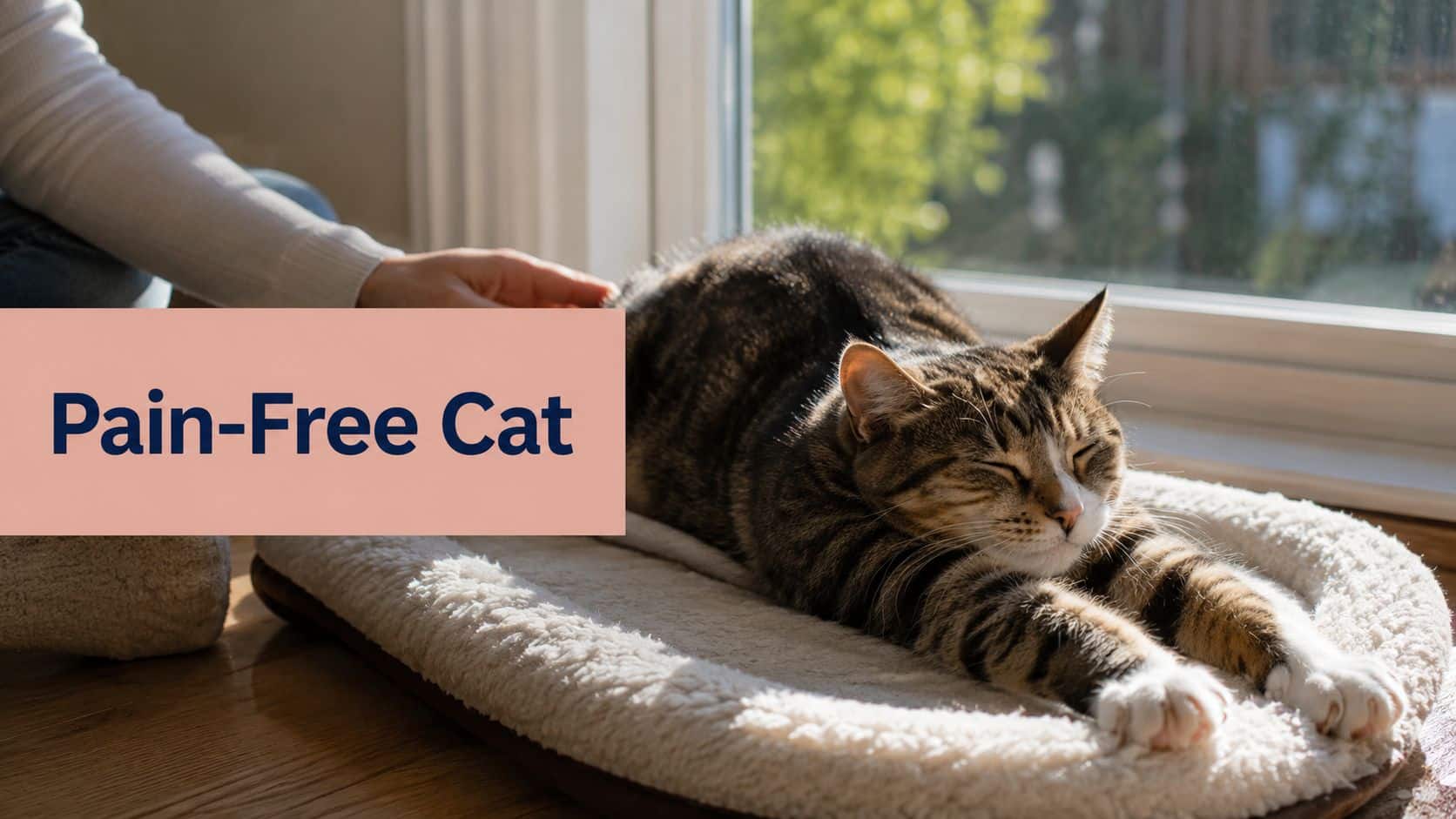
Gentle warmth can relax tight muscles and make resting more comfortable, especially in older cats with chronic stiffness. The trade-off is safety. Heat that feels pleasant to you can still be too much for a cat, particularly one who is frail, sleepy, or slow to move away.
Use warmth only if your cat can leave it freely. Put a layer of bedding or a towel between your cat and any heat source. Test the surface with your inner wrist or forearm first. It should feel mildly warm, not hot.
Good home options include:
- A heated pet bed in a quiet, draft-free area
- A warm towel wrapped over bedding and replaced as it cools
- A heating pad on a low setting placed under part of the bed, never directly against your cat
Skip heat over any area that looks swollen, over a fresh injury, or if your cat seems restless and uncomfortable with it. In those cases, stop and reassess rather than trying to make the setup work.
A helpful demonstration is below.
Think Through the House From Your Cat's Perspective
Walk room by room and look for friction points. The litter box should not be the hardest place to reach. The favorite nap spot should not require a painful jump. Water should be available somewhere calm, not only in a busy area where a sore cat may feel pressured or cornered.
One stable resting zone often works better than several scattered options. Choose a quiet area with soft bedding, easy footing, and enough space for your cat to settle without being picked up or moved. Predictability helps too. Painful cats usually cope better when the home is quiet, routines stay steady, and they do not need to keep adapting.
If your cat needs regular help getting up, struggles despite these changes, or seems uncomfortable even at rest, home setup alone is no longer enough. That is when a veterinary plan matters. For cats who may benefit from guided support at home, these rehabilitation exercises for cats and dogs show the kind of movement work that should be chosen carefully and matched to the cat in front of you.
Gentle Home Therapies and Mobility Support
A sore cat rarely wants a treatment session. They want relief that feels safe.

The best home support is quiet, brief, and easy for your cat to refuse. That matters. If a cat has to tolerate restraint, chasing, or repeated repositioning, the handling can add stress on top of pain. In practice, I want owners to judge every technique by one question: does your cat look more settled afterward, or more guarded?
Gentle Touch That Some Cats Accept
Start with contact your cat already likes. For many cats, that means the cheeks, neck, or shoulders. Use a flat hand and slow pressure. Do not knead, poke, or work over a sore spot.
A simple routine is enough:
- Sit beside your cat at their level.
- Rest your hand first, then begin a slow stroke from the head to the shoulders.
- Pause after each pass and watch the body language.
- Stop if you see skin twitching, tail lashing, ear pinning, a hard stare, or any turn toward your hand.
A few calm seconds can be useful. Longer is not always better.
If your cat softens, leans into the contact, or settles more comfortably, you can repeat a few passes or use small circles over the shoulder muscles and along the muscles next to the spine. Skip the belly, joints, and any area your cat protects. Cats with arthritis, back pain, or recent injury often prefer less touch than owners expect.
Mobility Support Without Turning It Into Exercise Class
Movement helps some painful cats, but only if the movement is self-directed and low effort. The goal at home is not to stretch the cat out or build strength on your own. The goal is to reduce strain during normal daily activity.
That usually looks like:
- using a ramp or sturdy step to reach a bed or couch
- placing food, water, and the litter box so your cat takes short, manageable walks
- encouraging position changes with a treat, toy, or affection your cat already enjoys
- choosing surfaces with traction so standing up takes less effort
For cats recovering from injury, surgery, or long-term stiffness, a more structured plan may help, but it should match the individual cat. These rehabilitation exercises for cats and dogs show the kind of controlled movement a veterinary team may recommend after evaluating comfort, strength, and balance.
Heat or Cold. Only in the Right Situation
These tools can help, but they are easy to misuse.
Cold is generally the better choice for a new swelling injury, especially within the first day or two. Warmth tends to suit chronic stiffness better, especially in older cats with arthritis who relax with gentle heat. In both cases, protect the skin with a towel, keep sessions short, and stop if your cat resists.
Do not hold a pack in place on a struggling cat. Do not apply heat over a swelling injury. If you are not sure whether you are dealing with fresh inflammation, chronic soreness, or something more serious, skip the pack and call your veterinarian. That is the safer decision.
Home care should make your cat more comfortable, not ask them to push through pain. If your cat cannot move normally without help, cries when touched, hides more each day, or declines food and water, home support has reached its limit and an in-home veterinary assessment is the right next step.
Red Flags and Dangers to Avoid at All Costs
The biggest mistake I want every cat owner to avoid is reaching into the human medicine cabinet.
Never give your cat ibuprofen, acetaminophen, or naproxen.
Human pain relievers such as ibuprofen, acetaminophen, and naproxen are extremely dangerous and potentially fatal to cats, even in minute doses. Acetaminophen is absolutely contraindicated in cats because it causes irreversible oxidative damage to red blood cells, leading to methemoglobinemia and death, with no safe therapeutic window (GoodRx veterinary medication review).

What Not To Do
Helping a sore cat means avoiding well-meant shortcuts.
- Don't use human pain medicine. Not a tiny dose. Not once. Not “just until morning.”
- Don't guess on prescription dosing. Even medications veterinarians do use in cats must be dosed precisely.
- Don't force movement. Pulling a cat out from under furniture, stretching a limb they're protecting, or insisting they walk can worsen pain.
- Don't use extreme heat or cold. A hot pack that feels soothing to you may burn a cat. Ice applied directly can injure skin.
- Don't pile on supplements randomly. “Natural” doesn't automatically mean safe or useful.
If you're sorting through home products and wellness claims, be careful with broad detox or remedy language. A safer way to think through that topic is with a veterinarian's eye for risk, not trends. This article on how to detox at home is a good reminder that supportive care needs to be grounded in what the body can tolerate.
Signs Home Care Has Reached Its Limit
Some situations need prompt veterinary attention, not another day of watchful waiting.
Call a veterinarian urgently if your cat has:
- Trouble breathing
- An inability to stand or walk normally
- Sudden paralysis or dragging of limbs
- Uncontrolled crying, panting, or distress
- A sudden swollen abdomen
- Repeated vomiting
- Complete refusal to eat
- Pain after trauma, a fall, or a possible bite wound
- Straining to urinate or repeated trips to the litter box with little output
Those aren't signals to try one more home remedy. They're signals to get help.
When Professional In-Home Care Is the Next Step
Home support is valuable, especially when you've improved footing, reduced jumping, created warm resting spots, and made daily life easier. But persistent pain still needs a diagnosis and a structured treatment plan.
This is particularly important in cats because no NSAID is currently FDA-approved for long-term use in cats, which means veterinarians often have to rely on short-term dosing protocols or off-label use under close supervision. That reality makes non-pharmaceutical support and environmental modification an important part of ongoing care, but not the whole answer (FDA guidance on pain relievers for pets).
When To Bring In Veterinary Help
In-home care becomes the next logical step when:
- your cat is still uncomfortable after you've made sensible home adjustments
- travel to a clinic causes extreme stress
- mobility problems make transport hard
- you need a plan that combines comfort, function, and day-to-day practicality
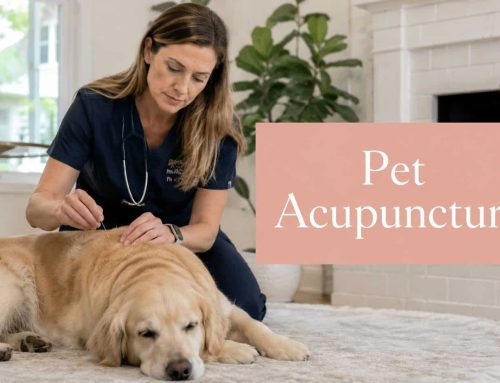
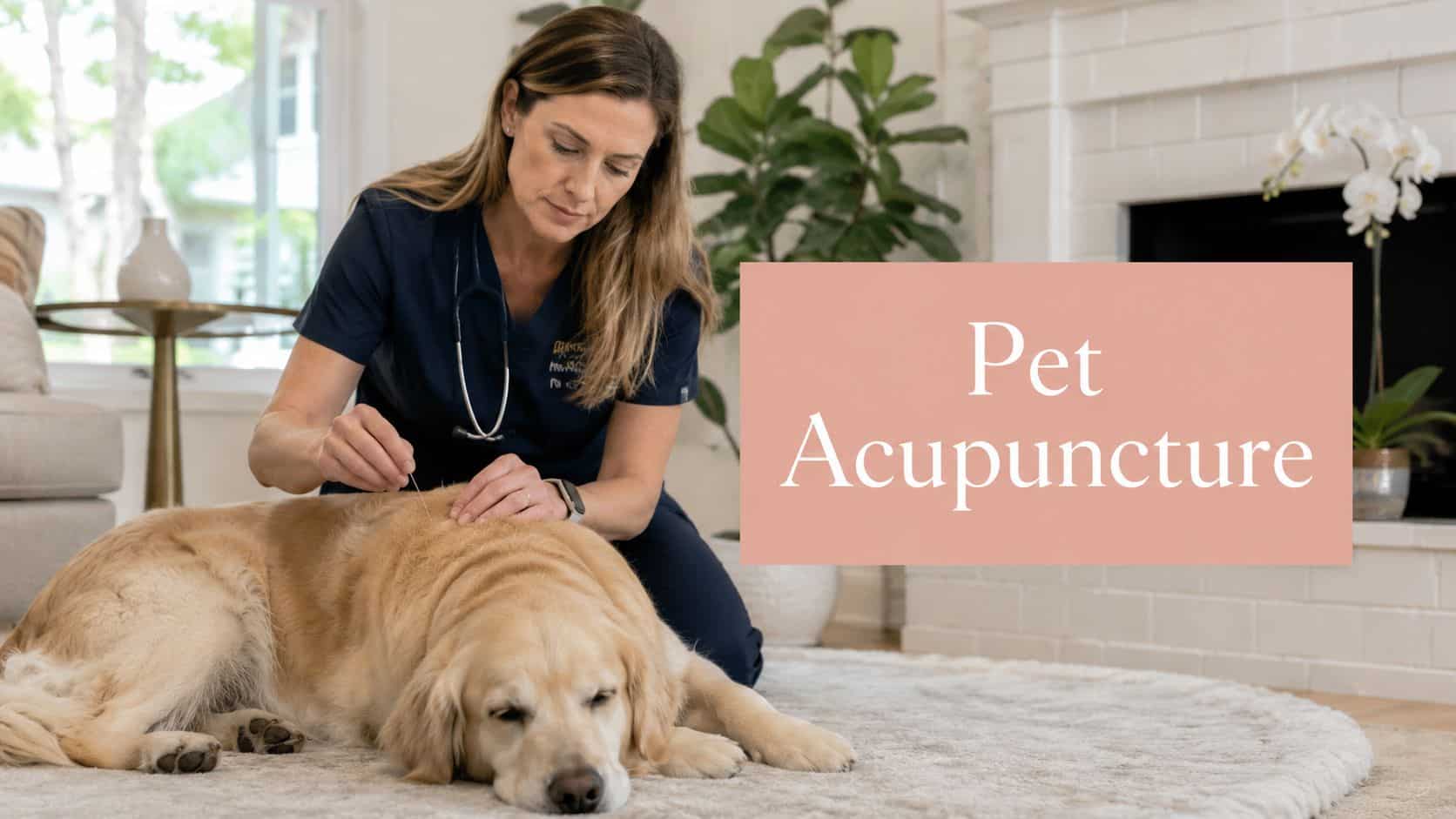
Professional in-home veterinary support can include acupuncture, laser therapy, rehabilitation planning, and individualized home exercise work, depending on the cat and the diagnosis. Those services don't replace your primary veterinarian. They complement that care and make follow-through easier in a familiar environment.
For our neighbors here in the South Tampa area, these services provide a way to manage your cat's pain effectively, complementing the care from your primary veterinarian and ensuring your beloved companion feels safe and comfortable during treatment. If you want to understand what that kind of support can look like, take a look at rehab at home healthcare services.
The Right Goal
The primary goal isn't to make a painful cat act young again overnight.
It's to help them rest comfortably, move with less effort, keep using the litter box, enjoy affection, and stay engaged with home life. Good pain management often looks quiet from the outside. A cat sleeps in a better position. They groom again. They choose the couch instead of hiding under it. They walk to dinner without hesitation.
That kind of improvement matters.
If your cat in South Tampa seems sore, stiff, less mobile, or not like themselves, Pet Acupuncture & Wellness (PAW Vet Practice) offers calm, in-home integrative veterinary care designed to complement your primary veterinarian. Dr. Monica provides compassionate support for pain relief, mobility issues, rehabilitation, acupuncture, laser therapy, and wellness planning, all in the place your cat feels safest: home.