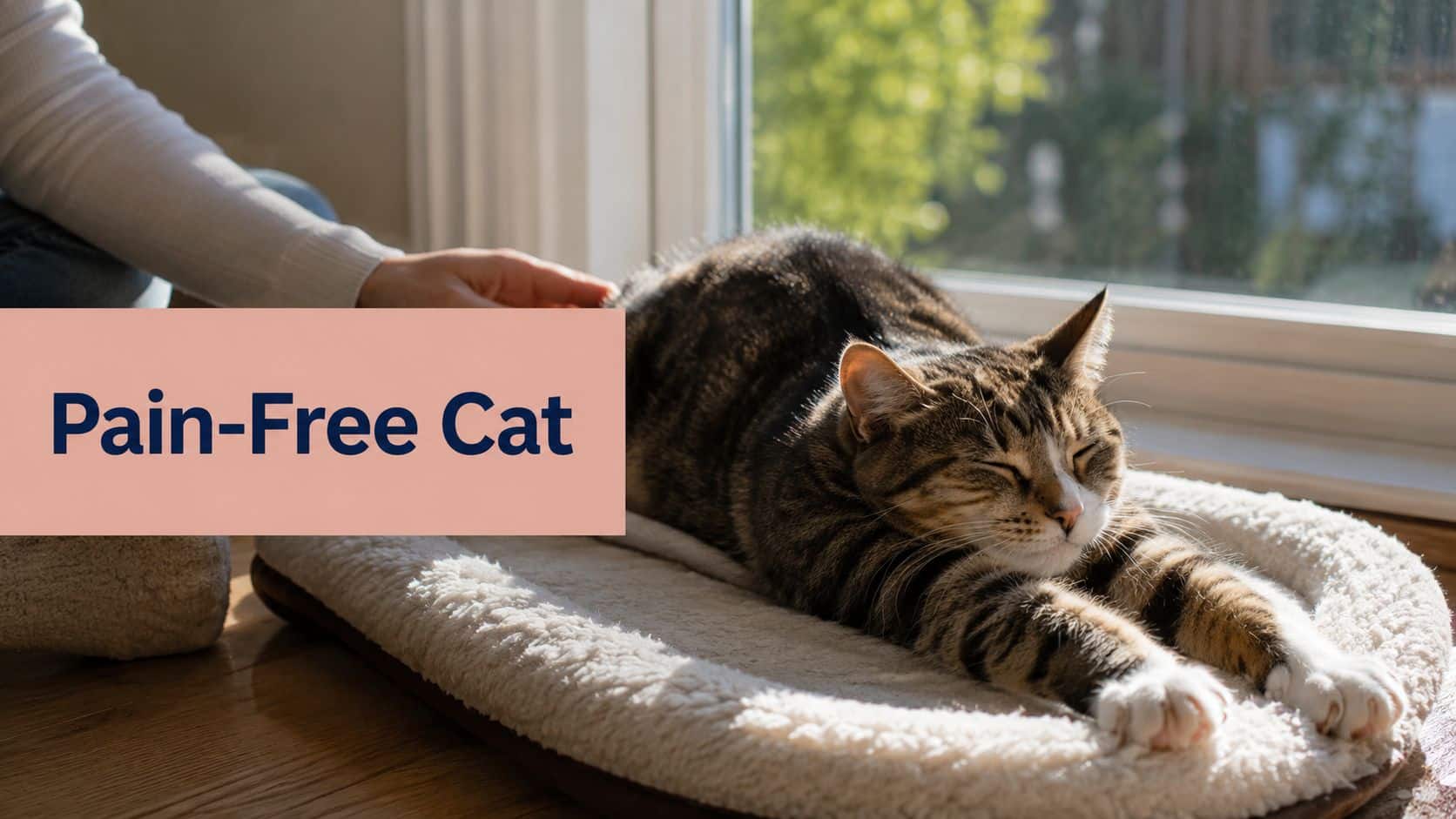
Your dog hesitates before jumping onto the couch. Your cat stops using the tall perch she's loved for years. You notice a stiff back, a slower walk, a look that says something hurts, even if your pet isn't crying out.
That's often how disc disease shows up at home. Not as one dramatic moment, but as a series of small changes that worry you because you know your pet's normal routine so well. For many South Tampa pet owners, the hardest part is figuring out whether they're seeing ordinary aging, a muscle strain, arthritis, or pain coming from the spine.
Acupuncture for degenerative disc disease can be a helpful part of treatment for some pets, especially when the main goals are pain relief, easier movement, and better quality of life. It's not a way to regrow a damaged disc. It is a way to support comfort, mobility, and day-to-day function in a practical, low-stress setting, especially when care happens at home.
Identifying the Signs of Disc Disease in Your Pet
Disc disease often starts with behavior changes before owners see any obvious limping or weakness. A pet in spinal pain may move less, resist being handled, or become unusually quiet. That matters because dogs and cats are both good at hiding discomfort until it begins interfering with daily life.

What South Tampa Dog Owners Often Notice First
In dogs, spinal discomfort commonly appears as reluctance. They may avoid stairs, pause before jumping into the car, or cry out when picked up. Some develop a tense abdomen or a hunched posture because they're trying to brace the back.
Common signs include:
- A wobbly gait: Some dogs develop an unsteady, “drunken sailor” walk. That can reflect weakness, poor coordination, or pain affecting how they place their feet.
- A hunched back: A rounded topline, sometimes called kyphosis, often means the back muscles are guarding an irritated area.
- Pain with handling: Yelping when lifted, flinching when touched over the spine, or resisting harnessing can all point to back pain.
- Muscle spasms: Tight, trembling muscles along the back are common when the body is trying to stabilize a painful segment.
- Less interest in play: Many dogs with disc pain still want to engage, but they stop doing the movements that make them uncomfortable.
If your dog is showing several of these changes, it helps to keep a simple log of what you're seeing. That makes it easier to discuss patterns with your veterinarian and decide whether options like dog back pain relief support make sense.
Practical rule: If your pet's mobility changes over days or weeks, pay attention to the trend, not just the worst moment.
Cats Often Show Pain More Quietly
Cats usually don't announce disc pain. They withdraw from activities that used to look effortless. An owner may only realize something is wrong when litter box habits change or the cat starts sleeping in unusual places because climbing has become uncomfortable.
Watch for signs such as:
- Hiding more often
- Avoiding high furniture or windowsills
- Trouble getting into the litter box
- A lower activity level
- Resistance to being picked up
- Irritability with touch along the back
Human back-pain research doesn't translate perfectly to pets, but it does support acupuncture as a meaningful pain-management tool. A review summarized by Northeast Spine & Sports Medicine states that individualized acupuncture provides clinically relevant benefits for chronic pain secondary to degenerative conditions, proving more effective than sham acupuncture and showing superior results in improving symptoms compared to standard Western medicine treatments.
That doesn't diagnose your pet. It does support the larger point that carefully targeted acupuncture can play a real role in managing chronic pain conditions.
How Acupuncture Provides Relief for DDD
Acupuncture works best when owners understand what it can and can't do. It can't reverse structural disc damage. It won't restore lost disc height or remove herniated material. What it often can do is turn down pain, reduce muscle guarding, and help a pet move more comfortably.
A simple way to think about it is a dimmer switch. In many disc patients, the nervous system amplifies pain signals because nearby tissues are inflamed and protective muscles stay tight. Acupuncture helps lower that signal volume.
What Happens In The Body

Needle placement stimulates nerves, local tissue, and the body's own pain-regulating systems. The best-supported explanation from the available data is neurophysiologic. According to Lycoming Orthopedic & Sports Acupuncture, acupuncture stimulates A-delta and C-fiber afferents, triggers release of endogenous opioid peptides such as beta-endorphin, and activates descending inhibitory pathways that reduce the “volume” of pain signals reaching the brain. The same source notes that many patients report meaningful analgesic effects within 4–6 sessions, with an initial protocol often being 2 sessions per week for 3–4 weeks.
For pets, I use that framework carefully. We can't assume every dog or cat follows a human timeline, but the mechanism is useful and clinically relevant.
Three effects matter most in daily practice:
- Pain modulation: The body releases natural pain-dampening chemicals.
- Improved circulation: Better local blood flow supports irritated tissues around the painful area.
- Reduced secondary tension: Tight muscles around the spine often soften once the pain cycle eases.
For a broader view of modalities often paired with acupuncture, South Tampa owners can look at integrative veterinary care options.
Here's a short visual overview of the treatment concept:
What Acupuncture Does Not Do
Expectations must remain realistic. If your pet has a chronically degenerating disc, acupuncture isn't a structural cure. It doesn't replace emergency care for sudden paralysis. It doesn't make a surgical case disappear.
A good acupuncture plan aims for easier movement, less pain, better rest, and more confidence walking through the house.
That's still meaningful. When a dog can rise without crying, turn more comfortably, or settle into sleep without constant repositioning, the treatment is doing important work.
A PAW Vet Practice In-Home Session Explained
Most pets are far more relaxed at home than in a clinic lobby. That changes the entire feel of an acupuncture visit. Instead of bright lights, slippery floors, and unfamiliar smells, your pet stays in the place where they already know how to settle.
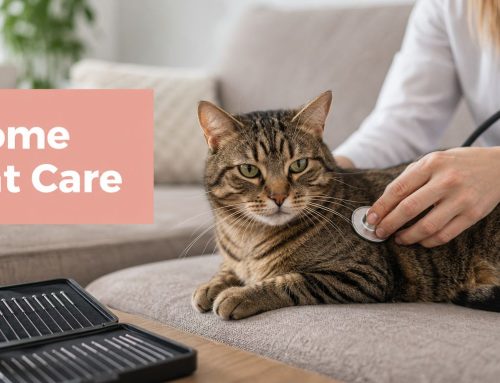
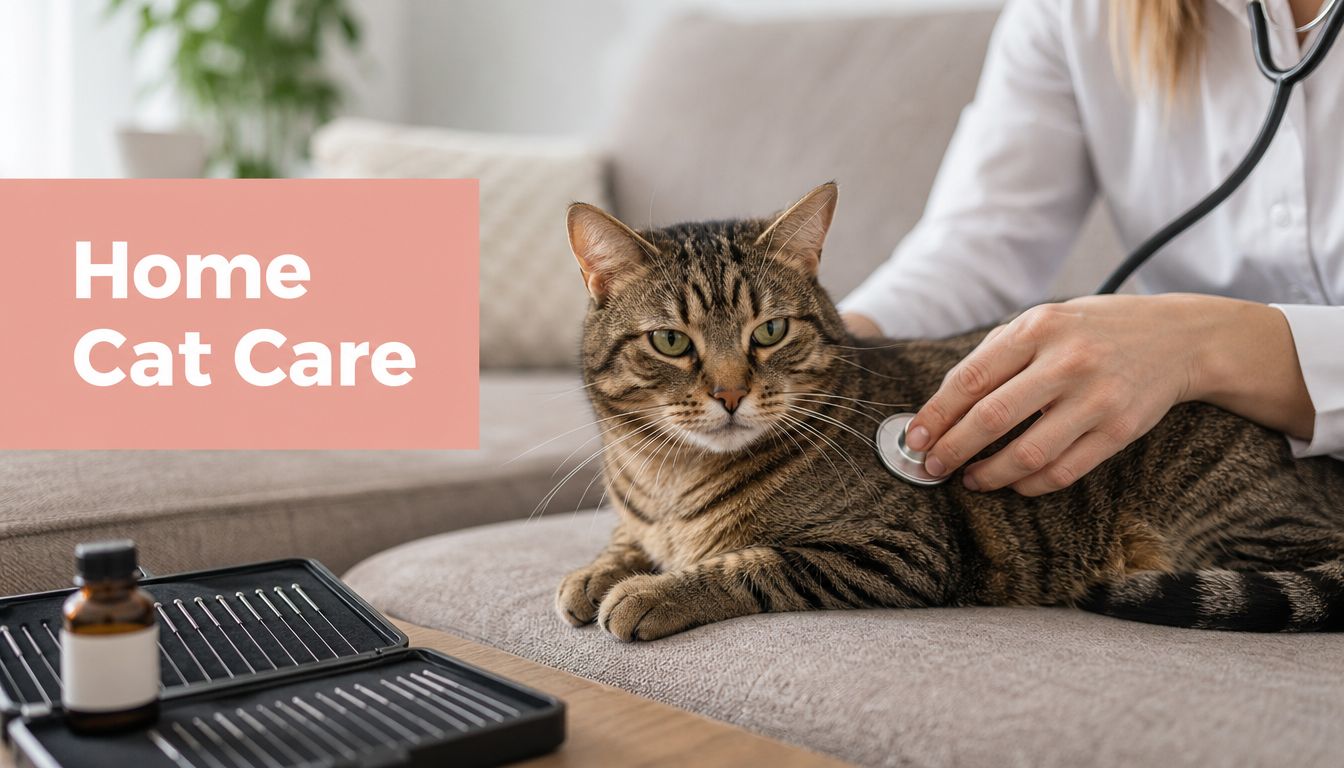
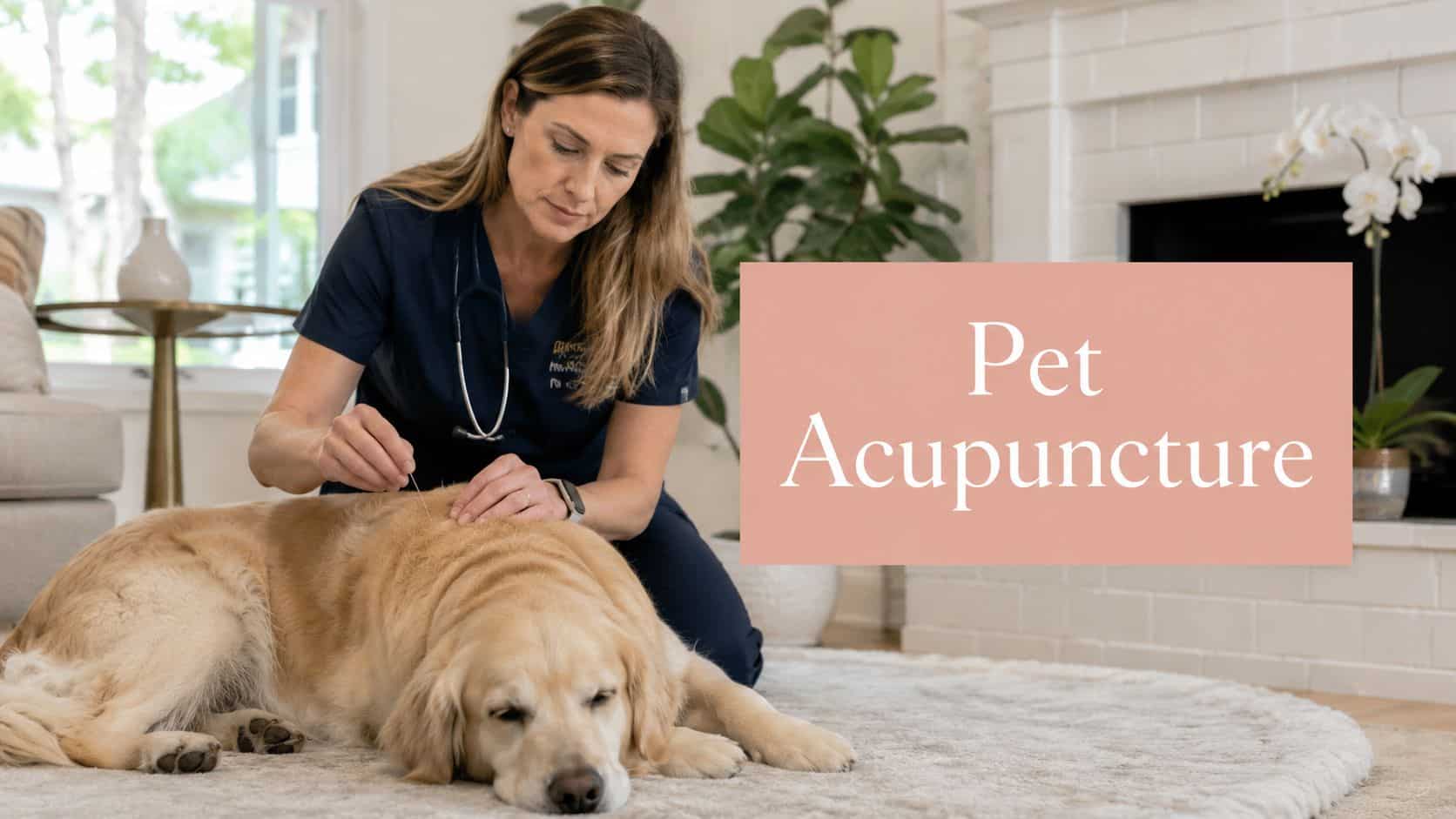
At pet acupuncture house-call care in South Tampa, Dr. Monica comes in, gives your pet time to observe, and starts with history before doing anything hands-on. Owners often use that time to describe the little details that matter most, like difficulty with stairs, reluctance to be picked up, pacing at night, or trouble posturing to urinate or defecate.
The Assessment At Home
An in-home exam for disc disease is more than locating a painful spot. It usually includes gait observation, posture, spinal palpation, range-of-motion assessment, and a review of prior records or imaging when available. Traditional Chinese Veterinary Medicine observations may also be part of the visit, including tongue and pulse evaluation, because they help shape an individualized plan.
That combination matters. Some pets mainly show pain. Others show weakness, anxiety, muscle tension, or compensatory strain in the shoulders and hips. The treatment plan changes based on that pattern.
What Treatment May Include
A session may use one modality or several, depending on the patient:
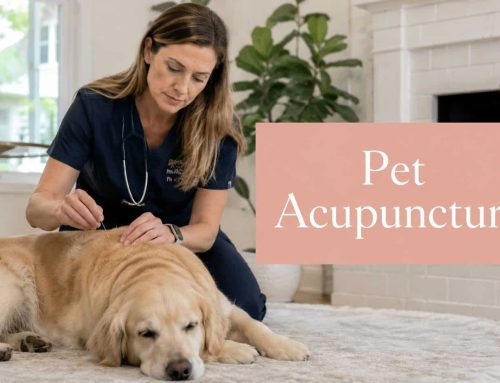
- Dry needling: Very fine needles are placed in selected acupuncture points and tense muscle regions. Many pets relax during this part and some become sleepy.
- Electroacupuncture: A mild current is added between certain needles. This isn't used on every patient, but it can be especially helpful when nerve irritation or deeper pain patterns are present.
- Aquapuncture: A small amount of injectable fluid, often something like B12, is placed into specific points for longer-lasting stimulation.
- Therapeutic laser: Laser can be added over painful regions to support comfort and reduce irritation without extra handling.
Some pets tolerate only a few needles at the first visit. That's fine. Good treatment isn't about forcing a full protocol. It's about matching the plan to the patient in front of you.
Why The Home Setting Helps
In a house-call setting, owners can stay with their pet. The dog can lie on a favorite rug. The cat can be treated in a quiet room instead of bracing inside a carrier. Those details aren't small. They often determine how much a pet can relax into the visit.
For South Tampa families, the mobile format is also practical. There's no loading a painful dog into the car, no struggling to transport a senior cat, and no extra stress before treatment even begins.
Expected Outcomes and Recovery Timeline
Most pets don't show a dramatic overnight change after one acupuncture session. Improvement usually builds in layers. First, owners notice comfort changes. Then they notice function.
What Early Progress Can Look Like
The first signs are often subtle:
- Better rest: Your pet settles more easily and changes position less often.
- A brighter attitude: Some pets seem more engaged before they show major mobility gains.
- Less reactivity to touch: You may notice less flinching when the back or hips are handled.
- Easier daily movement: Rising, turning, or stepping outside may look smoother.
These changes matter because they show the pain cycle is starting to quiet down.
A useful piece of research from Frontiers in Endocrinology found that in lumbar disc pathology, acupuncture significantly increased the cross-sectional area of key paraspinal muscles, including the multifidus, erector spinae, and psoas, while reducing fat infiltration, or myosteatosis. That muscle improvement correlated with reduced pain scores and better functional stability.
That's human lumbar-disc data, not a veterinary guarantee. Still, it supports an important treatment goal in pets with spinal pain. Better muscle function around the spine often means safer, more comfortable movement.
What A Realistic Course Looks Like
Some pets improve quickly. Others need a steady series before you can fairly judge the response. Disc disease is often chronic, and chronic pain rarely behaves like a light switch.
For many owners, the practical question is how long to continue before reassessing. A structured treatment series is common because one session doesn't tell the whole story. If you're trying to understand that process, this guide on how many acupuncture sessions pets may need is a helpful starting point.
Clinical focus: Success usually means your pet moves with less effort and enjoys more of normal life. It doesn't mean the spine has been restored to a younger state.
Maintenance care is often part of long-term management. That's not a failure. It's how many chronic conditions are handled well, whether the diagnosis is disc disease, arthritis, or both at the same time.
Integrating Acupuncture with Your Primary Veterinarian
The strongest care plans for disc disease are collaborative. Acupuncture shouldn't compete with your pet's regular veterinarian. It should add another tool to the plan.

What Integrative Care Looks Like
A pet with degenerative disc disease may also need pain medication, weight management, activity modification, home exercises, advanced imaging, or surgery consultation. Acupuncture fits alongside those options. It doesn't erase the need for them when they're appropriate.
That's especially true when a pet has overlapping problems. A senior dog may have disc pain plus arthritis. A cat may have spinal discomfort plus anxiety with clinic handling. Integrative care works because it addresses the whole patient, not one label.
At a South Tampa veterinary medical clinic partner page, owners can see how mobile support can complement ongoing veterinary care rather than replace it.
Where Communication Matters Most
Good coordination includes:
- Medication awareness: The acupuncture veterinarian needs to know what NSAIDs, gabapentin, or other medications your pet is taking.
- Imaging review: X-rays, neurology notes, and surgical recommendations shape the treatment plan.
- Safety screening: Not every painful pet is a simple acupuncture case. Sudden neurologic decline needs prompt conventional evaluation.
- Progress updates: Mobility changes, appetite, sleep, and comfort all help guide the next step.
Pet Acupuncture & Wellness (PAW Vet Practice) provides mobile integrative care for dogs and cats in South Tampa and works alongside the primary veterinarian by focusing on pain relief, mobility support, and individualized at-home treatment plans.
If your pet needs surgery, that doesn't mean acupuncture failed. If your pet does well without surgery, that doesn't mean surgery was never worth considering. The right answer depends on the patient.
Patient Spotlights from Our South Tampa Practice
The most reassuring part of this work is often seeing what “better” looks like in ordinary life. Not perfection. Daily function.
Charlie The Dachshund
Charlie came to care because his family noticed hind-end weakness, a guarded back, and a slower walk around the block. He still wanted to be active, but he was clearly choosing shorter routes and hesitating at transitions.
His plan centered on repeated in-home acupuncture with gentle electroacupuncture and laser support. Over time, his family reported that he was more comfortable on walks and more willing to move through the house without that cautious, braced posture.
Luna The Senior Cat
Luna's owners first noticed that she had stopped jumping onto her favorite sunny perch. She wasn't crying, but she was hiding more and seemed irritated when touched over her lower back.
Her treatment focused on low-stress in-home sessions because transport was hard on her. After a series of visits, her owners described a more relaxed posture, better litter box comfort, and a return to one of her old routines, spending time near the window again.
What These Cases Usually Have In Common
These pets weren't “fixed” in the dramatic sense. What changed was function.
- They rested more comfortably.
- They moved with less hesitation.
- Their owners felt less afraid that every normal activity would trigger pain.
That's often the right way to judge acupuncture for degenerative disc disease in dogs and cats. Look at the life your pet is able to live at home.
Frequently Asked Questions for South Tampa Pet Owners
By the time most owners ask about acupuncture, they've already been watching their pet struggle for a while. The remaining questions are usually practical.

Is My Pet Too Old Or Too Anxious For Acupuncture
Usually, no. Senior pets are often strong candidates because the treatment can be gentle and adaptable. Anxious pets may do better at home, where they aren't dealing with the extra stress of travel, a waiting room, and unfamiliar animals nearby.
How Do I Prepare My Home For An In-Home Visit
Keep it simple:
- Choose a quiet space: A room with decent footing and low traffic helps.
- Have records ready: Imaging reports, medication lists, and recent veterinary notes are useful.
- Don't force restlessness: Your pet doesn't need to perform. Normal behavior at home is informative.
- Bring favorite comforts: A bed, mat, or blanket can help your pet settle.
How Soon Might I See Results
Some owners notice early changes in comfort or sleep before they see major mobility changes. That's common. Available veterinary information suggests recovery timelines vary more than many owners expect. One future-dated summary in the provided data states that a 2025 study noted 70% of dogs with spinal pain improved after 4 weeks, while also noting that the potential advantage of a mobile clinic is still a hypothesis rather than a proven fact. In other words, home treatment may help some pets relax and respond better, but that still needs more direct research.
Can I Stay With My Pet During Treatment
Yes, and that often helps. Your presence can make the session easier for a nervous dog or cat. It also gives you a chance to observe what your pet tolerates well and what changes you should track between visits.
How Long Does A Session Last And What Does It Cost
Session length and cost depend on the patient, the services used, and the treatment plan recommended after evaluation. Since this article only cites verified data, it's better to discuss those specifics directly during scheduling rather than guess. The important point is that in-home care is designed around your pet's medical needs and your home logistics, not a rushed clinic flow.
Is Acupuncture Enough By Itself
Sometimes it's a major part of the plan. Sometimes it works best alongside medication, laser therapy, weight management, rehab exercises, or follow-up with your primary veterinarian. If a pet has worsening weakness, loss of mobility, or urgent neurologic changes, conventional veterinary evaluation comes first.
Home-based care can remove a major barrier to treatment. For many pets, the hardest part isn't the needle. It's the trip.
If your dog or cat in South Tampa is showing signs of spinal pain, stiffness, or mobility decline, Pet Acupuncture & Wellness (PAW Vet Practice) offers in-home integrative veterinary care focused on comfort, function, and practical support. A house-call consultation can help clarify whether acupuncture, laser therapy, or a broader mobility plan fits your pet's needs and how that care can work alongside your primary veterinarian.