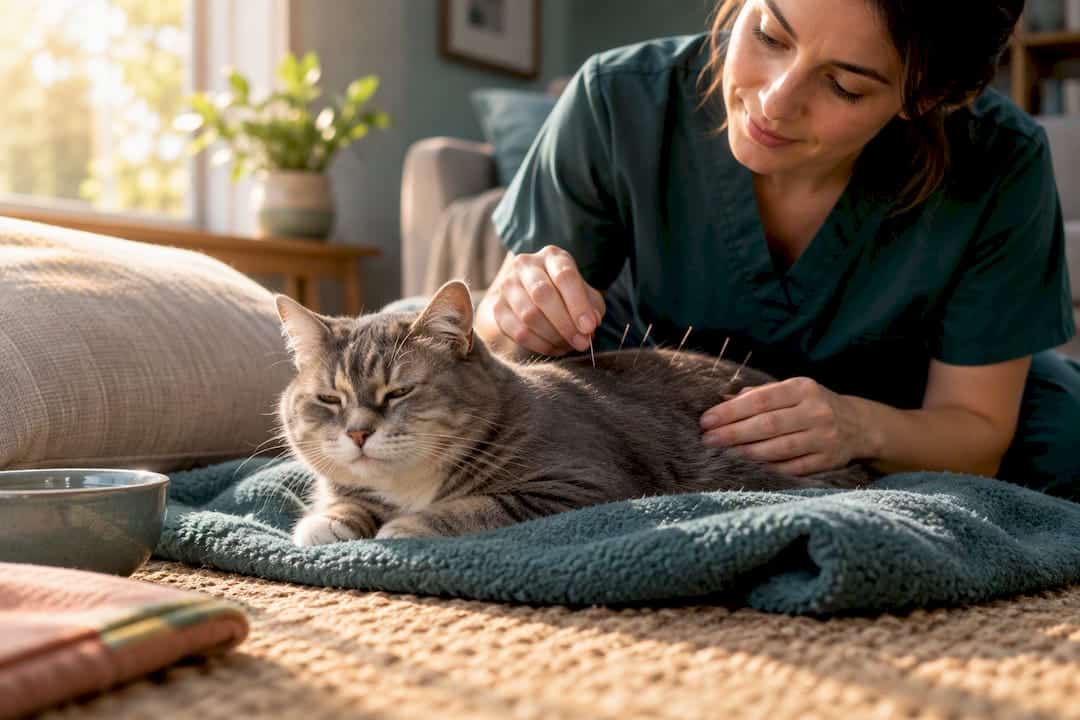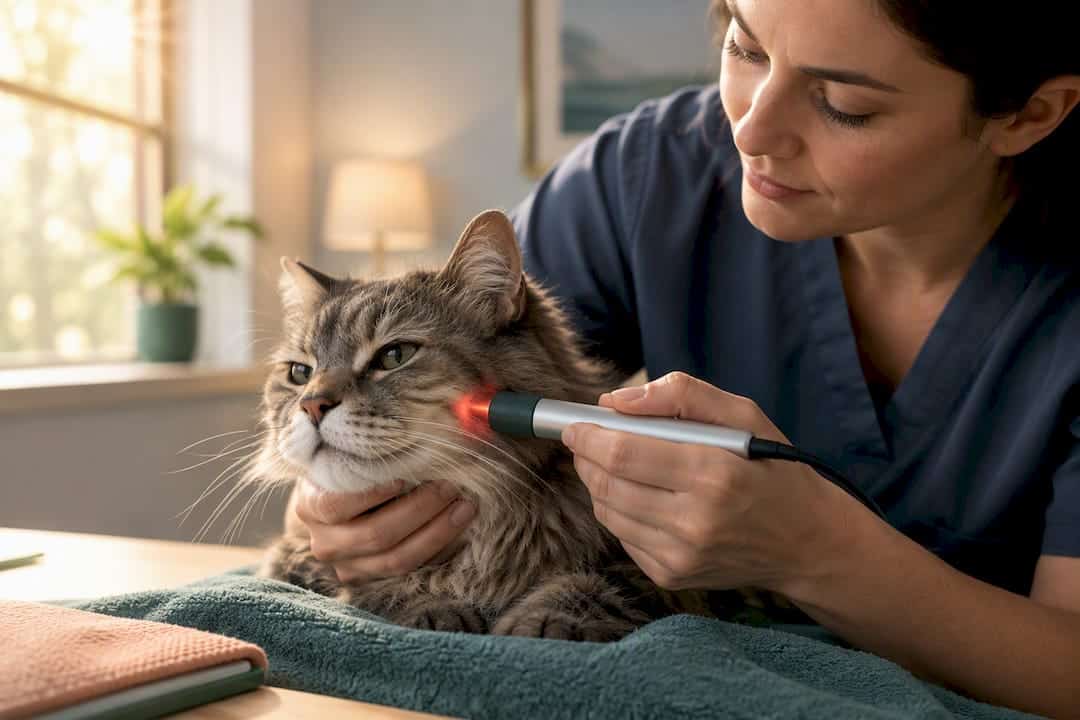
Acupuncture can help ease nausea in some cats when it’s used alongside, not instead of, a proper veterinary workup. Feline studies on electroacupuncture at the PC6 point show it can calm the reflex that triggers reflux, and thousands of veterinarians hold acupuncture certification in the United States. Think of it as one supportive tool in a bigger care plan, never the first stop when your cat won’t stop vomiting.
TL;DR:
- Electroacupuncture at PC6 can physiologically reduce the frequency of reflux-related muscle relaxation episodes in cats, though it does not always prevent vomiting.
- The effectiveness of acupuncture varies depending on the stimulation method, the acupoint chosen, and individual cat responses, with PC6 having the strongest evidence for nausea relief.
- Veterinary acupuncture is generally safe when performed with sterile needles, but it should always be part of a comprehensive veterinary diagnosis and treatment plan.
- Acupuncture sessions usually involve multiple treatments over several weeks, costing around $430 for an initial visit, plus travel fees, and should be monitored for response and adjusted accordingly.
- The current evidence on acupuncture’s ability to stop vomiting is mixed, supporting its role as a low-risk adjunct rather than a standalone cure for feline nausea.
Table of Contents
- How acupuncture may reduce nausea in cats
- Types of acupuncture used for cats
- Is acupuncture safe, and when should you see a vet first
- What a treatment session looks like and what it costs
- Clinical evidence: what studies say about acupuncture for feline nausea
- Why we treat acupuncture as one part of your cat’s care, not the whole plan
- Ready for in-home acupuncture? Here’s how a first visit works
- Sources
- FAQ
How acupuncture may reduce nausea in cats
Nausea in cats often starts with a confused signal traveling along the vagus nerve, the body’s long communication line between gut and brain. When that signal misfires, it can trigger transient lower esophageal sphincter relaxation, or TLESR, the same reflex behind reflux and vomiting. Acupuncture appears to settle this pathway rather than block it outright, nudging the nervous system back toward balance the way a dimmer switch softens a harsh light instead of cutting the power.
The most studied point for this purpose is Pericardium 6, known in Traditional Chinese Veterinary Medicine as Neiguan, located on the inner forearm. A feline study found that electroacupuncture at PC6 reduced the frequency of TLESR episodes, a meaningful physiologic signal even though not every trial on actual vomiting outcomes has agreed.
Electroacupuncture at PC6 has been shown in feline studies to modulate TLESR frequency, according to published research, supporting a real, if modest, physiologic effect tied to this single point.
A few things shape whether a cat responds:
- The point selected matters, since PC6 has the strongest feline-specific evidence for nausea.
- The stimulation method, whether manual, electrical, or injectable, can change the strength and consistency of the effect.
- Individual variation is real: some cats show clear physiologic changes while others show none.
Types of acupuncture used for cats
Not every needle session looks the same, and the method your veterinarian chooses often depends on your cat’s temperament and the condition being treated.
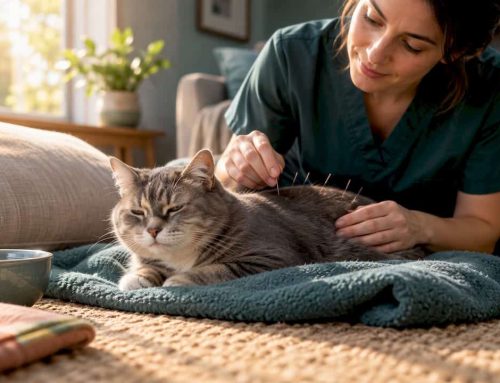
- Manual acupuncture uses fine needles placed by hand and left in for several minutes, often the gentlest starting point for a nervous cat.
- Electroacupuncture adds a mild electrical current between needle pairs, giving more consistent, measurable stimulation, which is why it appears often in PC6 research.
- Aquapuncture injects a small amount of liquid, often vitamin B12 or saline, directly into an acupoint, useful when needle retention isn’t practical.
- Acupressure applies firm, steady pressure instead of needles, a reasonable option for cats who won’t tolerate needles at all.
A trained veterinary acupuncturist will often mix these approaches depending on how your cat settles into the first few minutes of a session.
Is acupuncture safe, and when should you see a vet first
Acupuncture carries a favorable safety profile in cats when performed by a trained practitioner using sterile, single-use needles. Reported side effects are uncommon, and most cats tolerate the thin needles with little reaction, since veterinary acupuncture needles are much thinner than standard blood-draw needles.
That safety record does not replace the need for a diagnosis. Veterinary reviews on feline vomiting recommend baseline diagnostics, including bloodwork, a chemistry panel, and imaging, before treating persistent vomiting, because the underlying cause changes everything about the right treatment. Kidney disease, hyperthyroidism, a GI obstruction, pancreatitis, and toxin exposure can all look like simple nausea at first glance.
Before booking an acupuncture session for a nauseous cat, work through this short list:
- Note how long the vomiting has lasted and whether it’s occasional or daily.
- Watch for red flags such as lethargy, blood in the vomit, ongoing diarrhea, dehydration, or sudden weight loss.
- Schedule a veterinary exam and diagnostics if any red flag is present or vomiting has lasted more than a few days.
- Ask your veterinarian whether acupuncture fits reasonably into your cat’s current treatment plan.
Pro Tip: If your cat has lost weight or seems unusually quiet along with the vomiting, treat that as a same-week vet visit rather than something to monitor at home.
What a treatment session looks like and what it costs
A first acupuncture visit usually opens with a conversation about your cat’s history and a review of any diagnostics already completed, followed by a gentle physical exam. Needles go in next, often at PC6 and a few supporting points, and your cat rests quietly for several minutes while the practitioner monitors comfort and response. Most sessions run under an hour from start to finish.
Veterinarians typically recommend trialing three to six sessions spaced over several weeks before judging whether acupuncture is helping, since the effect tends to build gradually rather than appear after one visit.
Expect prices to vary depending on factors such as who performs the session, travel or mobile service fees for at-home appointments, the modality used, and any add-on therapies provided during the visit.
Track response through appetite, fewer vomiting episodes, and normal activity levels, and discuss adjusting the plan if two or three sessions bring no change.

Clinical evidence: what studies say about acupuncture for feline nausea
The research on acupuncture and feline nausea points in two directions at once: clear physiologic signals, and mixed outcomes when it comes to actual vomiting.
| Study | Design | Main finding |
|---|---|---|
| Electroacupuncture at PC6 and TLESR | Feline physiologic study | Reduced frequency of transient lower esophageal sphincter relaxation episodes |
| Aquapuncture at PC-6 and dexmedetomidine-induced vomiting | Randomized crossover trial | No significant reduction in vomiting or nausea scores compared with control |
The TLESR study suggests electroacupuncture can influence a mechanism tied to nausea at the physiologic level. The crossover trial, though, found that aquapuncture at the same point did not meaningfully reduce vomiting triggered by a sedative drug, a reminder that a promising mechanism doesn’t always translate into a clear clinical win. Taken together, the evidence supports acupuncture as a plausible, low-risk adjunct rather than a stand-alone cure for feline nausea.
Why we treat acupuncture as one part of your cat’s care, not the whole plan
A cat’s nausea rarely has one cause, and we’ve built our approach around that reality. Every acupuncture session happens in your cat’s own home, which keeps stress low for cats who shut down or panic in a clinic waiting room, and we work alongside your cat’s regular veterinarian rather than in place of them. Senior cats, anxious cats, and those with mobility limits tend to benefit most from this at-home model, since travel itself can trigger the very nausea you’re trying to treat. We see acupuncture as a supportive layer added to whatever diagnostic and medical plan your veterinarian has already started, never a replacement for it.
— Pet Acupuncture & Wellness
Ready for in-home acupuncture? Here’s how a first visit works

Once your veterinarian has ruled out a serious underlying cause, booking an in-home assessment is simple and keeps your cat out of a stressful waiting room entirely. A first visit typically runs 45 to 60 minutes and includes a full intake alongside the acupuncture session itself.
- Have your cat’s recent bloodwork or diagnostic results ready to share.
- Expect a technician mobile fee of $60 on top of the initial assessment and acupuncture service, which starts at $430.
- Mention any anxiety, mobility issues, or prior vet visit struggles so we can plan the session around your cat’s comfort.
Full pricing for acupuncture and related services is listed on our cost of services page, and you can learn more about in-home acupuncture for digestive issues before you book.
Sources
- Effects and mechanisms of electroacupuncture at PC6 on frequency of transient lower esophageal sphincter relaxation in cats
- The effect of aquapuncture at Pericardium 6 (PC-6) on dexmedetomidine-induced nausea and vomiting in cats
- Two proposed veterinary specialties under consideration: Acupuncture, embryo transfer | American Veterinary Medical Association
- Clinical approaches to vomiting in cats (review)
This article is general information, not a substitute for advice from a qualified doctor. Consult a qualified healthcare professional about your own circumstances before acting on anything here.
FAQ
Does acupuncture get rid of nausea in cats?
Acupuncture doesn’t eliminate nausea outright, but feline research on electroacupuncture at PC6 shows it can reduce the frequency of a reflex tied to reflux and nausea. Results vary by cat and by cause, which is why it works best as a supportive therapy alongside a veterinary diagnosis.
How much does feline acupuncture cost?
At Pet Acupuncture & Wellness, an initial assessment and acupuncture session with a technician starts at $430, plus a $60 technician mobile fee for the in-home visit. Costs can rise with additional modalities like electroacupuncture, priced separately on the same pricing page.
Does acupuncture actually work on cats?
Studies show mixed results: one trial found electroacupuncture reduced TLESR episodes, a nausea-related reflex, while a separate crossover trial on aquapuncture found no significant drop in drug-induced vomiting. The honest answer is that it shows real physiologic promise but isn’t a guaranteed fix for every cause of nausea.
Where are the acupressure points on cats?
The most researched point for nausea sits at Pericardium 6, known as Neiguan, located along the inner forearm just above the wrist. A trained practitioner locates this and other points based on your cat’s specific symptoms, so acupressure at home is best guided by a professional rather than attempted from a diagram alone.