If your dog suddenly becomes paralyzed, stabilize her gently and call your veterinarian or an emergency clinic right away. Once your vet has examined her and given the go-ahead, home rehab often begins with careful nursing, bladder care, and gentle passive range of motion exercises. Many dogs who still feel deep pain in their paws have a real chance at recovery. This guide walks you through the daily steps, the equipment choices, and the moments that call for more urgent care.
TL;DR:
- Dogs with deep pain sensation often have a better chance of recovery, especially if surgery is performed promptly within the first 24 hours of paralysis.
- Home nursing must involve turning the dog every four to six hours, careful skin monitoring, bladder expression, and pressure-relief bedding to prevent pressure sores and infections.
- Gentle daily exercises, including passive range of motion and assisted standing, are key to recovery once cleared by the veterinarian, with progress tracked through consistent video and logs.
- Equipment like slings, harnesses, carts, and ramps must be properly fitted and used to support movement and protect the dog’s body during rehab.
- Overall, dogs with retained deep pain sensation tend to recover faster, and many still regain walking ability within twelve weeks of conservative management.
Table of Contents
- First 24 hours: stabilize, what to tell the vet, and red flags
- Daily nursing essentials: turning, bedding, skin care, and infection prevention
- At-home rehabilitation: passive range of motion, assisted standing, and stepwise progression
- Choosing and using mobility aids, supportive bedding, ramps, and accessories
- Surgery vs conservative care: how decisions are made and what to expect
- Week-by-week milestones and realistic expectations for recovery
- Adjunct and clinic-based treatments that support recovery
- Clinic perspective: why we recommend at-home, integrative rehab
- How Pet Acupuncture & Wellness can help with mobile, in-home rehab
- Sources
- FAQ
First 24 hours: stabilize, what to tell the vet, and red flags
Handle your dog like her spine is fragile, because right now it is. Support her body along its full length when you lift her, sliding a firm board or towel sling underneath rather than scooping her under the belly, and use two people for anything larger than a small dog.
When you call your veterinarian, be ready to describe how quickly the paralysis came on, whether it has worsened since you noticed it, and whether your dog reacts when you gently pinch a toe (this “deep pain” response matters more than almost anything else in the exam). Mention any changes in urination and whether her breathing looks labored.
Some signs mean you drive straight to emergency care instead of waiting for a callback:
- Loss of deep pain sensation, meaning no response to a firm toe pinch.
- Labored or rapid breathing, or blue-tinged gums.
- Sudden worsening of weakness over hours rather than days.
- Visible severe pain, such as screaming or rigid guarding of the back.
Your vet may recommend a neurologic exam and imaging like an MRI to find the cause and decide whether surgical decompression is warranted, and timing matters here: a dog who has lost deep pain and needs surgery generally does better the sooner that surgery happens.
Daily nursing essentials: turning, bedding, skin care, and infection prevention
A paralyzed dog’s day-to-day nursing care is what prevents small problems from becoming medical emergencies. Recumbent dogs are prone to pressure sores, urine scald, and congestion in the lungs, so a steady routine of turning, cleaning, and watching for trouble is the backbone of home rehab.
- Turn your dog from side to side every four to six hours, and reposition her rather than letting her settle into the same spot for a whole day, since Merck Veterinary Manual recommends this interval to prevent pressure sores.
- Set up a recovery area with a pressure-relief mattress or several layers of supportive padding, especially under her hips and shoulders where bony prominences bear the most weight.
- Check her skin at every turn for redness, warmth, or breaks, and use a barrier cream on areas exposed to urine.
- Express her bladder manually three to four times daily if she cannot urinate on her own, watching for straining, cloudy urine, or a strong odor that might signal a urinary tract infection, and ask your vet about urinalysis every two to four weeks to catch problems early, a schedule also recommended by Merck’s guidance on nervous system care.
- Feed her in a position that reduces the risk of choking or inhaling food into the lungs, and keep fresh water always within reach.
Turning combined with pressure-relief bedding and padding under bony areas meaningfully reduces the odds of pressure ulcers developing in dogs who cannot reposition themselves, according to Cornell’s guidance on recumbent patient care.
Pro Tip: Keep a simple paper log by her bed noting turn times, bladder expressions, and skin checks. It takes thirty seconds and catches patterns you would otherwise miss.
At-home rehabilitation: passive range of motion, assisted standing, and stepwise progression
Once your vet clears her for movement, gentle daily exercise becomes one of your most useful tools. Passive range of motion, often shortened to PROM, means moving each joint through its natural bend and extension while your dog is relaxed, typically ten to fifteen repetitions per joint, two to three times a day, always staying within a comfortable range and never forcing a stretch.
As strength returns, you can progress to assisted standing, using a sling or supportive harness under her belly to hold her upright for short periods while her legs bear partial weight. This helps retrain the nerves and muscles involved in balance long before she can stand alone.
- Start standing sessions at thirty seconds to one minute, building gradually as she tolerates it.
- Use a sling for brief supported walks, aiming first just for elimination breaks, then longer as her strength improves.
- Record short video clips from the same angle each day, since research on conservative management outcomes notes that consistent video documentation helps clinicians track subtle gains or declines during telemedicine check-ins.
- Watch for ten consecutive steps taken without support as a meaningful functional milestone.
- Note any return of voluntary bladder control, since this often signals real neurologic progress.
Stop the session and call your vet if you notice increased pain, new swelling, or any sign that her strength or coordination is getting worse rather than better. A randomized trial found that structured, intensive early rehabilitation did not significantly outperform a basic, owner-led home exercise program for dogs with incomplete spinal cord injury, which is genuinely reassuring: the trial published in a veterinary journal suggests that consistent, gentle exercise you do yourself at home carries real weight in her recovery.
Pro Tip: Do PROM sessions at the same times each day, right after a turn or bladder expression, so the routine becomes automatic for both of you.

Choosing and using mobility aids, supportive bedding, ramps, and accessories
The right equipment protects your dog’s body while she heals and makes your job as her nurse considerably easier. A sling is best for brief support during elimination or short PROM sessions, a full-body harness gives more consistent support for assisted walking, and a wheeled cart becomes useful once she is stable enough to move independently but still needs help bearing weight in her hind end.
- Choose a sling or harness with adjustable straps and soft padding to avoid rubbing under the arms or belly.
- Measure her chest and length carefully before buying a cart, since a poor fit can cause chafing or an unnatural gait.
- Add a supportive, pressure-relief mattress to her recovery area to reduce the skin issues that come with lying down for long stretches.
- Place ramps at doorways and non-slip mats on hard floors to prevent slipping during assisted walks.
- Consider paw boots if she tends to scuff her toes, and protective padding on the sides of her cart if your home has tight turns.
Our own equipment guide walks through sizing and fitting in more detail if you want help choosing between a sling, harness, or cart for your dog’s specific size and stage of recovery.
Surgery vs conservative care: how decisions are made and what to expect
Whether your vet recommends surgery or conservative management usually comes down to one factor above all others: whether your dog still has deep pain sensation in her paws. Dogs who retain that sensation tend to recover faster and more reliably than those who have lost it, no matter which path is chosen.
- Surgical decompression performed promptly after losing deep pain sensation offers a very high chance of restoring mobility, according to Cornell University’s veterinary college, which underscores why speed matters so much in that specific scenario.
- Conservative management, meaning strict rest, medication, and rehab rather than surgery, still produces meaningful recovery: a prospective study found that 96% of deep pain positive dogs and 48% of deep pain negative dogs regained the ability to walk within twelve weeks under conservative care, per research published on ambulation recovery.
- Conservative care typically means about four weeks of strict activity restriction, careful pain control, diligent nursing, and PROM, with a twelve-week window before you and your vet reassess progress, a timeline detailed by veterinary researchers at the University of Illinois.
- Watch closely for urinary tract infections, pressure sores, and aspiration pneumonia throughout either path, since any of these can slow recovery or worsen the overall outcome.
Week-by-week milestones and realistic expectations for recovery
Recovery rarely moves in a straight line, but there are patterns worth knowing so you can set expectations that are hopeful yet realistic. Dogs who retain deep pain sensation tend to regain the ability to walk noticeably faster than those who have lost it.
- In one conservatively managed cohort, deep pain positive dogs had a median time to ambulation that was considerably shorter than that of deep pain negative dogs, per the same ambulation recovery study.
- Small, incremental gains, more standing time, a few more steps, better bladder control, matter more than any single dramatic leap forward.
- If progress plateaus for more than a week or two, that is a signal to schedule a re-evaluation with your vet rather than assuming rehab has failed.
- Track wins in your daily log. On hard weeks, looking back at where she started can keep both of you motivated.
Adjunct and clinic-based treatments that support recovery
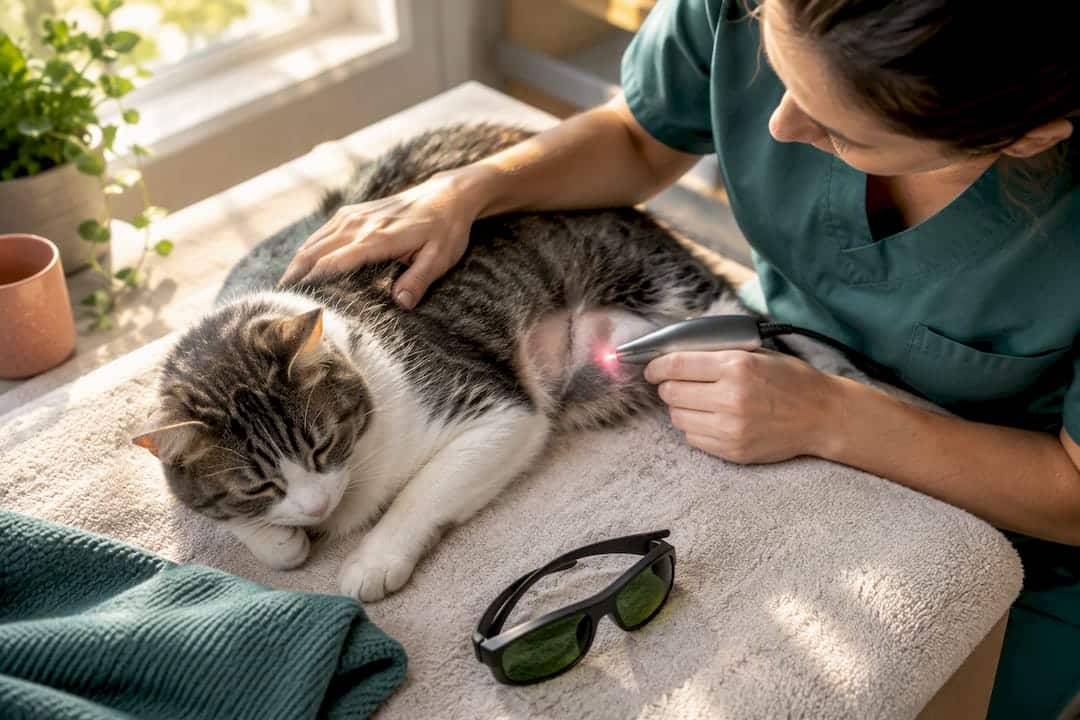
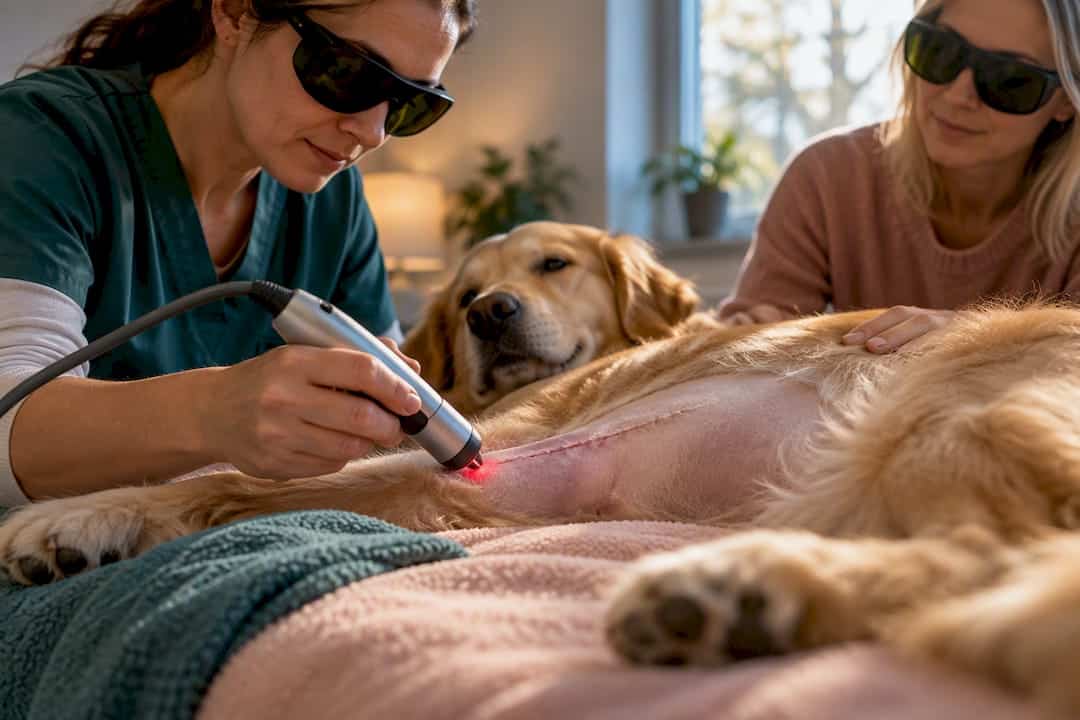
Laser therapy, acupuncture, functional electrical stimulation, and underwater treadmill work are commonly used alongside nursing and exercise, though the evidence base for each varies in strength. Cornell’s overview of intervertebral disc disease describes multimodal approaches as best used to manage pain and encourage neuromuscular recovery alongside, not instead of, basic rehab.
- Electroacupuncture and other adjuncts show mixed but sometimes promising results in small studies when combined with a broader rehab plan.
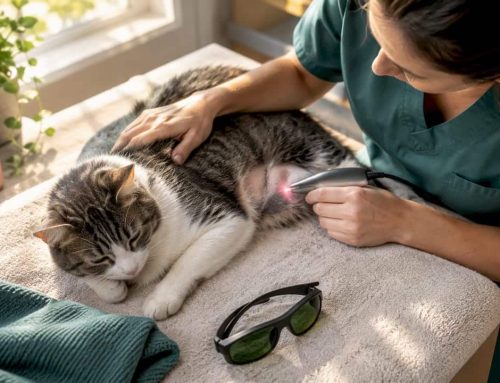
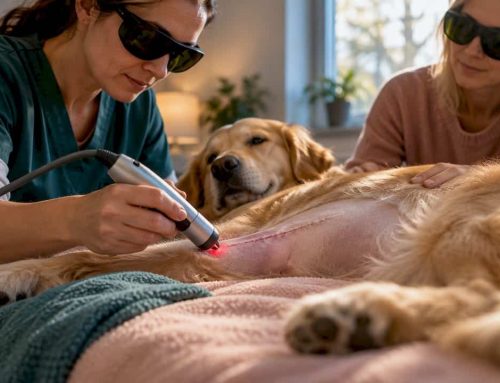
- Laser therapy and acupuncture can often be delivered in a mobile or home setting, while underwater treadmill work generally requires clinic equipment.
- These therapies work best as support for pain control and muscle stimulation around the owner-led exercises that make up the core of home rehab.
Clinic perspective: why we recommend at-home, integrative rehab
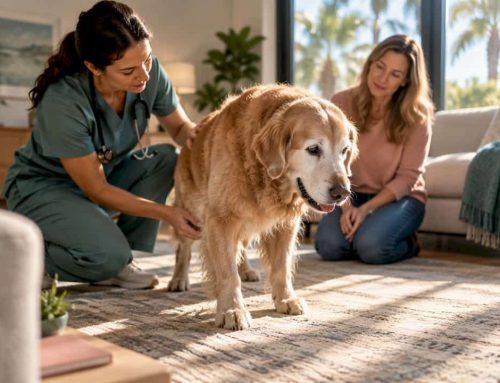
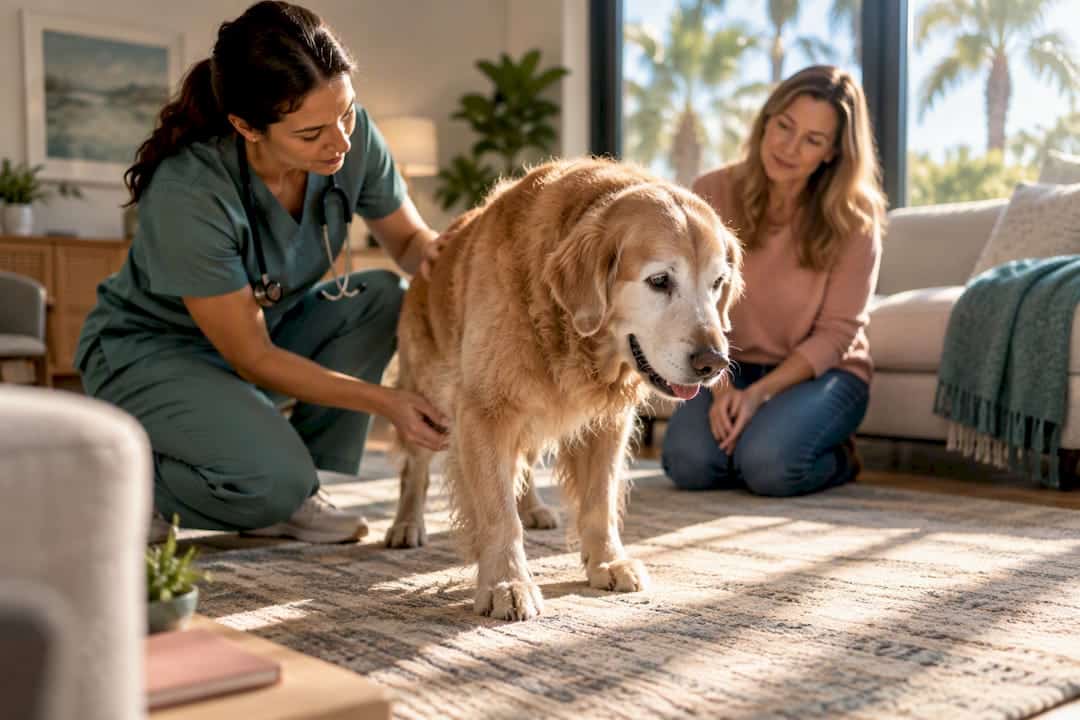
We built our practice around the idea that a paralyzed dog heals better in the home she knows, not in the back of a stressful clinic hallway. Anxious or senior dogs especially benefit from familiar smells and a calm routine, and that comfort translates into better compliance with turning schedules and daily exercises.
We tailor every rehab plan to your dog’s specific injury and your home’s layout, and we coordinate directly with your primary veterinarian so nothing falls through the cracks. If you are feeling overwhelmed by the day-to-day demands of nursing care, you are not alone in that, and support is part of what we offer alongside the clinical work.
— Pet Acupuncture & Wellness
How Pet Acupuncture & Wellness can help with mobile, in-home rehab
We bring rehabilitation therapy, acupuncture, laser treatments, and telemedicine follow-ups directly to your dog’s recovery space in South Tampa, so you never have to load a paralyzed dog into a car for basic care. A typical first visit includes a hands-on assessment and the start of an at-home rehabilitation package built around her specific injury and home setup.
If your dog is navigating paralysis right now, reach out to schedule an initial assessment and let us build a plan around her, and your home, together.
Sources
The clinical claims in this guide draw on veterinary teaching hospitals and peer-reviewed research, including Cornell University’s spinal disk resources, the prospective cohort study on conservative management, the randomized trial on postoperative rehabilitation, and updates from the University of Illinois. Readers wanting deeper detail on prognosis and rehab evidence can consult these directly.
- Diseased spinal disks | Cornell University College of Veterinary Medicine
- Recovery of ambulation in small, nonbrachycephalic dogs after conservative management of acute thoracolumbar disk extrusion – PMC
- Updates on Intervertebral Disc Extrusion (IVDE) – Veterinary Medicine at Illinois
FAQ
How do you treat a paralyzed dog at home?
Home treatment centers on frequent turning, bladder expression, skin checks, and gentle passive range of motion exercises, all done under your veterinarian’s guidance. Mobility aids like slings or carts and adjunct therapies such as acupuncture or laser treatment often support this daily nursing routine.
Can a dog walk again after being paralyzed?
Many dogs regain the ability to walk, and the strongest predictor is whether they still feel deep pain in their paws at diagnosis. In one cohort, 96% of deep pain positive dogs recovered ambulation within twelve weeks under conservative management, compared with 48% of deep pain negative dogs, according to research on conservative management outcomes.
How to stimulate a paralyzed dog?
Gentle passive range of motion exercises, assisted standing with a sling, and short supported walks help stimulate nerves and muscles involved in movement. Adjunct therapies like electroacupuncture are sometimes added to this routine, though evidence for their added benefit is still developing.
How long can paralyzed dogs live?
With diligent nursing care and management of complications like pressure sores, urinary tract infections, and pneumonia, many paralyzed dogs live full, comfortable lives. Life expectancy depends far more on preventing these complications and managing the underlying cause than on paralysis itself.