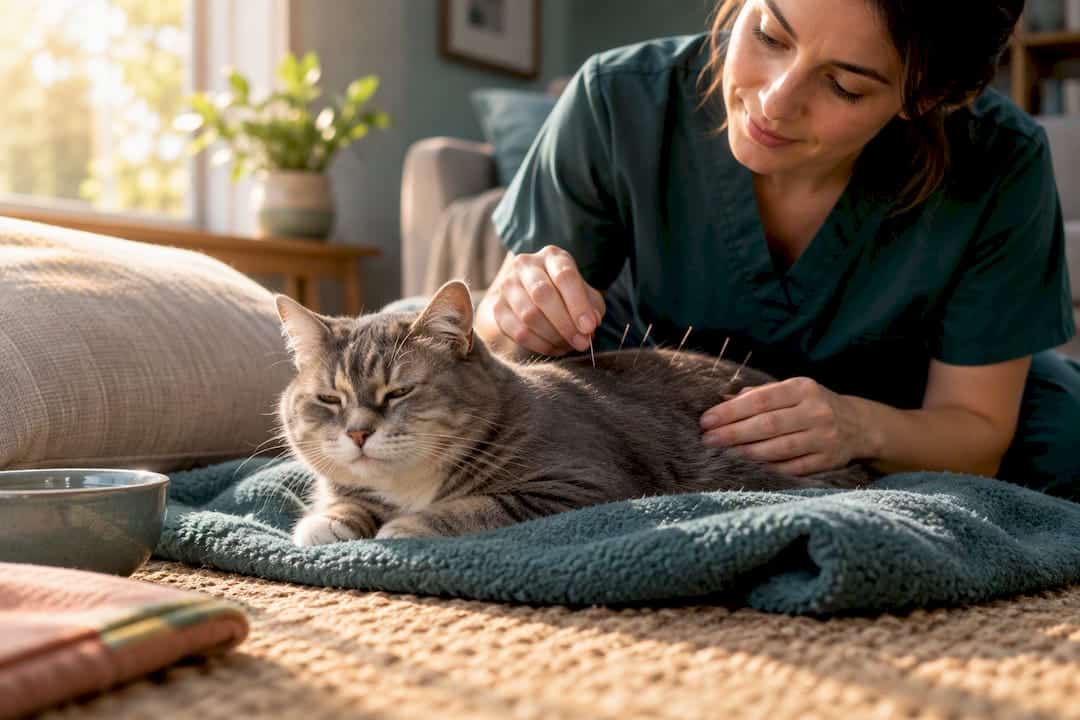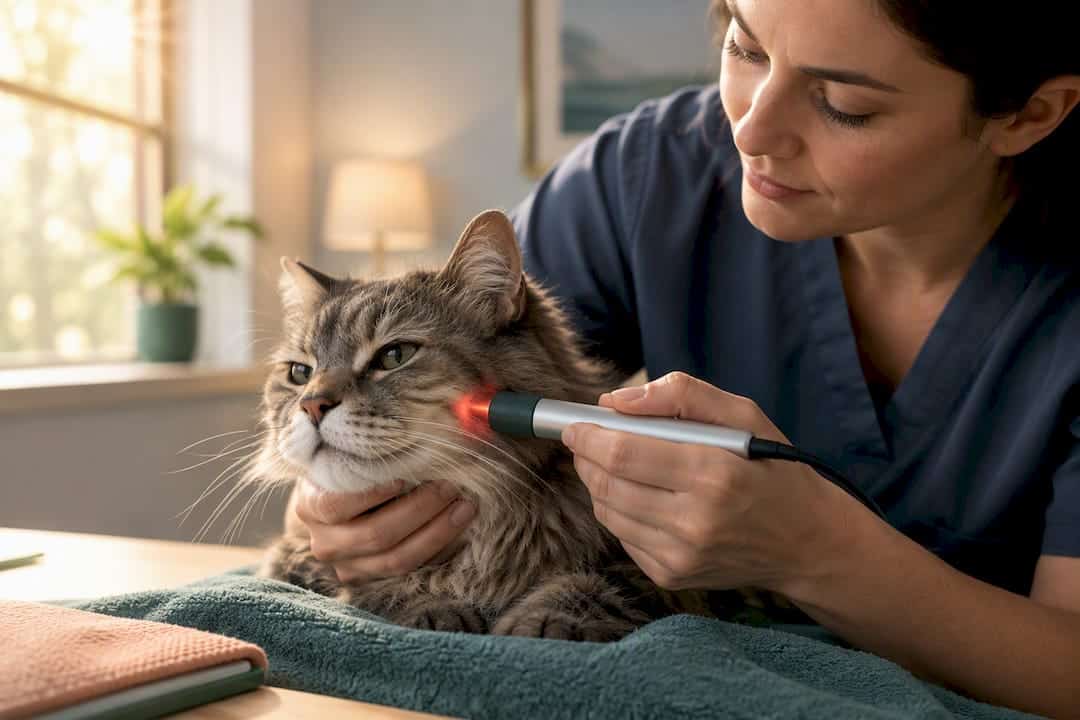
If your dog has suspected or confirmed degenerative myelopathy, your first move is threefold: start a mobility-preserving rehabilitation routine, make your home safer for a weakening gait, and build a coordinated plan with your veterinarian and a rehab professional. Degenerative myelopathy care is not about waiting to see what happens. It’s about acting early, while your dog still has strength worth preserving.
This is a progressive spinal cord disease, similar in pattern to ALS in people, and there is no pill that reverses it. But how you respond in the first weeks after diagnosis genuinely shapes how much mobility and comfort your dog keeps, and for how long.
Here’s what to do this week:
- Confirm the diagnosis path. Ask your vet about SOD1 genetic testing and whether an MRI is warranted to rule out a treatable compressive condition that mimics DM.
- Book a rehabilitation consult now, not after your dog stops walking. Early intervention is when physical therapy has the most to work with.
- Start low-impact mobility support at home today: add traction (yoga mats or rubber-backed rugs over slick floors), begin gentle standing and weight-shifting exercises, and remove obstacles your dog might catch a toe on.
- Ask about a rehab referral to a certified canine rehabilitation practitioner or a veterinary rehabilitation clinic near you.
Pro Tip: Start a simple gait log this week, before you feel like you need one. A weekly ten-second video of your dog walking across the same stretch of floor is worth more to a neurologist than a verbal description of “seems a little wobblier.”
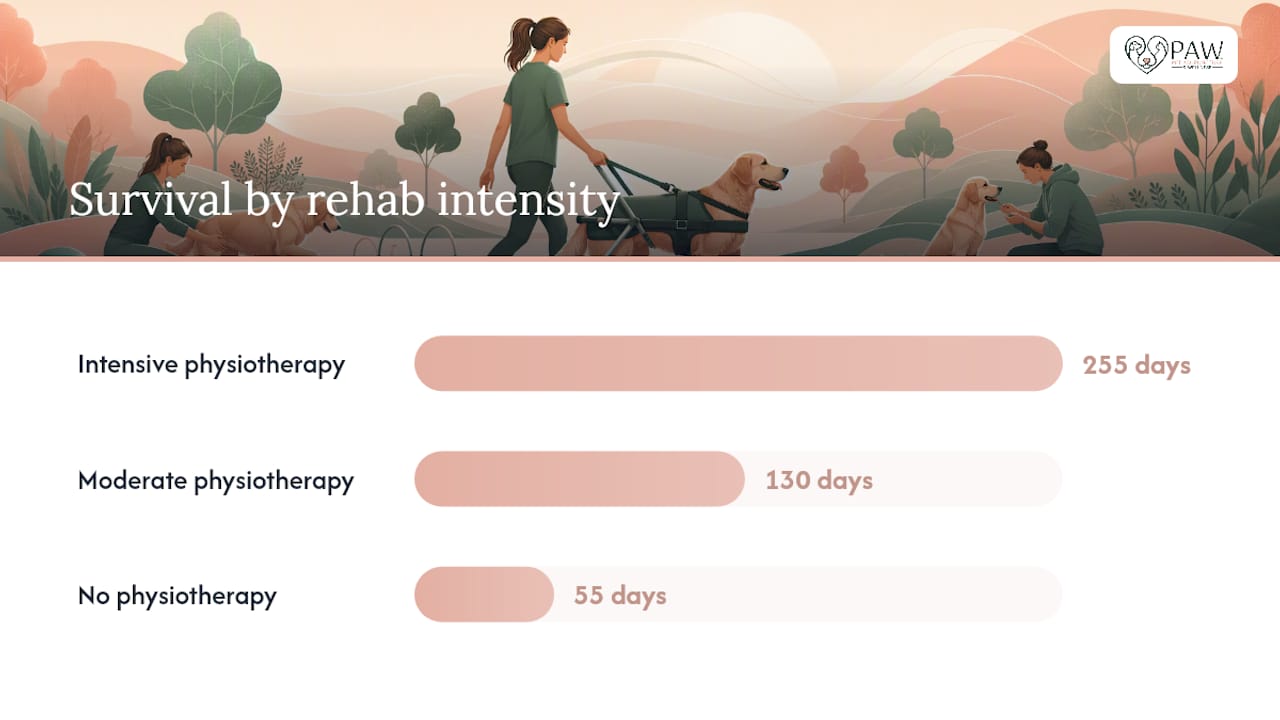
One figure should shape how you think about the next six months. In a study published in the Journal of Veterinary Internal Medicine, dogs receiving intensive physiotherapy survived a mean of 255 days, compared with 130 days for moderate physiotherapy and just 55 days for no physiotherapy at all. That’s not a marginal difference. It’s the clearest evidence in canine veterinary medicine that rehabilitation, not medication, is the intervention that matters most here.
Key Takeaways
Consistent, intensive rehabilitation is the single most impactful intervention available for degenerative myelopathy, and it works best when paired with early home safety changes and a coordinated veterinary team.
| Point | Details |
|---|---|
| Rehab intensity changes outcomes | Intensive physiotherapy correlates with notably longer mean survival compared to none. |
| No cure exists yet | Focus care on mobility, comfort, and preventing complications rather than curative medications. |
| Diagnosis is presumptive | SOD1 testing and MRI support, but don’t definitively confirm, a DM diagnosis while your dog is alive. |
| Home adaptations prevent crises | Traction surfaces, ramps, and skin checks prevent falls and pressure sores that cause more suffering than DM itself. |
| Coordinated care works better | Pet Acupuncture & Wellness offers in-home rehab guidance, acupuncture, and laser therapy that complement your dog’s clinic-based neurology and rehab team in South Tampa. |
Where to Read More on Degenerative Myelopathy Care
For deeper reading and material worth printing for your next vet visit, these sources back the guidance in this article:
- The Kathmann survival study in the Journal of Veterinary Internal Medicine, for the physiotherapy survival data itself.
- The 2023 clinician survey, for how neurologists and rehab professionals actually manage DM in practice.
- Cornell’s Riney Canine Health Center overview, for a trusted, plain-language clinical summary.
- MSPCA-Angell’s clinical page, for the diagnostic nuance around SOD1 testing and imaging.
Bringing a printed copy or a saved link from any of these to your next appointment gives you and your vet a shared, evidence-based starting point rather than a conversation built on secondhand forum advice.
This article is general information, not a substitute for advice from a qualified doctor. Consult a qualified healthcare professional about your own circumstances before acting on anything here.
Table of Contents
- What Are the Early Signs and Stages of Degenerative Myelopathy?
- How Is Degenerative Myelopathy Diagnosed?
- What Treatments Actually Help With Degenerative Myelopathy?
- What Rehabilitation and Exercise Help Dogs With Degenerative Myelopathy?
- When Should You Add Mobility Aids and Home Adaptations?
- What Nutrition and Supplements Support a Dog With Degenerative Myelopathy?
- How Do You Monitor Progression and Judge Quality of Life?
- Which Specialists Should Be Involved in Ongoing Care?
- What Does a Daily Care Routine Look Like for a Dog With DM?
- What Does the Research Actually Say About DM Treatment?
- A Mobile Provider’s View on Managing DM at Home
- How Pet Acupuncture & Wellness Supports Degenerative Myelopathy Care at Home
- Sources
- FAQ
What Are the Early Signs and Stages of Degenerative Myelopathy?
Degenerative myelopathy almost always starts quietly in the hind end. You’ll notice one hind paw scuffing the top of a nail on walks, or your dog’s back legs crossing slightly when turning. Some owners describe it as a subtle wobble that comes and goes, especially after rest, then reappears more consistently over following weeks.
The tricky part is that these early signs overlap heavily with arthritis and hip dysplasia, both far more common in senior dogs. The distinguishing clue is progression despite adequate pain control. If your dog is on a reasonable arthritis protocol and still shows a steady decline in coordination and strength rather than pain, that pattern points toward a neurologic cause rather than a joint problem.
DM tends to move through recognizable stages, though the pace varies enormously between dogs:
Early stage: Hind limb weakness, scuffing, occasional knuckling of the paw, subtle loss of coordination that’s easy to write off as “getting older.”
Middle stage: Loss of coordination becomes obvious. Dogs may cross their hind legs, sway when standing still, or struggle on stairs and slick floors.
Advanced stage: Nonambulatory paraparesis, meaning the hind legs can no longer support weight even with assistance, progressing eventually to paraplegia, often with urinary and fecal incontinence.
Late stage: In a minority of dogs whose disease runs its full course, forelimb weakness and even respiratory muscle involvement can appear, usually well over a year into the disease.
Most dogs move through these stages over six months to three years, and rehabilitation intensity is one of the biggest levers you have over how long that timeline stretches.
Pro Tip: Log three things weekly: how far your dog walks before tiring, whether toenails show new scuff marks, and any change in how quickly they get up from lying down. Patterns matter more than single observations, and a rehab therapist can adjust your program faster with real data than with “he seems worse.”
How Is Degenerative Myelopathy Diagnosed?
There is no single test that confirms degenerative myelopathy while your dog is alive. Definitive diagnosis requires histopathology examination of spinal cord tissue, which means every ante-mortem diagnosis is technically presumptive, built from a combination of history, breed, neurologic exam findings, and supporting tests that rule out other causes.
Your veterinarian will start with a thorough neurologic exam, checking reflexes, proprioception (does your dog know where its feet are without looking), and the specific pattern of weakness. DM produces a distinctive upper motor neuron pattern in the hind limbs that an experienced examiner can often recognize on sight.
From there, two tools do most of the heavy lifting:
- SOD1 genetic testing identifies a mutation strongly associated with DM risk, particularly in breeds like German Shepherds, Boxers, and Pembroke Welsh Corgis. A survey of neurologists and rehabilitation professionals found that most neurology clinicians use SOD1 testing to support a presumptive diagnosis, though a positive result alone doesn’t confirm disease. Plenty of dogs carry the mutation and never develop symptoms.
- MRI and CSF analysis rule out compressive lesions, such as a herniated disc or spinal tumor, that can mimic DM’s symptoms but are often treatable. The same survey found roughly 82% of 189 neurology respondents required spinal MRI before settling on a presumptive DM diagnosis, while others relied more heavily on exam findings and genetic testing.
MSPCA-Angell’s clinical guidance notes that SOD1 testing becomes especially useful when owners decline MRI, since it adds a data point toward a presumptive diagnosis without the cost and anesthesia risk of imaging.
Pro Tip: Bring your dog’s breed and family history to the first neurology appointment. Certain lines carry a higher SOD1 mutation frequency, and that context can shorten the diagnostic path considerably.
What Treatments Actually Help With Degenerative Myelopathy?
No medication has been proven to slow or stop degenerative myelopathy’s progression. That’s the uncomfortable truth every DM owner needs to hear early, because it reframes the entire care conversation away from “which drug will fix this” and toward “how do we preserve function and comfort for as long as possible.”
Cornell University’s veterinary college states plainly that there is no cure for DM, though routine physical therapy may delay clinical progression and help maintain muscle mass. That single sentence carries the whole treatment philosophy: rehabilitation is doing the work that medication cannot.
A number of drugs and supplements have been tried over the decades, with mixed to disappointing results:
- Corticosteroids were once commonly prescribed but show no evidence of altering DM’s course, and long-term steroid use carries its own risks for a dog that needs muscle mass, not muscle wasting.
- Aminocaproic acid, an antifibrinolytic drug, was popular in the 2000s but hasn’t held up under scrutiny as a disease-modifying agent.
- N-acetylcysteine and vitamin B, C, and E supplementation are frequently recommended informally, but the research behind the landmark physiotherapy survival study found that early pharmacologic approaches failed to outperform physical therapy alone.
The clinical goal, then, is not curative. It’s to prioritize mobility, comfort, and prevention of the secondary complications (pressure sores, urinary tract infections, muscle atrophy) that cause more suffering than the underlying nerve degeneration itself. That distinction should guide every decision you make from here, including which of the medications used for at-home pain management actually serve that goal.
What Rehabilitation and Exercise Help Dogs With Degenerative Myelopathy?
Rehabilitation is the single most evidence-backed intervention available for degenerative myelopathy care, and it works through several complementary channels rather than one magic exercise.
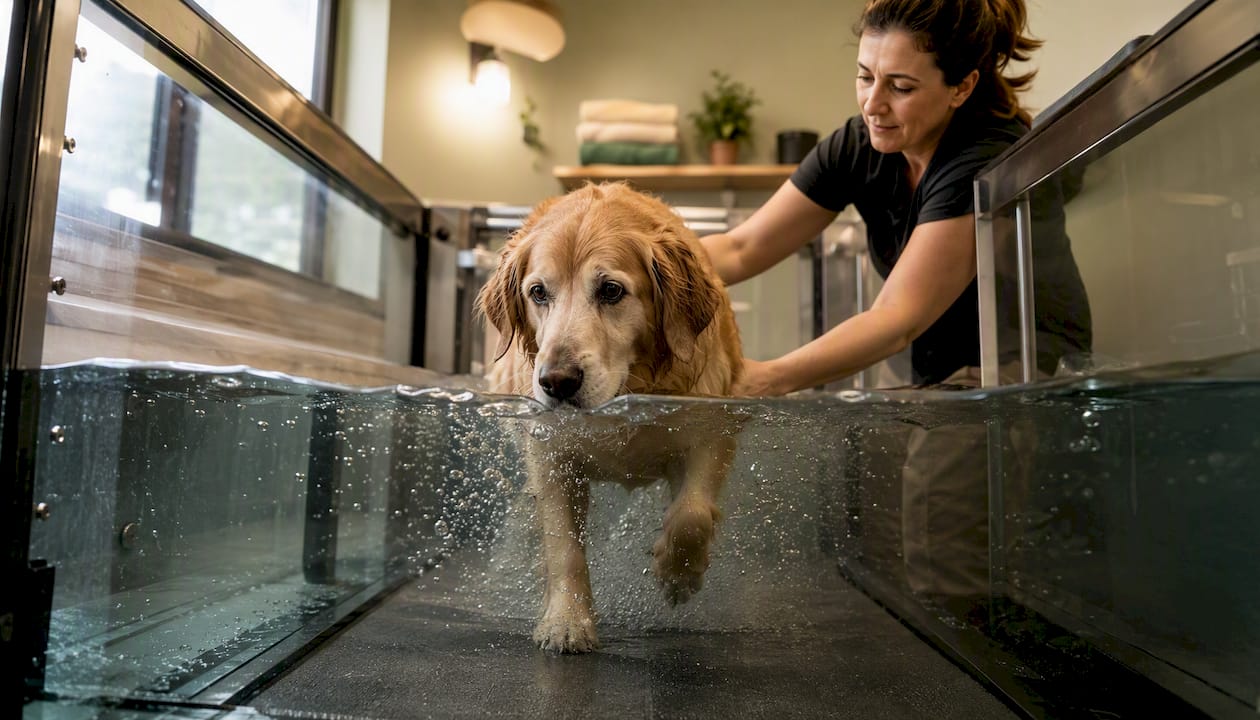
Underwater treadmill therapy lets dogs practice a normal walking gait while water buoyancy supports much of their body weight, reducing the strength demand on failing hind limbs. Gait training on land, often assisted with a harness or sling, reinforces the neuromuscular pathways that DM is slowly eroding. Strength and balance exercises, like sit-to-stand repetitions, weight shifting on an unstable surface, and cavaletti poles, build the muscle reserve that keeps a dog ambulatory longer. Assisted standing for a few minutes several times daily maintains circulation and prevents the rapid muscle wasting that comes with prolonged lying down.
A 2023 survey of neurology and rehabilitation professionals found that 95% of rehabilitation respondents recommend at-home exercises, 81% use underwater treadmill therapy, and 82% incorporate strength-building work into their DM protocols. This isn’t a fringe approach; it’s the clinical mainstream.
The survival numbers back up the intensity argument. Dogs in the Kathmann study receiving intensive, daily physiotherapy lived a mean of 255 days versus 55 days for dogs receiving none. That’s roughly a fourfold difference. The study’s sample size was small, which means the exact numbers shouldn’t be treated as gospel, but the direction of the effect, more consistent rehab correlating with meaningfully longer functional survival, is about as strong a signal as small-animal veterinary research produces.
Here’s a realistic weekly structure to adapt with your rehab therapist:
- Early stage (still walking independently): Daily 10 to 15 minute home exercise sessions (sit to stand, weight shifting, short walks on varied terrain), plus one to two clinic sessions weekly combining underwater treadmill and gait training.
- Middle stage (needs assistance to walk): Two daily assisted standing sessions of 5 minutes, gait training with a rear support harness three to four times weekly, and continued underwater treadmill work if your dog tolerates it without excessive fatigue.
- Late stage (nonambulatory): Passive range-of-motion exercises twice daily to prevent joint contracture, assisted standing as tolerated, and a shift in emphasis toward skin care and comfort over active strengthening.
Pro Tip: Watch for the fatigue line, not just the effort. Overexercising a DM dog can accelerate decline rather than slow it, so if your dog is shaking, panting heavily, or dragging a paw more than usual after a session, that’s the signal to shorten the next one, not push through it.
Track progress with the same simple metrics: distance walked before fatigue, number of stumbles per walk, and how long assisted standing can be sustained. If those numbers plateau or slide for two consecutive weeks, that’s your cue to bring it up at the next rehab visit rather than waiting for the scheduled recheck. Owners managing this at home often find it useful to combine structured home exercise routines with periodic clinic sessions, since the two settings reinforce different parts of the same program.
When Should You Add Mobility Aids and Home Adaptations?
The timing of assistive devices matters almost as much as which devices you choose. Introduce support too early and you risk letting muscles atrophy from disuse; wait too long and your dog risks a fall injury before you’ve adapted.
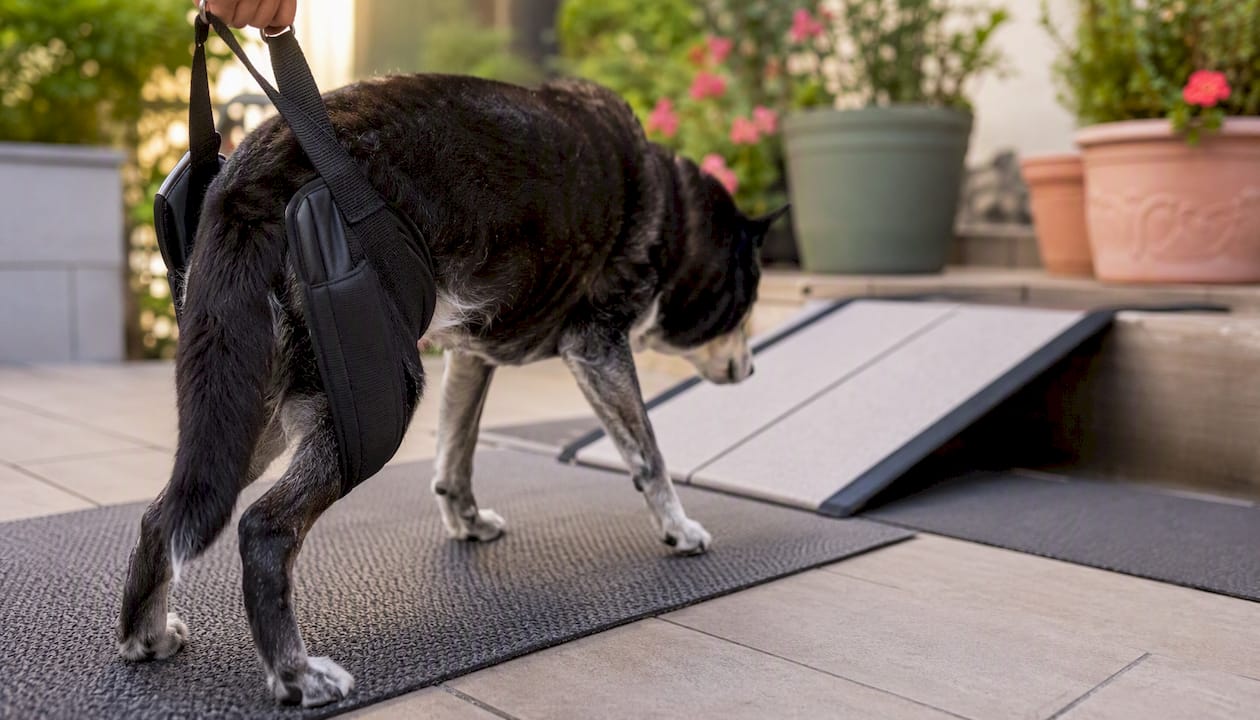
| Device | Best introduced when | What it addresses |
|---|---|---|
| Rear support harness or sling | First signs of hind limb weakness or scuffing | Assists standing, walking, and stairs while muscles are still active |
| Traction booties | Early to middle stage, especially on hardwood or tile | Prevents slipping and toenail drag injuries |
| Non-slip mats and rugs | As soon as any hind limb weakness appears | Reduces fall risk on slick flooring throughout the home |
| Wheelchair or cart | Once hind limbs can no longer bear consistent weight | Restores independent mobility for exercise and bathroom breaks |
| Ramps for stairs and vehicles | Middle stage onward | Removes the highest-risk fall points in daily routines |
A well-fitted harness, set up correctly, lets you support your dog’s rear end during walks without straining your own back, and it should sit snugly around the hips rather than the belly to distribute weight properly. Booties need to be checked for wear regularly since dragging toes can wear through fabric faster than you’d expect.
Beyond individual devices, a few home changes prevent the complications that cause more suffering than DM itself:
- Cover slick floors throughout main walkways, not just in one room, since a single unprotected stretch is often where falls happen.
- Raise food and water bowls to reduce strain on weakening hind legs while eating or drinking.
- Rotate your dog’s lying position every few hours once mobility is significantly reduced, and use padded or orthopedic bedding to prevent pressure sores over bony prominences like hips and elbows.
- Keep nails trimmed short, since overgrown nails catch more easily and worsen scuffing injuries.
Cornell’s clinical guidance points out that these home fixes, while unglamorous, often deliver outsized benefit relative to their cost and effort, sometimes preserving comfortable mobility for months longer than the disease’s natural course would otherwise allow.
What Nutrition and Supplements Support a Dog With Degenerative Myelopathy?
Body condition matters enormously in DM management, but not in the way many owners assume. The priority isn’t a special “DM diet.” It’s maintaining lean muscle mass and preventing obesity, since every extra pound is extra weight that weakening hind legs must support during rehab and daily movement.
Work with your vet on a diet that keeps your dog at a lean body condition score, adjusting caloric intake downward as activity naturally decreases in the middle and late stages. Adequate protein intake also supports the muscle-building work your rehab program is trying to accomplish.
On supplements, owners understandably want to try something, anything, that might help. Here’s an honest rundown of what’s commonly asked about:
- Vitamin B, C, and E supplementation has been tried based on theories about antioxidant support for nerve tissue, but no controlled evidence shows it slows DM progression.
- N-acetylcysteine is sometimes proposed as an antioxidant intervention; evidence supporting its use in DM specifically remains limited.
- Aminocaproic acid saw a wave of use in the 2000s based on early theoretical models, but subsequent evidence hasn’t confirmed a disease-modifying benefit.
- Steroids, whether for perceived anti-inflammatory effects, carry real downsides for DM dogs including muscle wasting and increased infection risk, working directly against the muscle-preservation goal of rehab.
None of this means supplements are automatically harmful, but it does mean you should discuss any addition with your vet before starting it, both for interaction risks with other medications and to keep expectations realistic. The evidence base consistently favors physical rehabilitation over pharmacologic intervention as the intervention that changes outcomes. Spend your energy and budget on rehab sessions and home adaptations before unproven pills.
How Do You Monitor Progression and Judge Quality of Life?
A simple quality-of-life checklist, reviewed weekly, catches decline early enough to adjust the care plan before a crisis forces the decision. Track these five areas honestly:
- Mobility: Can your dog still reposition itself, reach food and water, and get outside for bathroom needs, with or without assistance?
- Appetite: Is eating and drinking normal, reduced, or requiring encouragement?
- Pain indicators: Watch for restlessness, panting at rest, or reluctance to be touched, since DM itself is not typically painful but secondary issues like pressure sores can be.
- Bladder and bowel control: Note whether incontinence is present and whether skin around the hindquarters stays clean and dry.
- Respiratory effort: In advanced disease, watch for increased breathing effort, which can signal forelimb or diaphragmatic involvement.
Recheck frequency should be individualized rather than fixed. Survey data on clinician practice patterns found recheck timing varies widely, from every four weeks in actively progressing cases to closer to annual checks in dogs whose disease has plateaued. A reasonable starting cadence for most owners is a rehab therapist check every two to four weeks in the first few months, alongside a primary vet recheck every one to three months to reassess the overall plan.
Pro Tip: Keep the quality-of-life conversation ongoing rather than saving it for a crisis. Many rehab therapists and neurologists are comfortable discussing palliative thresholds early, which takes pressure off you to make that call alone in a moment of panic.
Decisions about palliative care or euthanasia should center on function and comfort rather than a specific stage number. A dog that’s nonambulatory but still eating well, engaging with the family, and free of pressure sores may have real quality of life left with dedicated nursing care. A dog struggling to breathe or developing recurrent, hard-to-manage skin infections is telling you something different. This is a decision best made with input from your primary vet, your rehab therapist, and your own read on your dog’s spirit, not a rigid formula.
Which Specialists Should Be Involved in Ongoing Care?
Degenerative myelopathy care works best as a team effort, and knowing who does what saves you from bouncing between appointments without a clear plan.
Your primary veterinarian manages overall health, medication oversight, and typically coordinates referrals. A veterinary neurologist confirms the presumptive diagnosis, rules out treatable mimics via MRI, and interprets SOD1 test results in context. A certified rehabilitation therapist designs and adjusts the actual exercise program, tracks functional progress session to session, and is often the professional who sees your dog most frequently as the disease progresses.
Refer to a neurologist when the diagnosis is uncertain, when symptoms progress unusually fast, or when imaging is needed to rule out a compressive lesion. Refer to a rehab specialist as soon as DM is suspected, not after your dog has already lost significant strength, since early rehabilitation referral gives the therapist more baseline function to work with and preserve.
Bring these to every specialist visit:
- Your gait log or videos showing progression over the past few weeks
- SOD1 genetic test results, if completed
- A current medication and supplement list
- Specific questions: Is the current rehab intensity appropriate? Are there new signs suggesting a different diagnosis? What’s the realistic timeline for the next mobility milestone?
Finding a rehab provider who communicates directly with your primary vet and neurologist, rather than operating in isolation, makes the whole system function far better for your dog and far less exhausting for you.
What Does a Daily Care Routine Look Like for a Dog With DM?
Daily nursing care is where degenerative myelopathy rehab actually happens, far more than in the occasional clinic visit. Here’s a realistic day structure to adapt:
- Morning: Assist your dog to standing, check paws and skin for redness or sores, and take them out for a supported bathroom break.
- Mid-morning: A short home exercise session, weight shifting, sit-to-stand repetitions, or a brief supported walk on a non-slip surface.
- Midday: Rest period with a position change if your dog is resting in one spot, plus a bathroom check for incontinence management.
- Afternoon: A second, lighter exercise session or an assisted standing session, adjusted based on morning fatigue levels.
- Evening: Feeding at a raised bowl if mobility warrants it, a final bathroom break, and a full skin check before bed, paying particular attention to hips, elbows, and any area bearing extra pressure.
- Overnight: Padded, supportive bedding and, for dogs with reduced mobility, a scheduled position change if you’re able to check on them once during the night.
Pro Tip: Keep a simple daily log, even just a few words per entry: “good energy, one stumble on stairs” or “skin looks red near left hip.” Two weeks of these notes tell your rehab therapist more than a single detailed description at the next visit.
Call your vet promptly if you notice a new pressure sore, a sudden change in bladder or bowel control, signs of pain that weren’t present before, or a rapid decline in strength over just a few days rather than the usual gradual pattern. Sudden changes deserve same-week attention rather than waiting for the next scheduled recheck.
What Does the Research Actually Say About DM Treatment?
The strongest piece of evidence in canine degenerative myelopathy management remains the physiotherapy survival study published in the Journal of Veterinary Internal Medicine. Here’s how the numbers break down:
| Physiotherapy intensity | Mean survival |
|---|---|
| Intensive (daily, structured) | 255 days |
| Moderate | 130 days |
| None | 55 days |
That’s roughly a fourfold survival difference between dogs receiving no rehab and dogs receiving intensive daily rehab. It’s worth being honest about the limitations here: this was a small study, and small studies can overstate effect sizes or reflect confounding factors, like owners who commit to intensive rehab possibly also providing more attentive care overall. Still, the direction and magnitude of the finding align with what rehabilitation professionals report clinically, and no competing intervention comes close to this level of documented benefit.
The 2023 clinician survey adds practical texture to that finding. It shows this isn’t a niche opinion, it’s standard practice among the professionals treating these dogs every day, with the large majority of rehabilitation respondents recommending home exercise, underwater treadmill work, and strength building as core parts of a DM protocol.
When you bring this research to your own vet conversation, the honest interpretation is this: physiotherapy is the single most consistently supported intervention for degenerative myelopathy rehab, even though the underlying evidence base remains built on small studies and clinical consensus rather than large randomized trials. That’s a real limitation, but it’s also the best information currently available, and it points in one clear direction.
A Mobile Provider’s View on Managing DM at Home
A typical in-home visit for a dog with degenerative myelopathy starts before we even touch the dog. We watch how your dog moves from the car to the front door, how they navigate your specific hallway, your specific stairs, your specific throw rugs. That context shapes the plan far more than a generic exercise sheet ever could, and it’s the piece that’s hardest to replicate in a clinic exam room where a dog is stressed, on unfamiliar flooring, and not behaving the way they do at home.
From there, a coordinated plan usually blends a few pieces working together rather than any single silver-bullet therapy:
- Custom exercise routines built around your actual home layout, not a generic printout
- Acupuncture and laser therapy sessions used as comfort-focused adjuncts alongside the core rehab program
- Direct communication with your primary vet and any clinic-based rehab therapist so nobody is working from outdated information
- Reduced travel stress for a dog that finds car rides and waiting rooms genuinely difficult as mobility declines
The families who manage DM best over the long haul are the ones who treat this as a coordinated team effort rather than a single vet visit followed by hoping for the best. A mobile integrative provider isn’t a replacement for your neurologist or your clinic-based rehab therapist. It’s a way to fill the gaps between those visits with consistent, in-home support that adapts as your dog’s needs change week to week.
How Pet Acupuncture & Wellness Supports Degenerative Myelopathy Care at Home
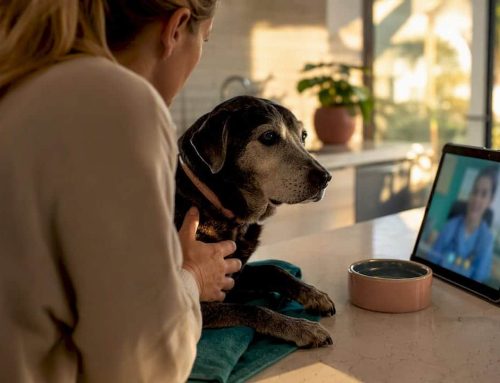
Managing a dog through progressive hind-limb weakness is exhausting when every appointment means a stressful car ride and a waiting room your dog dreads. Pet Acupuncture & Wellness brings the rehab consult, the acupuncture session, and the comfort-focused exam to your living room in South Tampa instead, so your dog can be assessed in the environment where they actually move, stumble, and rest.
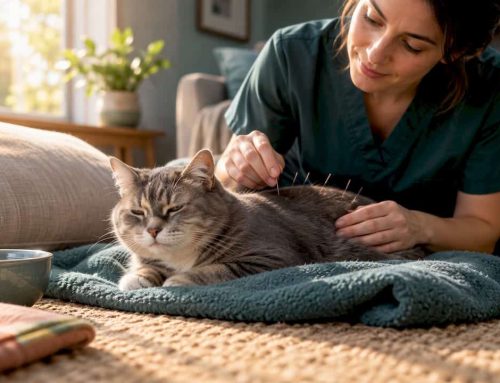
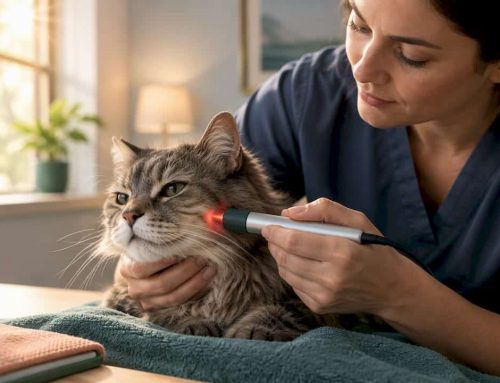
House-call visits for DM typically combine several services depending on where your dog is in the disease course: acupuncture for comfort and circulation support, laser therapy as a gentle adjunct alongside your structured exercise program, herbal therapy for owners exploring additional integrative options, and hands-on guidance for the same underwater treadmill and gait-training principles your clinic-based rehab team recommends, adapted for what’s realistic in your own home. These services are designed to work alongside, not replace, the clinic-based rehabilitation and neurology care your dog may already be receiving through a dedicated rehab provider.
A first visit generally includes a full mobility assessment, a walk-through of your home to flag fall risks and traction gaps, and a demonstration of two or three simple exercises you can start that same day. If acupuncture is part of the plan, we’ll also cover what that looks like for a dog with reduced mobility and how it fits alongside your existing rehab schedule. To get started, reach out to Pet Acupuncture & Wellness to book a first at-home assessment and put a coordinated, comfort-focused plan in place before the next stage of this disease catches you off guard.
Sources
- Daily Controlled Physiotherapy Increases Survival Time in Dogs with Suspected Degenerative Myelopathy – Kathmann – 2006 – Journal of Veterinary Internal Medicine – Wiley Online Library
- Diagnosis and management of dogs with degenerative myelopathy: A survey of neurologists and rehabilitation professionals
- Diagnosis and management of dogs with degenerative myelopathy: A survey of neurologists and rehabilitation professionals (PubMed entry)
- Degenerative myelopathy | Cornell University College of Veterinary Medicine
FAQ
What should I avoid doing if my dog has degenerative myelopathy?
Avoid letting your dog go without daily movement, since prolonged inactivity accelerates muscle wasting faster than the disease alone. Also avoid pushing exercise past visible fatigue, since overexertion can worsen decline rather than help it.
Is degenerative myelopathy considered a disability in dogs?
Yes, functionally. As DM progresses to nonambulatory paraparesis or paraplegia, dogs lose independent mobility and require assistive devices and daily nursing support comparable to a permanent mobility disability.
How can I help prevent degenerative myelopathy?
There’s no proven way to prevent DM in a dog carrying the SOD1 mutation, since it’s a genetic, progressive condition. Responsible breeders can reduce prevalence over generations through SOD1 genetic screening before breeding.
Does degenerative myelopathy go away after surgery?
No. Unlike compressive spinal conditions that surgery can correct, DM is a degenerative nerve disease with no surgical cure, which is why ruling out treatable compressive lesions via MRI matters so much during diagnosis.
How much does intensive rehabilitation actually extend survival?
In the Kathmann study, dogs receiving intensive physiotherapy survived a mean of 255 days compared with 55 days for dogs receiving none, though the study’s small sample size means individual results vary.
When should I bring in a mobile provider like Pet Acupuncture & Wellness?
Consider mobile, in-home support as soon as travel to appointments becomes stressful for your dog or when you want acupuncture and laser therapy woven into your existing rehab plan without adding extra car rides.