Most dogs start with weekly acupuncture sessions for several weeks, then taper to maintenance appointments every few weeks once improvement holds. That’s the short answer, and it applies to the majority of canine patients, from a senior Labrador with hip arthritis to a dachshund recovering from disc surgery. According to Washington State University’s Veterinary Teaching Hospital, a typical plan includes weekly sessions for several weeks with gradual spacing to every two to four weeks for maintenance, though some dogs respond after one or two treatments while others need a longer series.
What changes that baseline? Quite a bit, actually.
- Acute or post-surgical cases often need sessions two to three times per week in the first two to three weeks before stepping down to weekly.
- Chronic conditions like osteoarthritis usually respond well to once-weekly sessions from the start.
- Temperament and stress level matter: an anxious dog who tenses through every session may need shorter, gentler treatments spaced slightly further apart at first.
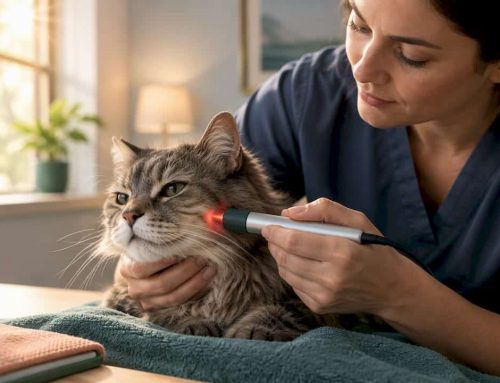
- Concurrent therapies (laser, rehabilitation, medication) can reduce the number of acupuncture sessions needed to reach the same outcome.
Pro Tip: Plan for a formal reassessment after four to six sessions. If your dog shows no meaningful improvement by that point, a good veterinary acupuncturist will adjust needle placement, stimulation technique, or consider switching to electroacupuncture rather than simply repeating the same protocol.
Key Takeaways
Most dogs benefit most from weekly acupuncture sessions for four to six weeks, followed by a formal reassessment and a taper to every two to four weeks for long-term maintenance.
| Point | Details |
|---|---|
| Initial frequency | Most dogs start with once-weekly sessions for four to six weeks to build a maximal response. |
| Reassessment checkpoint | Formally evaluate progress after four to six sessions; adjust technique or frequency based on response. |
| Maintenance cadence | Once improvement holds, taper to every two to four weeks or monthly for long-term management. |
| Post-op and acute cases | Neurologic or post-surgical dogs often need twice-weekly sessions in the first two to three weeks. |
| Pet Acupuncture & Wellness | Mobile in-home sessions in South Tampa support consistent weekly scheduling for senior, anxious, or mobility-limited dogs. |
Further reading and primary sources
- Acupuncture for chronic pain in dogs, Washington State University Veterinary Teaching Hospital
- Prospective, randomized, placebo-controlled clinical trial evaluating acupuncture in dogs with osteoarthritis (PMC7517673)
- Acupuncture plus physiotherapy for post-disc extrusion ambulation recovery (MDPI, 2025)
- Acupuncture for pets, Vetster
- Acupuncture for Dogs, Dog Cancer
- An overview of acupuncture dosage in veterinary medicine, AJTCVM
- How many acupuncture sessions does your pet need? Pet Acupuncture & Wellness
- Integrative veterinary care, Pet Acupuncture & Wellness
This article is general information, not a substitute for advice from a qualified doctor. Consult a qualified healthcare professional about your own circumstances before acting on anything here.
Table of Contents
- What veterinary acupuncture actually is (and how it differs from human acupuncture)
- Conditions where acupuncture is commonly used for dogs
- How acupuncture helps your dog: mechanisms and what the evidence shows
- How many acupuncture treatments does your dog need? Detailed frequency guidance
- Sample treatment plans for common conditions
- What happens during a session and what side effects to expect
- How to choose the right veterinary acupuncturist for your dog
- What acupuncture sessions cost and how to plan your budget
- Why mobile acupuncture can change what’s possible for your dog
- Pet Acupuncture & Wellness brings expert care to your dog’s home
- Sources
- FAQ
What veterinary acupuncture actually is (and how it differs from human acupuncture)
Veterinary acupuncture involves inserting fine, sterile needles into specific anatomical points on your dog’s body to stimulate nerves, muscles, and connective tissue. The goal is to modulate pain signals, support circulation, and encourage the body’s own healing responses. It is sometimes called dry needling in a clinical context, and when mild electrical current is added through the needles, it becomes electroacupuncture (EA).
The most important distinction from human acupuncture: only a licensed veterinarian may legally perform acupuncture on animals in the United States. Many certified veterinary acupuncturists hold additional training through organizations like the International Veterinary Acupuncture Society (IVAS) or the American Holistic Veterinary Medical Association (AHVMA), and some board-certified rehabilitation specialists (DACVSMR) incorporate acupuncture into their practice.
A typical session involves:
- A brief intake review of your dog’s current symptoms, gait, and response since the last visit
- Physical examination and selection of acupuncture points based on the condition being treated
- Placement of 5–30 fine needles, depending on the protocol
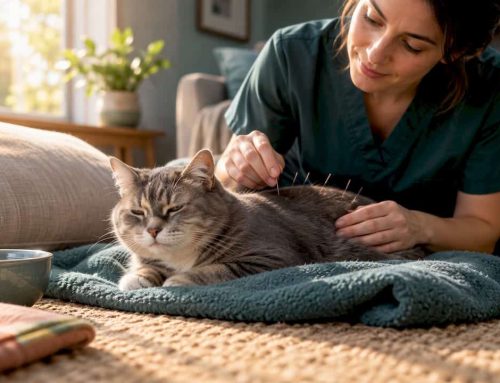
- Needles left in place for 15–45 minutes while your dog rests
- Optional electroacupuncture, where gentle electrical pulses are delivered through paired needles for enhanced stimulation
Sessions are generally well-tolerated. Many dogs relax deeply, and some fall asleep during treatment. The number of needles and the duration vary by condition severity, your dog’s size, and the practitioner’s clinical judgment.
Conditions where acupuncture is commonly used for dogs
Veterinary acupuncture is not a one-size-fits-all therapy, and the condition being treated directly shapes how often your dog will need sessions. Here are the most common indications:
- Osteoarthritis and hip dysplasia: The most frequently treated condition. Acupuncture helps manage chronic joint pain and stiffness, often alongside anti-inflammatory medications or joint supplements.
- Intervertebral disc disease (IVDD) and post-surgical rehab: Dogs recovering from disc extrusion or spinal surgery often benefit from acupuncture integrated into a physiotherapy plan, with more frequent early sessions.
- Acute musculoskeletal strains and sprains: Short, intensive treatment windows can speed recovery from soft tissue injuries.
- Chronic pain syndromes: Dogs with conditions like degenerative joint disease or spondylosis often use acupuncture as a long-term management tool.
- Nausea and appetite support: Particularly useful for dogs undergoing chemotherapy or managing gastrointestinal conditions.
- Cancer palliative care: Acupuncture can support comfort and quality of life alongside oncology treatment, though it does not treat the cancer itself.
- Anxiety and behavioral support: Some dogs with generalized anxiety or noise phobia respond to acupuncture as part of a broader behavioral and medical plan. For more on this, the acupuncture for dogs with anxiety guidance from Pet Acupuncture & Wellness covers what the evidence actually supports.
Acupuncture works best as part of a multimodal plan. For a dog with severe arthritis, combining acupuncture with rehabilitation therapy, appropriate pain medication, and weight management tends to produce better outcomes than any single approach alone. Post-surgical neurologic cases and acute injuries are the conditions that most consistently call for higher early-session frequency.
How acupuncture helps your dog: mechanisms and what the evidence shows
The biological effects of acupuncture are real, even if the full picture is still being studied. Needle insertion at specific points triggers local tissue responses and activates nerve pathways that influence pain processing at the spinal cord and brain level. The main mechanisms include:
- Endorphin and opioid peptide release: Stimulation of acupuncture points prompts the release of endogenous opioids, which reduce pain perception.
- Local blood flow changes: Needling increases circulation to the treated area, which can support tissue healing.
- Neuromodulation: Acupuncture influences the autonomic nervous system, which partly explains its effects on nausea, anxiety, and systemic inflammation.
- Segmental analgesia: Points selected along specific spinal segments can reduce pain signals traveling from an affected limb or joint.
The clinical evidence in dogs is promising but still developing. A prospective, randomized, placebo-controlled crossover trial in client-owned dogs with naturally occurring osteoarthritis used once-weekly treatments for four weeks and found that owners perceived meaningful improvement one week after the final treatment session. Objective measures were more variable, and the authors noted that the timing of outcome measurement significantly affects results. That nuance matters: owner-reported quality of life often improves before gait analysis scores change.
For post-surgical spinal cases, the evidence is more striking. A 2025 MDPI study found that dogs receiving acupuncture integrated into physiotherapy after acute disc extrusion had a higher probability of regaining ambulation, with a mean of approximately 4.5 acupuncture sessions until ambulation in the treatment group. That figure gives you a concrete target to discuss with your vet when planning a post-op protocol.
Clinical decisions in veterinary acupuncture are typically based on cumulative response across a series of treatments rather than single-session proof. Think of it the way you’d think about physical therapy: one appointment rarely tells the whole story.
How many acupuncture treatments does your dog need? Detailed frequency guidance
The standard protocol follows a two-phase pattern: an initial intensive phase, followed by a maintenance phase once improvement is established.
Phase 1: Initial/intensive phase
Most animals need acupuncture at least once weekly for four to six weeks as a minimum to build a maximal positive response. For very acute or severe cases, some clinics start at two to three sessions per week for the first two to three weeks before stepping down to weekly. Acute gastrointestinal or neurologic emergencies can even warrant daily treatment for a short window, though that is the exception rather than the rule.
Phase 2: Maintenance phase
Once your dog’s condition stabilizes and improvement holds between sessions, frequency tapers. Most dogs land on a maintenance schedule of every two to four weeks. Some well-managed chronic patients do well with monthly sessions; others need every-two-week support to maintain their gains.
Factors that change the plan:
- Diagnosis: Neurologic post-op cases need more frequent early sessions than a dog with mild chronic arthritis.
- Severity: A dog who can barely walk needs a different starting cadence than one who is just a little stiff in the mornings.
- Response speed: Some dogs show noticeable improvement after one or two sessions. Others need the full four-to-six-session series before any change is visible.
- Concurrent therapies: A dog also receiving laser therapy and rehabilitation may need fewer acupuncture sessions to reach the same outcome.
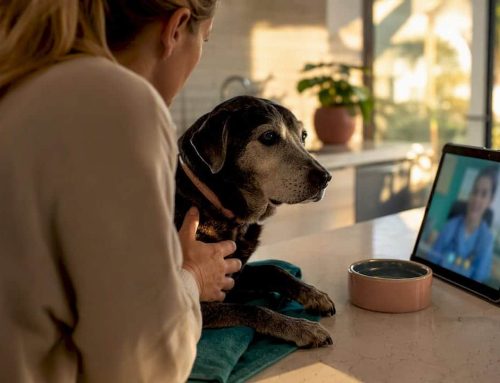
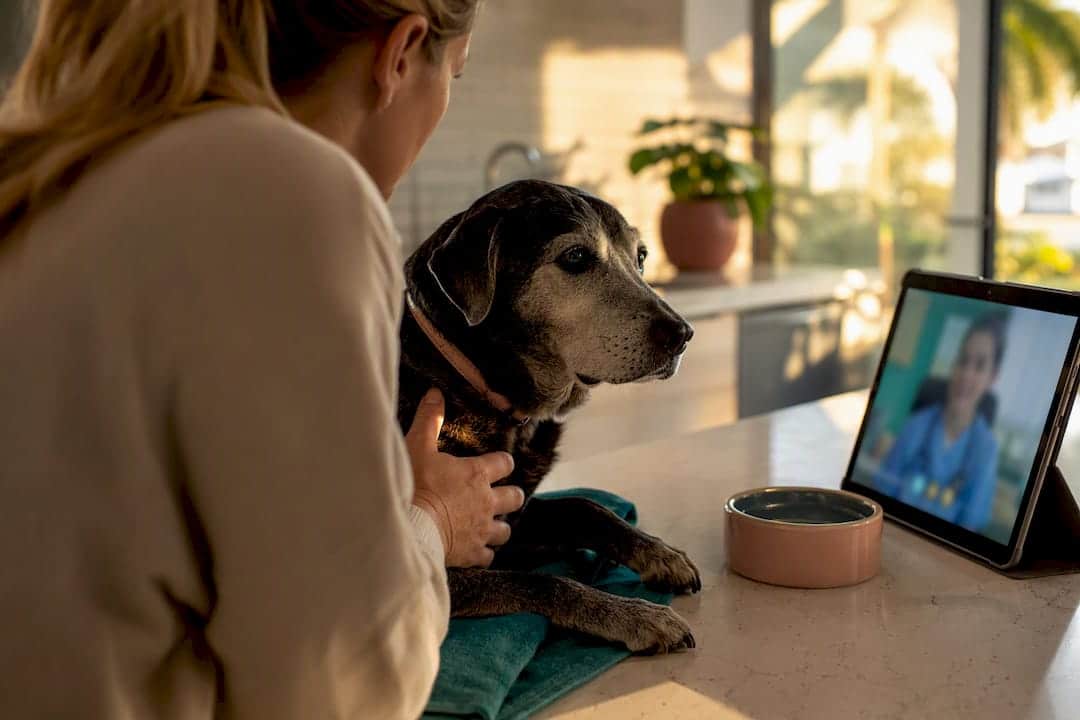
- Temperament: An anxious dog who struggles to relax during treatment may benefit from shorter sessions or in-home visits that remove the stress of travel.
- Owner logistics and budget: Twice-weekly sessions are clinically ideal for some cases but not always feasible. A good practitioner will help you find the most effective schedule within your real-world constraints.
Typical protocols by condition type:
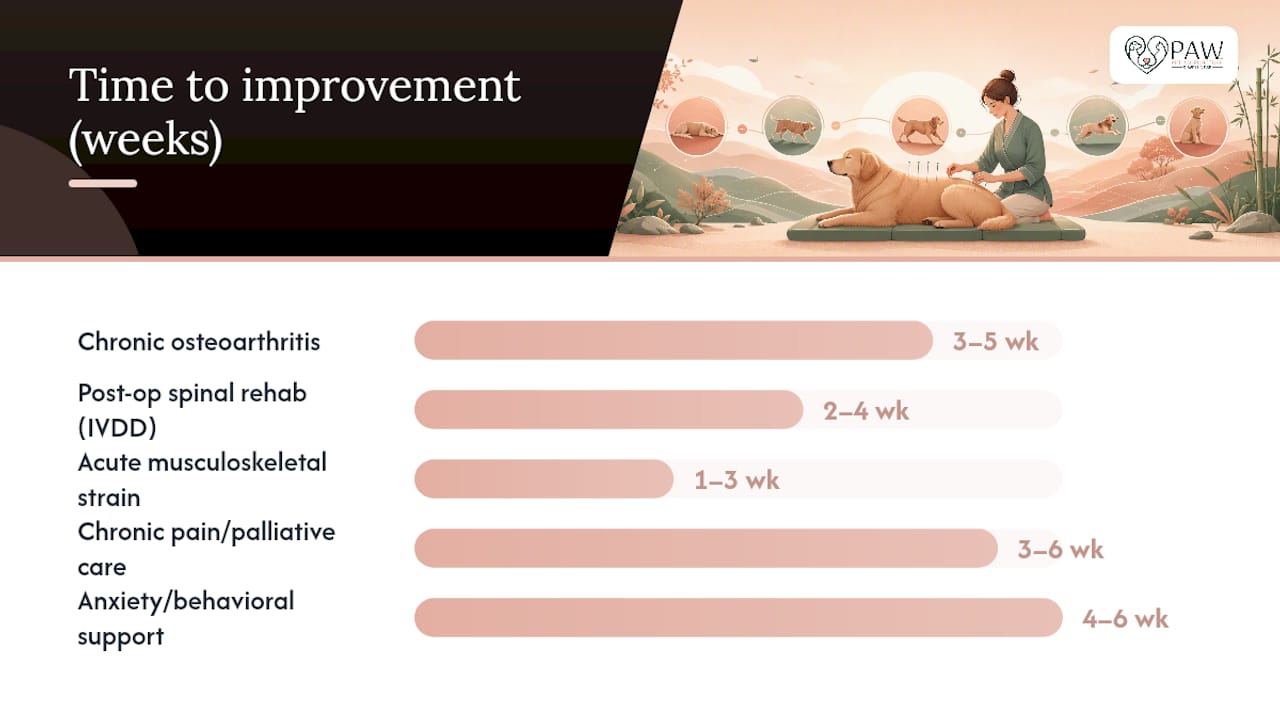
| Condition | Starting frequency | Initial session count | Timeline to first improvement |
|---|---|---|---|
| Chronic osteoarthritis | Once weekly | 4–6 sessions | 3–5 weeks |
| Post-op spinal rehab (IVDD) | Twice weekly | 4–6 sessions | 2–4 weeks |
| Acute musculoskeletal strain | Once to twice weekly | 3–5 sessions | 1–3 weeks |
| Chronic pain / palliative care | Once weekly | 4–8 sessions | 3–6 weeks |
| Anxiety / behavioral support | Once weekly | 4–6 sessions | 4–6 weeks |
Pro Tip: If your dog shows no meaningful improvement after four to six sessions, ask your vet about adjusting needle depth, stimulation technique, or adding electroacupuncture. Per the AJTCVM dosage overview, experienced practitioners treat acupuncture like a pharmaceutical dose: if the current parameters aren’t producing a response, they change the parameters rather than simply repeating the same protocol.
Sample treatment plans for common conditions
These examples are meant to give you a realistic starting point for conversations with your veterinary acupuncturist, not to replace their clinical judgment.
Senior dog with hip osteoarthritis
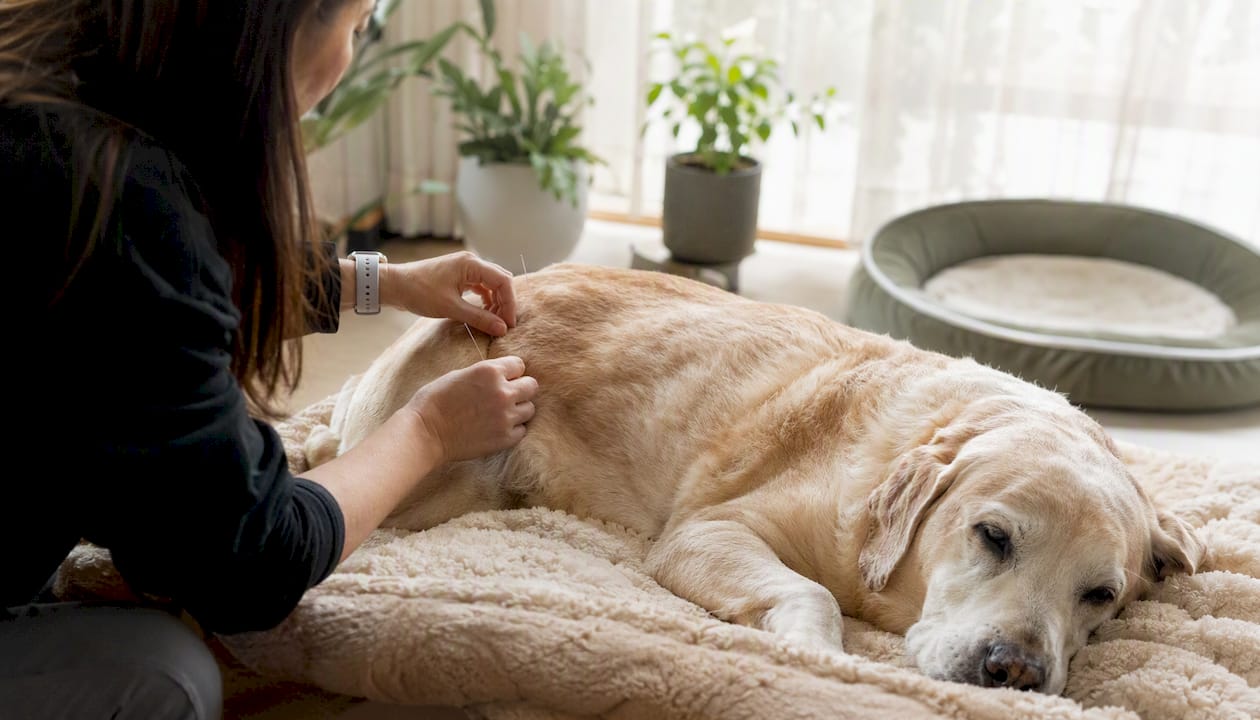
A ten-year-old Labrador with bilateral hip arthritis and mild muscle wasting would typically start with once-weekly sessions. Needles are placed at local hip and lumbar points alongside distal points that support circulation and pain modulation. Sessions run 20–30 minutes with needles in place. Electroacupuncture at low frequency (under 15 Hz) may be added at session two or three if the initial response is modest. After four to six sessions, the owner and vet assess mobility, sleep quality, and willingness to exercise. If improvement holds, sessions taper to every two to three weeks, then monthly for long-term maintenance.
Post-operative dachshund recovering from disc surgery
A paraparetic dachshund after thoracolumbar disc extrusion surgery would typically begin acupuncture within the first week post-op, integrated with physiotherapy. The starting frequency is twice weekly for two to three weeks, then once weekly as ambulation improves. Research supports this approach: dogs in the acupuncture-plus-physiotherapy group reached ambulation in a mean of approximately 4.5 sessions. Electroacupuncture at low frequencies is commonly used in these cases for its analgesic and neuromodulatory effects.
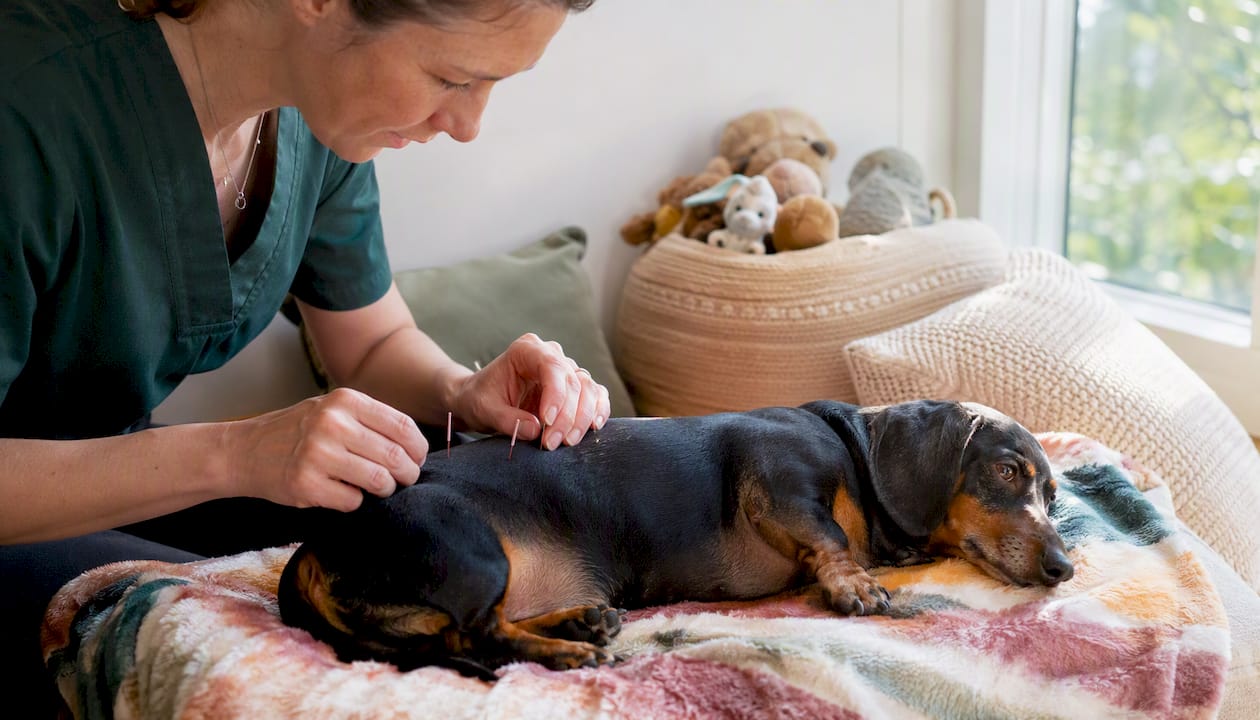
Anxious dog needing behavioral support
An anxious dog with generalized stress responses would start with once-weekly sessions in a calm, low-stimulation environment. In-home visits are particularly valuable here, since the dog never has to leave its safe space. Needles are placed at calming points, and sessions are kept shorter (15–20 minutes) until the dog acclimates. Reassessment at four to six sessions determines whether frequency can taper or whether additional support (behavioral modification, herbal therapy) is needed.
Numbered steps for tracking your dog’s progress between sessions:
- Note your dog’s willingness to climb stairs, jump, or walk their usual distance each day.
- Track sleep quality and nighttime restlessness, which often improve before daytime mobility does.
- Observe appetite and energy level in the 24–48 hours after each session.
- Keep a simple log (even a phone note) to share with your vet at the next visit.
- Watch for any post-session fatigue or mild soreness, which is normal and usually resolves within 24 hours.
What happens during a session and what side effects to expect
Knowing what to expect makes the whole process less stressful for both of you.
Step-by-step session overview:
- Intake and history review: Your vet reviews changes since the last visit, current medications, and any new symptoms.
- Physical examination: Gait, muscle tone, and point sensitivity are assessed to guide point selection for that session.
- Needle placement: Between 5 and 30 fine, sterile needles are placed at selected points. Most dogs tolerate this with minimal reaction; some show a brief twitch at insertion.
- Needle-in time: Needles remain in place for 15–45 minutes, depending on the protocol and your dog’s comfort level.
- Electroacupuncture (if used): Gentle electrical pulses are delivered through paired needles. Low-frequency settings (under 15 Hz) are common for pain management and are generally well-tolerated in awake patients.
- Post-session monitoring: Your vet observes your dog’s response before you leave and discusses what to watch for at home.
Common side effects (minor and temporary):
- Transient fatigue or sleepiness for 12–24 hours after a session
- Mild soreness at needle sites
- Occasional small bruise at a needle point
- Temporary increase in symptoms in the first session or two (a known phenomenon sometimes called a “healing response”)
Signs that warrant a call to your vet:
- Swelling, heat, or discharge at a needle site
- Significant worsening of symptoms lasting more than 48 hours
- Unusual behavior changes or neurologic signs after a session
How to prepare your dog at home:
- Feed a light meal two to three hours before the appointment rather than right before.
- Take a short, calm walk beforehand to help your dog settle.
- Bring a favorite blanket or mat so your dog has something familiar to lie on.
- Skip vigorous exercise for 24 hours after each session.
Pro Tip: For anxious or mobility-limited dogs, in-home sessions remove the single biggest stressor: the car ride and clinic environment. A dog who arrives calm and relaxed tends to tolerate needles better, hold still longer, and show a more consistent treatment response. Pet Acupuncture & Wellness offers mobile visits throughout South Tampa precisely for this reason.
How to choose the right veterinary acupuncturist for your dog
Not every practitioner offering “animal acupuncture” has the same training. Here’s what to look for.
Credentials that matter:
- A Doctor of Veterinary Medicine (DVM) degree is non-negotiable. In the United States, only licensed veterinarians may legally perform acupuncture on animals.
- Additional certification through IVAS (International Veterinary Acupuncture Society) or AHVMA-affiliated programs indicates formal post-graduate training in veterinary acupuncture.
- Board certification in canine rehabilitation (DACVSMR or CCRP) combined with acupuncture training is a strong signal for post-op and musculoskeletal cases.
Experience signals worth asking about:
- How many dogs with your dog’s specific condition have they treated?
- Do they have a rehabilitation background, or do they work alongside a rehab therapist?
- Are they willing to communicate with your primary vet and share treatment records?
- Can they explain their point selection rationale in plain language?
Red flags:
- No veterinary license or vague answers about credentials
- Promises to “cure” complex diseases like cancer or severe neurologic injury through acupuncture alone
- No formal intake assessment or individualized protocol
- Unwillingness to coordinate with your primary care vet
What to expect at the first visit:
A thorough first appointment includes a full history, physical and neurologic examination, and a discussion of realistic goals and timelines. The vet should explain why they’re choosing specific points and what they expect to see after the initial series. If the first visit feels rushed or generic, that’s worth noting.
Pro Tip: Ask directly: “What will you change if my dog doesn’t respond after four to six sessions?” A confident, experienced practitioner will have a clear answer. Vague reassurance that “it just takes time” is not a protocol.
What acupuncture sessions cost and how to plan your budget
Veterinary acupuncture is a specialized service, and pricing reflects that. In the United States, a single canine acupuncture session typically runs between $75 and $200, depending on your location, the practitioner’s credentials, session length, and whether electroacupuncture is included. Mobile or in-home visits often carry a travel fee on top of the session cost, though many owners find the convenience well worth it.
Budgeting by phase:
- An initial series of six weekly sessions at $100–$150 per session puts the first phase at roughly $600–$900.
- Maintenance at every two to four weeks runs approximately $100–$300 per month, depending on session frequency.
- Post-op or acute cases starting at twice-weekly sessions will front-load costs in the first month.
Practical considerations:
- Book an initial block of four to six sessions upfront if your vet’s schedule allows. Consistency in the early phase matters more than any other variable.
- Ask about cancellation policies before you start, since frequent rescheduling can disrupt the treatment rhythm.
- Some pet insurance plans (Trupanion, Healthy Paws, and others) cover acupuncture as part of alternative therapy riders. Check your policy before your first appointment.
- Employer pet benefit programs are an emerging option worth exploring if your workplace offers them.
Cost callout: A full initial series plus three months of biweekly maintenance typically totals $1,200–$2,000 for most dogs, though this varies significantly by region and case complexity.
Pro Tip: If cost is a constraint, discuss it openly with your vet. Some practitioners can prioritize the most critical sessions and space them slightly further apart without sacrificing too much therapeutic momentum, especially once your dog has shown a clear response.
Why mobile acupuncture can change what’s possible for your dog
From a clinical standpoint, the environment where acupuncture happens is not a minor detail. It directly affects how well your dog tolerates the needles, how deeply they relax during the session, and ultimately how consistently they respond across a series of treatments.
Dogs who are stressed in a clinic setting often arrive with elevated cortisol levels, tense muscles, and heightened pain sensitivity. That physiological state works against the very mechanisms acupuncture is trying to activate. When the same treatment happens in your dog’s own home, on their own bed, with familiar smells and no car ride, the baseline is completely different. Anxious dogs who would fidget through a clinic session often settle within minutes at home, allowing the needles to stay in place longer and the treatment to work more effectively.
For senior dogs with significant mobility limitations, the benefit is even more concrete. Lifting a painful arthritic dog in and out of a car for weekly appointments is its own source of discomfort and risk. Removing that barrier makes it far more realistic to maintain the weekly cadence that the initial phase actually requires.
At Pet Acupuncture & Wellness, the mobile model also allows the treating vet to observe your dog in their actual living environment: how they navigate stairs, where they rest, how they move across different floor surfaces. That context informs frequency decisions in ways a clinic visit simply cannot replicate. A dog who looks reasonably comfortable on the exam table but struggles on hardwood floors at home may need a different maintenance schedule than their clinic presentation suggests.
Pet Acupuncture & Wellness brings expert care to your dog’s home
For South Tampa dog owners managing a senior, post-surgical, or anxious pet, consistent acupuncture frequency is the single biggest predictor of a good outcome, and the biggest barrier to consistency is usually the logistics of getting there.
Pet Acupuncture & Wellness offers mobile in-home acupuncture, electroacupuncture, rehabilitation coordination, and integrative care for dogs who need expert treatment without the stress of a clinic visit. Every plan is built around your dog’s specific condition, response, and home environment, with the flexibility to adjust frequency as improvement progresses. Whether your dog is starting a post-op recovery series or needs long-term monthly maintenance for chronic arthritis, the care comes to you.
To book an in-home acupuncture appointment or learn more about South Tampa dog acupuncture and pricing, visit Pet Acupuncture & Wellness online or reach out directly to schedule your dog’s first session.
Sources
- Acupuncture for chronic pain in dogs | Veterinary Teaching Hospital | Washington State University
- Prospective, randomized, placebo‑controlled clinical trial evaluating acupuncture in dogs with osteoarthritis (PMC7517673)
- Study showing acupuncture plus physiotherapy improved ambulation recovery after disc extrusion (MDPI, 2025)
- Acupuncture for pets | Vetster
- Acupuncture for Dogs | Dog Cancer
- An overview of acupuncture dosage in veterinary medicine | AJTCVM
FAQ
How often should my dog get acupuncture?
Most dogs start with once-weekly sessions for four to six weeks, then taper to every two to four weeks for maintenance once improvement is established. Acute or post-surgical cases may begin at twice-weekly sessions for the first two to three weeks.
How long does it take for acupuncture to work on my dog?
Some dogs show noticeable improvement after one or two sessions, but building a maximal response typically requires at least four to six weekly treatments. Owner-perceived quality-of-life improvements often appear before objective gait changes do.
What are the possible side effects of acupuncture on dogs?
Side effects are generally mild and temporary, including fatigue or sleepiness for 12–24 hours, mild soreness at needle sites, and occasional small bruising. Significant worsening of symptoms or any swelling or discharge at a needle site warrants a call to your vet.
Is dog acupuncture worth it?
For conditions like osteoarthritis, post-surgical spinal rehab, and chronic pain, the clinical evidence supports acupuncture as a meaningful addition to a multimodal treatment plan. A randomized trial in dogs with osteoarthritis found owner-perceived improvement after a four-week weekly series, and post-op spinal cases show faster ambulation recovery when acupuncture is integrated with physiotherapy.