Yunnan Baiyao can be appropriate for your dog in specific bleeding situations, but only when prescribed and monitored by a veterinarian. Randomized veterinary trials show modest hemostatic benefits in procedural settings, yet quality-control concerns and undisclosed ingredients make unsupervised use genuinely risky. Here is what you need to know before giving it to your dog:
- Common uses: perioperative bleeding control (nasal biopsy, spay/neuter), acute traumatic hemorrhage as an adjunct, and bleeding tumors such as hemangiosarcoma
- Core caveat: product quality varies significantly between batches and suppliers; veterinary supervision is not optional
- If your dog is actively bleeding now: call your veterinarian or an emergency clinic immediately. Do not wait to read the rest of this article.
Key Takeaways
Yunnan Baiyao can reduce perioperative bleeding in dogs when used under veterinary supervision, but quality-control concerns and small trial sizes mean cautious, monitored use is the only responsible approach.
| Point | Details |
|---|---|
| Evidence is real but limited | Randomized trials show shorter bleeding time (300 vs. 367 sec) and reduced blood loss in spay cases, but sample sizes are small. |
| Vet supervision is required | Dosing, timing, and monitoring must be vet-directed; human package insert dosing does not apply to dogs. |
| Quality varies by source | Batch contamination with heavy metals or undisclosed drugs is documented; buy through a veterinarian or licensed pharmacy. |
| Know when to stop | Stop and call your vet if you see liver enzyme changes, signs of thrombosis, or persistent GI upset. |
| Pet Acupuncture & Wellness | Offers in-home integrative consults in South Tampa for safe, monitored Yunnan Baiyao use alongside conventional care. |
Table of Contents
- What is Yunnan Baiyao and how is it sold in the U.S.?
- How does Yunnan Baiyao work in dogs?
- What do clinical studies in dogs actually show?
- When do veterinarians use Yunnan Baiyao in dogs?
- How do vets give Yunnan Baiyao, and what does dosing look like?
- What are the side effects and contraindications?
- Drug interactions, contamination risks, and quality-control concerns
- Where should you buy Yunnan Baiyao in the U.S.?
- What should you do if your dog is actively bleeding?
- How should you store Yunnan Baiyao at home?
- How do veterinarians monitor dogs on Yunnan Baiyao?
- When can an in-home integrative veterinarian help?
- What we think about Yunnan Baiyao and evidence-based integrative care
- Personalized herbal care, right at your dog’s door
- Sources
- FAQ
What is Yunnan Baiyao and how is it sold in the U.S.?
Yunnan Baiyao is a traditional Chinese herbal formula with roots in 20th-century Chinese medicine, where it was used to control bleeding in humans. In veterinary practice, it falls under the broader umbrella of Traditional Chinese Veterinary Medicine (TCVM), and U.S. dog owners encounter it in several forms.
PetMD notes that the product is not FDA-approved for use in dogs, meaning every veterinary application is off-label. That does not make it illegal to use, but it does mean your vet is working without the safety net of a formal approval process.
Forms you will find in the U.S.:
- Oral capsules: the most common form used in veterinary studies and clinical practice
- Powder: can be applied topically to wounds or mixed into food
- Small red “emergency” pill (Bao Xian Zi): a higher-concentration dose included in some packaging, intended for severe hemorrhage only
- Topical powder: applied directly to bleeding wounds
The small red pill deserves special attention. It is not a bonus vitamin. It represents a concentrated emergency dose and should only be used when a veterinarian has specifically instructed you to do so. Giving it casually or preemptively at home carries real risk.
Yunnan Baiyao is sold through veterinarian offices, compounding pharmacies, and online retailers. The source matters enormously, and the buying guidance section below explains why.
How does Yunnan Baiyao work in dogs?
The honest answer is that the exact mechanism is not fully understood, partly because the manufacturer does not disclose the complete ingredient list. That opacity is not a minor footnote; it shapes everything from dosing confidence to drug interaction risk.
Proposed mechanisms include platelet activation, reduced fibrinolysis (the process that breaks down clots), and effects on clot kinetics observed in some laboratory settings. Some researchers have also suggested anti-inflammatory and antiangiogenic properties, though these remain less studied in dogs.
What the clinical data actually shows is more nuanced. A crossover randomized study in healthy dogs found no statistically significant changes in buccal mucosal bleeding time (BMBT), prothrombin time (PT), activated partial thromboplastin time (aPTT), or most thromboelastography (TEG) parameters, though some percent-change trends in TEG values were observed. The formula appears to have a plausible hemostatic effect in certain procedural contexts, but the mechanism driving that effect remains partially speculative.
What do clinical studies in dogs actually show?
The evidence base is real but modest. Several randomized, blinded trials have been conducted specifically in dogs, which puts Yunnan Baiyao ahead of many herbal products in terms of veterinary scrutiny. The results are encouraging in specific contexts and inconclusive in others.
Key trial findings:
- In a randomized, blinded trial of 19 dogs undergoing nasal biopsy, treated dogs had a shorter time to stop bleeding (around 300 seconds vs. 367 seconds in controls). Blood loss as a percentage of body weight trended lower but did not reach statistical significance. Standard coagulation tests showed no consistent changes.
- A randomized, blinded study in 42 dogs undergoing spay/neuter found reduced weight-normalized blood loss overall, with a statistically significant reduction in spay cases after outlier removal (approximately 4-fold decreased blood loss, p=0.026). No adverse effects were observed in the trial.
- Peer-reviewed laboratory work in beagle dogs reported limited or inconsistent coagulation changes across tested parameters, while noting overall tolerability at studied doses.
- A retrospective study of dogs with right atrial masses and pericardial effusion found Yunnan Baiyao appeared relatively safe in that cohort but did not improve survival or reduce recurrence compared to pericardiocentesis alone.
What the evidence does not yet tell us:
- Whether benefits hold across different product batches and formulations
- Long-term safety in dogs on concurrent medications
- Whether hemostatic lab trends translate to meaningful clinical outcomes in complex cases
Independent veterinary evidence reviews note that the literature remains small, inconsistent across studies and products, and does not provide reliable proof of broad clinical benefit. Cautious, targeted use is the appropriate takeaway.
When do veterinarians use Yunnan Baiyao in dogs?
Vets tend to reach for Yunnan Baiyao in specific, well-defined situations rather than as a general wellness supplement. Understanding those situations helps you have a more informed conversation with your own veterinarian.
Situations where vets commonly consider it:
- Perioperative bleeding prophylaxis: selected procedures such as nasal biopsy, rhinoscopy, or spay/neuter in dogs with anticipated higher bleeding risk
- Acute traumatic hemorrhage: as an adjunctive therapy alongside emergency veterinary care, never as a standalone treatment
- Bleeding tumors: hemangiosarcoma or other tumors prone to hemorrhage, where the goal is reducing acute bleeding episodes rather than shrinking the tumor
- Pericardial effusion: as an adjunct in dogs with right atrial masses, though evidence of survival benefit is limited
Where it is unlikely to help:
Yunnan Baiyao is not a proven tumor shrinker. It does not replace surgery, chemotherapy, or emergency transfusion. For non-bleeding conditions, there is no meaningful evidence supporting its use.
How do vets give Yunnan Baiyao, and what does dosing look like?
Dosing should always be determined by your veterinarian based on your dog’s weight, health status, and the specific clinical situation. The following reflects what has been used in veterinary studies and clinical practice, not a prescription you should apply at home without guidance.
Common approaches:
- Perioperative single dose: the spay/neuter trial used a single high dose of 100 mg/kg given orally 2–4 hours before surgery. This is one studied protocol, not a universal standard.
- Repeated dosing regimens: some clinical protocols use lower doses given multiple times daily, particularly for ongoing bleeding management in tumor cases. Your vet will determine the schedule.
- Topical powder: applied directly to wounds or surgical sites for local hemostasis.
- The red emergency pill: reserved for severe, acute hemorrhage under direct veterinary instruction only.
Always record the dose, timing, and any concurrent medications your dog is taking. This information matters if your dog has an adverse reaction.
Pro Tip: If your dog refuses capsules, your vet may suggest opening them and mixing the powder into a small amount of wet food or a pill pocket. Never crush and mix without checking with your vet first, since some formulations may behave differently when the capsule is opened.

For post-spay recovery support, natural pain relief after spaying is a related topic worth discussing with your vet alongside any hemostatic protocol.
What are the side effects and contraindications?
Most dogs in published trials tolerated Yunnan Baiyao without reported adverse effects at studied doses. That is reassuring, but it does not mean risk-free, particularly outside controlled trial conditions.
Reported and potential side effects:
- Mild GI signs: nausea, vomiting, loose stools, or appetite changes
- Occasional elevation in liver enzymes with repeated use
- Theoretical thromboembolic risk if the procoagulant effect is excessive
- Allergic reactions (rare, but possible given undisclosed ingredients)
When not to use it:
- Dogs currently on anticoagulant therapy (warfarin, heparin, clopidogrel): the interaction risk is real and unpredictable
- Dogs with clotting disorders where a procoagulant effect could cause harm
- Pregnant dogs: avoid unless your veterinarian specifically advises otherwise
- Dogs with known liver disease: use with caution and close monitoring
Stop and call your vet if you notice: sudden weakness or collapse, neurologic changes, pale or white gums, unexplained jaundice, or persistent GI upset after starting the supplement.
Drug interactions, contamination risks, and quality-control concerns
This is where Yunnan Baiyao’s biggest real-world risks live, and it is the section most online sources gloss over.
Clinically important interactions:
- Anticoagulants and antiplatelet drugs (including NSAIDs like carprofen or meloxicam): combining these with Yunnan Baiyao creates unpredictable clotting effects. Discuss timing and concurrent use with your vet before starting.
- Chemotherapy agents: interactions are largely unknown. If your dog is in an oncology protocol, coordinate with the oncologist before adding any herbal supplement.
Quality-control and contamination risks:
Clinicians Brief warns that manufacturers do not disclose full ingredient lists and batch-to-batch composition can vary significantly. Contamination with heavy metals, mycotoxins, or undisclosed pharmaceutical compounds has been documented in herbal product surveys. This is not a hypothetical concern; it is a documented pattern in proprietary Chinese herbal blends.
The practical implication: you cannot fully assess herb-drug interactions when you do not know everything that is in the product. That is a real limitation, not a reason to panic, but it does mean sourcing matters and monitoring is not optional.
Practical steps to reduce risk:
- Source through your veterinarian or a reputable veterinary compounding pharmacy when possible
- Ask for a certificate of analysis or lot-specific documentation if available
- Discuss baseline liver enzyme testing and periodic monitoring with your vet if your dog will use Yunnan Baiyao repeatedly
- Review all herbal interactions with medications with your vet before starting
Where should you buy Yunnan Baiyao in the U.S.?
Not all sources are equal, and the quality gap between a veterinarian-sourced product and an unknown online seller can be significant.
Buying guidance:
- Prefer veterinarian-sourced product or a licensed veterinary compounding pharmacy. These channels offer the best traceability and are most likely to carry product from reputable manufacturers.
- Check packaging carefully: look for a lot number, country of manufacture, expiration date, and a supplier contact. Packaging that lacks these basics is a red flag.
- Avoid the lowest-cost online options with no product traceability, no contact information, and no documentation of manufacturing standards.
- Do not use human package insert dosing for your dog. Human and canine dosing protocols differ, and the insert was not written for veterinary use.
- Confirm dosing with your vet regardless of what the packaging says.
Pro Tip: Keep your purchase receipt and the lot number from every bottle you buy. If your dog has an adverse reaction or a product recall is issued, that information helps your vet file an accurate adverse event report and trace the specific batch.
For a broader look at herbal supplements for dogs and how to evaluate them, your vet can walk you through sourcing and safety considerations specific to your dog’s health history.
What should you do if your dog is actively bleeding?
Yunnan Baiyao is not an emergency room. If your dog is bleeding significantly right now, these are your priorities:
- Apply gentle, firm pressure to any external wound with a clean cloth. Keep your dog calm and warm.
- Do not give oral medications unless your veterinarian has specifically instructed you to do so in this situation.
- Do not use the red emergency pill at home unless your vet has given you explicit, prior instructions on exactly when and how to use it.
- Transport to an emergency clinic immediately if you see: collapse or extreme weakness, difficulty breathing, pale or white gums, rapid or weak heartbeat, or bleeding you cannot control with pressure.
Active internal bleeding, suspected hemoabdomen, or pericardial effusion are emergencies. Call your vet or the nearest emergency animal hospital first.
How should you store Yunnan Baiyao at home?
Proper storage protects both the product’s integrity and your household.
- Store in the original packaging in a cool, dry place away from direct light and heat. Do not store in a bathroom cabinet where humidity fluctuates.
- Respect expiration dates. Herbal products degrade, and an expired product may have altered potency or increased contamination risk.
- Keep out of reach of children and other pets. The concentrated red emergency pill in particular could cause harm if accidentally ingested by a child or a small pet.
- Record the lot number and purchase date in a notebook or phone note. This takes thirty seconds and could matter significantly if a recall is issued.
How do veterinarians monitor dogs on Yunnan Baiyao?
Monitoring is not just a formality. It is how your vet catches problems before they become serious.
What monitoring typically includes:
- Physical exam at follow-up visits: checking for signs of thrombosis, unexpected bleeding, or GI distress
- CBC and liver enzyme panel if your dog is using Yunnan Baiyao repeatedly or long-term
- Clotting panel or TEG in select patients, particularly those with underlying bleeding disorders or on concurrent medications
Triggers to stop therapy:
- Adverse changes in liver enzymes or clotting parameters
- New clinical signs consistent with thrombosis: sudden lameness, neurologic changes, or respiratory distress
- Lack of clinical benefit in the context where it was prescribed
Communication checklist for your vet visit:
- Bring the product bottle with its lot number
- List all other medications and supplements your dog takes
- Report any GI changes, energy shifts, or unusual symptoms since starting
- Ask how long the current course is planned and what the stopping criteria are
When can an in-home integrative veterinarian help?
Some dogs genuinely cannot tolerate a clinic visit. Senior dogs with mobility challenges, anxious dogs who shut down in waiting rooms, and post-surgical patients who need monitoring without the stress of transport are all situations where an in-home integrative vet adds real value.
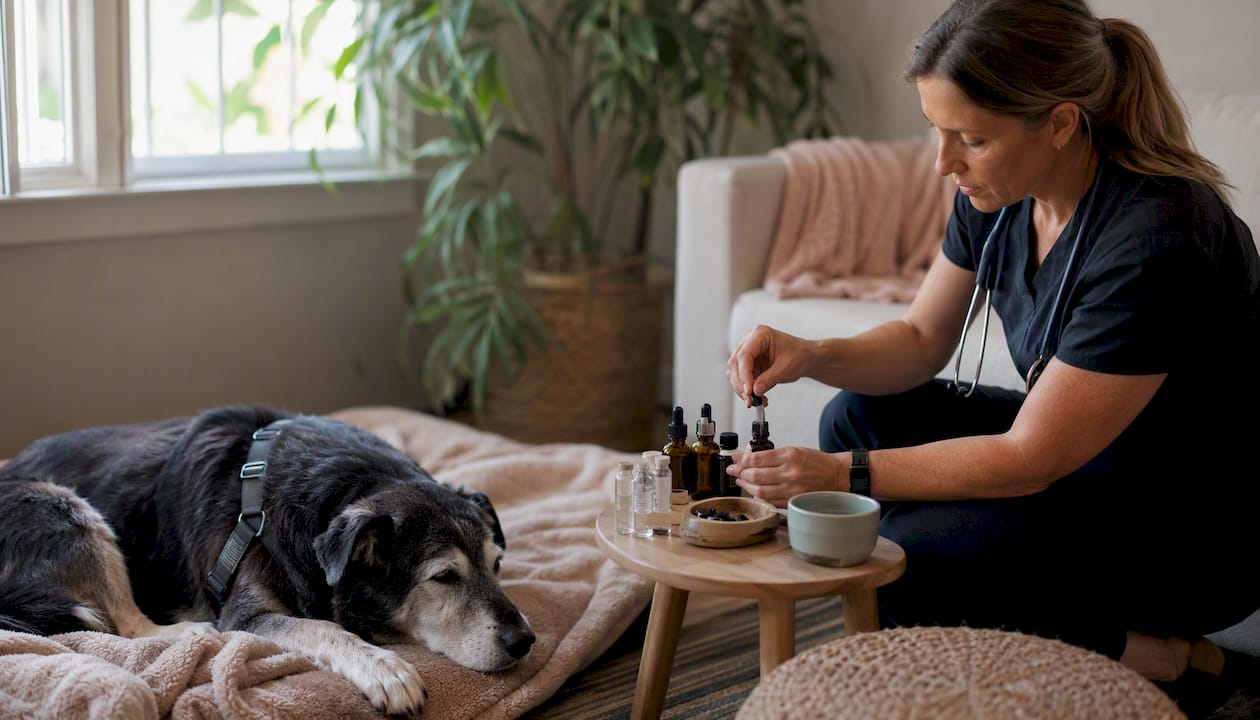
At Pet Acupuncture & Wellness, an in-home visit for Yunnan Baiyao evaluation includes a full medication review, dose planning based on your dog’s weight and health history, baseline monitoring recommendations, and hands-on guidance for administration. For dogs managing bleeding tumors or recovering from procedures, that kind of personalized attention in a familiar environment can make the difference between a dog who tolerates a protocol and one who does not.
Pro Tip: If your dog is a senior or has mobility issues, ask your vet specifically about in-home options for follow-up monitoring. Reducing the stress of travel is not just a comfort measure; it can meaningfully affect how your dog responds to treatment.
Explore pet herbal therapy in South Tampa to learn how an in-home integrative consult works and what to expect.
What we think about Yunnan Baiyao and evidence-based integrative care
Yunnan Baiyao sits in an interesting place in veterinary medicine: it has more randomized trial data behind it than most herbal products, yet the evidence is still modest enough that overconfidence is a real risk. The trials showing reduced bleeding time in nasal biopsy and reduced blood loss in spay cases are genuinely encouraging. They are also small, conducted in specific procedural contexts, and have not yet been replicated at scale.
What concerns us more than the evidence gaps is the manufacturing opacity. When a product’s full ingredient list is proprietary, every claim about mechanism and every interaction assessment is built on incomplete information. That is not a reason to dismiss Yunnan Baiyao entirely; it is a reason to use it with eyes open, under veterinary supervision, with monitoring in place.
The integrative approach we believe in at Pet Acupuncture & Wellness is not about choosing herbs over conventional medicine. It is about combining the best of both, with honest informed consent about what we know and what we do not. If your dog’s oncologist or surgeon is already involved, Yunnan Baiyao should be a conversation that includes them, not a supplement you add quietly on the side.
Personalized herbal care, right at your dog’s door
Your dog deserves guidance that fits their specific health picture, not a generic dosing chart pulled from a forum. Pet Acupuncture & Wellness offers in-home herbal therapy consultations in South Tampa, where a mobile integrative veterinarian reviews your dog’s full medication list, discusses whether Yunnan Baiyao is appropriate for their situation, and builds a monitoring plan alongside your primary vet.
This is especially valuable for senior dogs, anxious dogs, or any dog managing a complex condition where herbal therapy needs to work alongside conventional treatment rather than around it. Every consultation includes a safety review, dose planning, and clear communication with your existing veterinary team. To schedule an in-home integrative consult, visit Pet Acupuncture & Wellness and book directly online.
Sources
- The Effect of Yunnan Baiyao on Platelet Activation, Buccal Mucosal Bleeding Time, Prothrombin Time, Activated Partial Thromboplastin Time, and Thromboelastography in Healthy Dogs: A Randomized, Controlled, Blinded Study
- The effects of oral administration of Yunnan Baiyao on blood coagulation in beagle dogs as measured by kaolin-activated thromboelastography and buccal mucosal bleeding times
- Yunnan Baiyao for Dogs | PetMD
- Yunnan Baiyao facts and myths — Clinicians Brief
- Use of Yunnan Baiyao and epsilon aminocaproic acid in dogs with right atrial masses and pericardial effusion – Murphy – 2017 – Journal of Veterinary Emergency and Critical Care
- Evidence update: Yunnan Baiyao — SkeptVet
This article is general information, not a substitute for advice from a qualified doctor. Consult a qualified healthcare professional about your own circumstances before acting on anything here.
FAQ
What are the side effects of Yunnan Baiyao for dogs?
The most commonly reported Yunnan Baiyao side effects in dogs are mild GI signs such as nausea, vomiting, or loose stools, along with occasional appetite changes. Liver enzyme elevations have been noted with repeated use, and theoretical risks include thromboembolic events and allergic reactions given the product’s undisclosed ingredient list.
How long does it take for Yunnan Baiyao to work in dogs?
In perioperative studies, a single oral dose given 2–4 hours before a procedure was associated with reduced bleeding during surgery. For ongoing bleeding management in tumor cases, clinical response timelines vary and should be assessed by your veterinarian at follow-up.
Does Yunnan Baiyao shrink tumors in dogs?
No published veterinary evidence supports Yunnan Baiyao as a tumor-shrinking agent. Its studied role is hemostatic, meaning it may help reduce bleeding from tumors like hemangiosarcoma, but it does not treat the underlying tumor. A retrospective study in dogs with right atrial masses found no survival benefit compared to pericardiocentesis alone.
What is the little red pill in Yunnan Baiyao packaging?
The small red pill, called Bao Xian Zi, is a higher-concentration emergency dose included in some Yunnan Baiyao packages. It is intended for severe hemorrhage only and should never be given at home without explicit prior instruction from your veterinarian.
Is Yunnan Baiyao safe for dogs long-term?
Long-term safety data in dogs is limited. Published trials were short-term and procedural. Clinicians recommend periodic liver enzyme monitoring for dogs using it repeatedly, and the manufacturing opacity means unknown long-term risks cannot be fully ruled out. Always use under veterinary supervision.