
TL;DR:
- Losing 6 to 12 percent of body weight improves mobility and reduces arthritis pain in dogs. Combining weight management with therapeutic omega-3 diets or supplements enhances joint health effectively. Regular vet guidance and consistent diet, exercise, and pain control are essential for optimal results.
The most effective diet for arthritic dogs combines weight optimization with therapeutic EPA/DHA omega-3 dosing and a veterinary-approved joint or weight-loss diet. If your dog is carrying extra pounds, even a 6–12% reduction in body weight produces measurable improvements in lameness and mobility. Here is what to do right now:
Three immediate actions:
- Weigh your dog and record it. You need a baseline before anything else. Use a pet scale at your vet’s office or a home bathroom scale (weigh yourself, then weigh yourself holding your dog, and subtract).
- Switch to, or confirm, a vet-recommended diet. A therapeutic weight-loss or joint diet supplies controlled calories and guaranteed EPA/DHA dosing. If your dog is on a prescription diet already, do not change it without calling your vet first.
- Start omega-3 at a therapeutic dose, or verify your current diet supplies it. Effective dosing is weight-based. Your vet can calculate the target milligrams of EPA and DHA per kilogram of body weight and tell you whether your current food already hits that mark.
Your next-steps checklist:
- Weigh your dog today and write it down.
- Call your vet to get a daily calorie target based on your dog’s ideal body weight, not current weight.
- Pick one diet option from the categories below to discuss at your next appointment.
- Schedule a 6–12 week recheck to measure weight change and mobility.
Pro Tip: Bring a photo of your dog’s current food label, treat bag, and any supplements to your vet appointment. Your vet can calculate whether the current feeding amount actually delivers a therapeutic EPA/DHA dose, or whether a switch or addition is needed.
Table of Contents
- Why your dog’s weight is the biggest lever you can pull
- Which diet type fits your dog’s situation?
- Which nutrients actually move the needle?
- Safe treats, foods to avoid, and the egg question
- How to build and follow a feeding plan
- What the supplement evidence actually shows
- When diet alone is not enough
- Key Takeaways
- Diet is only part of the picture, and here is what most guides miss
- How Pet Acupuncture & Wellness supports arthritic dogs at home
- Useful sources
- FAQ
Why your dog’s weight is the biggest lever you can pull
Losing excess body weight reduces joint pain through two separate mechanisms, and understanding both helps you stay motivated when progress feels slow.

The first is mechanical. Every pound of body weight places roughly three to five pounds of force on a joint during normal walking. Lighter dogs simply load their cartilage less with every step.
The second is metabolic. Adipose tissue actively secretes inflammatory molecules called adipokines that worsen joint disease independently of mechanical load. Fat is not passive storage. It is an inflammatory organ, and shrinking it reduces systemic inflammation throughout your dog’s body, not just at the joint.
Clinical trials show that a moderate reduction in initial body weight—typically 6–12%— produces measurable improvements in lameness scores and mobility. That is a realistic, achievable target for most dogs within a few months of consistent dietary management.
Pro Tip: Use a Body Condition Score (BCS) chart alongside the scale. A BCS of 4–5 out of 9 is the target for most dogs. You should be able to feel your dog’s ribs easily but not see them. Taking a weekly photo from above and from the side gives you a visual record that is surprisingly motivating.
Which diet type fits your dog’s situation?
Therapeutic weight-loss diets are clinically more effective for obese dogs with osteoarthritis than simple calorie reduction alone, because they are higher in protein, restricted in fat, and higher in fiber. The protein preserves lean muscle while fat is lost; the fiber keeps your dog feeling full. Choose the diet type that matches your primary goal.
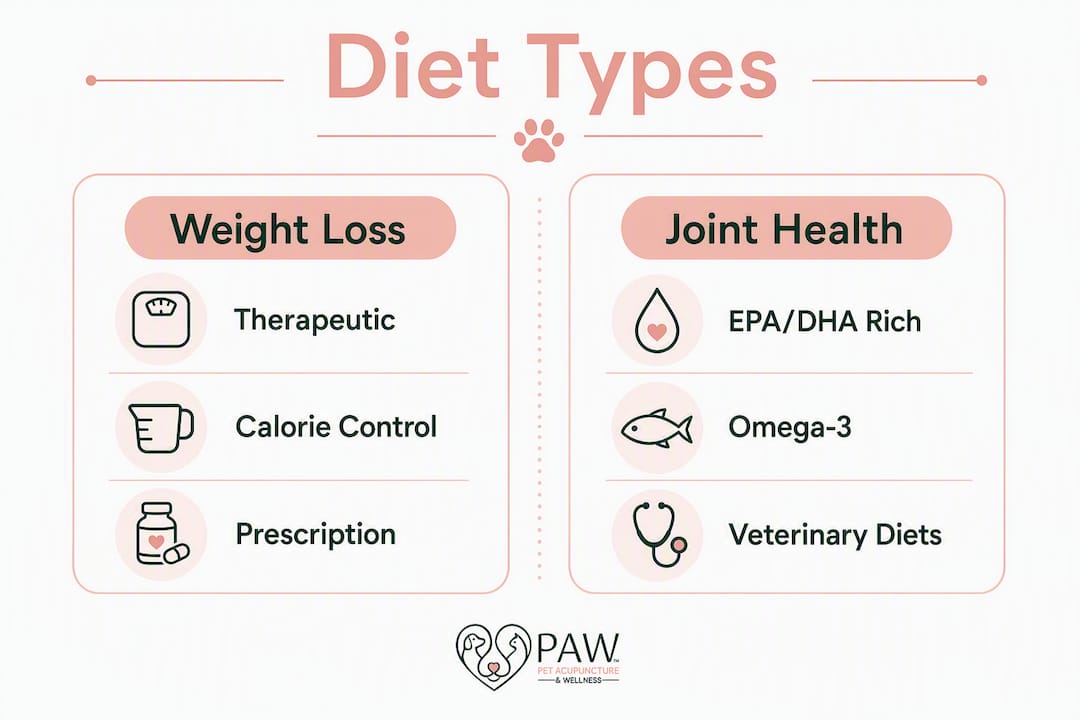
| Primary goal | Diet type | Availability | Best for | Cost tier |
|---|---|---|---|---|
| Weight loss (primary) | Therapeutic weight-loss diet (high protein, high fiber, fat-restricted) | Prescription | Obese dogs, dogs with comorbidities | Higher |
| Joint inflammation control | Prescription joint diet with guaranteed EPA/DHA | Prescription | Dogs at healthy weight with active joint pain | Higher |
| Combined weight + joint | Prescription joint/weight diet (e.g., Hill’s j/d + calorie control) | Prescription | Overweight dogs with significant joint symptoms | Higher |
| Modest weight control | High-protein senior or weight-management commercial diet | Over-the-counter | Mildly overweight dogs, maintenance after weight loss | Moderate |
Two prescription options worth asking your vet about specifically:
Hill’s Prescription Diet j/d (Mobility) is formulated with a guaranteed level of EPA and DHA and is one of the most studied joint diets in veterinary medicine. It is designed so that feeding the recommended daily amount delivers a clinically relevant omega-3 dose without requiring a separate supplement.
Purina Pro Plan Veterinary Diets: Joint Mobility takes a similar approach, combining EPA/DHA with controlled calorie density. Your vet can calculate whether the feeding amount for your dog’s target weight actually hits the therapeutic EPA/DHA threshold, which is the key question to ask before purchasing either diet.
Neither is an endorsement. Both are examples of what a prescription joint diet should do: deliver a known, clinically tested nutrient dose at a controlled calorie level.
Which nutrients actually move the needle?
EPA and DHA omega-3 fatty acids are the most recommended nutritional intervention for managing osteoarthritis in dogs, with the strongest clinical evidence of any dietary component. Everything else on this list is either supportive or still being studied.
- EPA and DHA (omega-3s): Reduce joint inflammation at the cellular level. Effective dosing is weight-based; your vet calculates the target mg/kg. Some prescription diets supply the full dose at recommended feeding amounts. When diet alone falls short, a tested fish oil supplement bridges the gap.
- High-quality protein: Preserves lean muscle mass during weight loss. Muscle supports joint stability, so losing muscle while losing fat is counterproductive. Therapeutic diets are formulated to prevent this.
- Controlled calories and dietary fiber: Fiber increases satiety, which makes calorie restriction easier to sustain. This is why therapeutic weight-loss diets outperform simple portion reduction of a standard kibble.
- Antioxidants and curcumin: Vitamin E, vitamin C, and turmeric-derived curcumin are used as adjuncts to reduce oxidative stress in joint tissue. Evidence is promising but not as strong as for EPA/DHA. Safety and dose matter, especially with curcumin.
- Hydration: Adequate water intake supports synovial fluid production and overall metabolic health. Wet food, broth added to kibble, or a water fountain can all increase daily water consumption for dogs that drink reluctantly.
On glucosamine and chondroitin: oral glucosamine and chondroitin have not shown consistent clinical benefit in randomized trials for dogs. They remain popular, but veterinarians increasingly prioritize EPA/DHA and therapeutic diets with known dosing over relying on these supplements.
Safe treats, foods to avoid, and the egg question
Safe treats for arthritic dogs are low-calorie, single-ingredient items. The goal is to keep treats at or below 10% of your dog’s daily calorie budget, because every treat calorie displaces a calorie from a nutritionally balanced meal.
Safe options (in moderation):
- Baby carrots, green beans, cucumber slices, and broccoli florets are low-calorie and most dogs enjoy them.
- Plain cooked chicken or turkey (no skin, no seasoning) works well as a high-value reward.
- Blueberries and watermelon (seedless) provide antioxidants with minimal calories.
Foods to avoid:
- Fatty table scraps, fried foods, and processed meats add calories without nutritional benefit and can trigger pancreatitis.
- Grapes, raisins, onions, and garlic are toxic to dogs regardless of arthritis status.
- Sugary treats, cookies, and human snack foods contribute to weight gain and offer nothing therapeutic.
On eggs: Cooked eggs are safe for dogs when served plain and fully cooked. One large egg contains roughly 70 calories, so treat them as an occasional addition rather than a daily staple. There is also a separate line of evidence worth knowing: eggshell membrane supplementation has shown benefit for joint pain and function in dogs in clinical studies, which is distinct from feeding whole eggs. If your dog is on a prescription diet, check with your vet before adding eggs regularly, since extra calories can undermine a carefully calculated calorie target.
Pro Tip: For a medium-sized dog on a 400-calorie daily budget, 10% is just 40 calories for treats. That is roughly half a baby carrot, two blueberries, and a small piece of chicken. Measuring treats by weight, not by feel, prevents the most common source of unintended calorie creep.

How to build and follow a feeding plan
Get a daily calorie target from your vet based on your dog’s ideal body weight, then reduce current intake gradually toward that goal. Sudden large cuts cause muscle loss; a steady, measured reduction is safer and more sustainable.
- Determine ideal weight and resting energy requirement (RER). Your vet calculates RER from ideal body weight, then applies a multiplier for activity level and weight-loss goal. Do not estimate this yourself; the math matters.
- Measure everything your dog currently eats. Use a kitchen scale, not a cup. Cups are notoriously inaccurate for kibble. Weigh the food, weigh the treats, and add up the total daily calories.
- Reduce kibble to the target amount and “bulk” with low-calorie vegetables if needed. Replacing some kibble volume with steamed green beans or carrots preserves the feeling of a full bowl while cutting calories. Dogs rarely notice the difference, and many enjoy the variety.
- Schedule rechecks every 4–6 weeks. Weigh your dog at each visit and adjust the calorie target if weight loss is faster or slower than the goal rate of roughly 0.5% of body weight per week.
Clinical trials with fish-oil-enriched diets reported improvements in lameness and weight bearing at 6–12 weeks after starting the diet. Weight-related mobility improvements tend to follow a similar timeline. Set realistic expectations with your vet at the outset so you know what to look for and when to reassess.
For tracking, a simple notebook or a notes app works fine. Record weight, BCS, and a brief mobility observation (did your dog rise easily this morning? How far did they walk?) at each weigh-in. A photo log from above and the side every two weeks gives you a visual record that numbers alone can miss.
What the supplement evidence actually shows
Use omega-3 (EPA/DHA) as your primary supplement strategy. Everything else is adjunct at best.
| Supplement | Evidence level | Notes |
|---|---|---|
| EPA/DHA (fish oil, krill oil) | Strong | Weight-based dosing; some prescription diets supply full dose |
| Eggshell membrane | Moderate (some positive studies) | Pilot and multicenter RCTs show mobility improvement; often combined with other ingredients |
| Glucosamine/chondroitin | Inconsistent/weak | Not consistently effective in randomized dog trials |
| MSM | Limited | Adjunct use; insufficient standalone evidence in dogs |
| Turmeric/curcumin | Promising, limited | Anti-inflammatory mechanism plausible; dose and bioavailability vary |
Many over-the-counter joint supplements contain ingredients with inconsistent evidence, and the supplement industry for pets is not as tightly regulated as prescription medications. When choosing a fish oil or any standalone supplement, look for products that have been independently tested for purity and labeled EPA/DHA content. ConsumerLab and the National Animal Supplement Council (NASC) quality seal are two markers worth checking.
Fish oil can go rancid. Store it in the refrigerator after opening, check the expiration date, and smell it before each use. Rancid fish oil delivers oxidized fats rather than therapeutic omega-3s.
Pro Tip: Before combining supplements with NSAIDs or other medications, always check with your vet. Fish oil has mild blood-thinning properties, and some combinations require monitoring. This is especially true if your dog is scheduled for surgery.
For a broader look at which supplements are worth discussing with your vet, the clinic’s guide to senior dog supplements covers the evidence in more detail.
When diet alone is not enough
Seek veterinary help when your dog’s mobility declines despite consistent dietary changes, or when you notice sudden lameness, loss of appetite, difficulty rising, or an unwillingness to use stairs or jump. These are signs that pain is outpacing what nutrition alone can address.
Veterinarians view arthritis management as a multimodal four-pillar approach: analgesics, weight optimization, dietary management, and structured exercise or rehabilitation. Diet is one pillar, not the whole structure. Pain control matters because a dog in pain will not move, and a dog that does not move loses muscle, gains weight, and declines faster. Effective pain management enables the exercise that makes weight loss possible.
Signs to call your vet now:
- Worsening limping or new lameness in a limb that was previously unaffected
- Reluctance to rise from rest, especially in the morning
- Loss of appetite or sudden weight loss
- Crying, whimpering, or flinching when touched near joints
- Inability to complete a walk your dog previously managed easily
Combining diet with structured physical rehabilitation preserves lean muscle while losing fat and improves joint stability in ways that diet alone cannot. In-home services like veterinary rehabilitation, acupuncture for pain relief, and food therapy consultations can accelerate improvement, particularly for senior dogs who find clinic visits stressful. Recognizing the early signs of arthritis before mobility declines significantly gives you more options and better outcomes.
Key Takeaways
Reducing body weight by 6–12%, combined with therapeutic EPA/DHA dosing from a veterinary-approved diet or supplement, produces measurable mobility improvements in arthritic dogs within weeks to months.
| Point | Details |
|---|---|
| Weight loss is the priority | Moderate body weight reduction (6–12% of initial body weight) produces measurable lameness improvement; aim for steady, gradual loss per week. |
| EPA/DHA dosing matters | Therapeutic omega-3 dosing is weight-based; confirm your diet or supplement actually hits the target mg/kg. |
| Prescription diets outperform guesswork | Hill’s j/d and Purina Pro Plan Joint Mobility supply clinically tested EPA/DHA at recommended feeding amounts. |
| Treats count | Keep treats at or below 10% of daily calories; use low-calorie vegetables and plain cooked proteins. |
| Pet Acupuncture & Wellness | In-home food therapy, rehab, and acupuncture complement dietary management for arthritic dogs in South Tampa. |
Diet is only part of the picture, and here is what most guides miss
Most arthritis nutrition articles stop at “feed omega-3s and keep your dog lean.” That advice is correct, but it skips the hardest part: adherence. A dog that is in significant pain will not move enough to lose weight, and a dog that is not losing weight will not get the metabolic anti-inflammatory benefit that makes the diet work. The two goals are interdependent.
What this means practically is that diet changes work best when pain is already being managed. If your dog is limping noticeably and you simply switch their food, you may see modest improvement but not the full benefit the clinical trials describe. Those trials typically enrolled dogs whose pain was at least partially controlled. The dogs that respond most dramatically to dietary intervention are the ones whose pain is addressed simultaneously through analgesics, acupuncture, or rehabilitation.
There is also a tendency to overweight supplements and underweight the food itself. Owners often spend more time researching glucosamine products than they do confirming whether their dog’s actual diet delivers a therapeutic EPA/DHA dose. A prescription joint diet that supplies the full omega-3 target at the recommended feeding amount is almost always more reliable than a standard kibble plus an unverified supplement. The diet is the intervention. The supplement is the backup.
Finally, at-home assessment changes what is possible. When a clinician sees a dog in its own environment, they observe how the dog rises from its bed, navigates its usual floor surfaces, and interacts with its normal routine. That context shapes the nutritional and rehabilitation plan in ways a clinic exam cannot replicate. Senior dogs especially tend to move more naturally at home, which gives a truer picture of functional capacity and where the gaps are.
How Pet Acupuncture & Wellness supports arthritic dogs at home
For arthritic dogs in South Tampa, the most practical next step after reading this is a conversation with a clinician who can assess your dog in the environment where they actually live and move. Pet Acupuncture & Wellness brings that conversation to your door.
An in-home integrative consult with Pet Acupuncture & Wellness typically includes a food therapy review (current diet, calorie estimate, EPA/DHA assessment), a hands-on mobility evaluation, and a plan that may combine veterinary acupuncture, rehabilitation therapy, and dietary guidance tailored to your dog’s weight, pain level, and lifestyle. Telemedicine follow-ups make it easy to adjust the plan between visits without another trip.
When you book, bring your dog’s current food bag, treat packaging, and any supplements you are already using. That information lets the clinician calculate your dog’s actual daily EPA/DHA intake on the spot and identify whether a diet switch, a supplement addition, or simply better portion control is the right first move. To schedule an in-home assessment, visit Pet Acupuncture & Wellness integrative care.
Useful sources
These are the peer-reviewed and veterinary-hospital sources that back the recommendations in this article. Bringing them to your vet appointment, especially for a nutrition or rehabilitation consult, gives your conversation a solid clinical foundation.
- Nutrition and nutraceuticals in the changing management of osteoarthritis for dogs and cats (AVMA/JAVMA)
- Systematic review of clinical trials of treatments for osteoarthritis in dogs (JAVMA)
- Indications and contraindications for orally administered joint health products in dogs and cats (JAVMA)
- Arthritis and Nutrition for Dogs, VCA Animal Hospitals
- Placebo-controlled pilot study of eggshell membrane supplement on mobility in dogs with osteoarthritis (PubMed)
- Efficacy of a joint supplement containing eggshell membrane in dogs with osteoarthritis: multicenter RCT (Frontiers in Veterinary Science)
- Evidence-based clinical nutrition to support weight management and joint care in dogs (Vet Times)
- Effectiveness of a new dietetic food to achieve weight loss and improve mobility in obese dogs with osteoarthritis (JARVM)
- What should I feed my dog? (Canine Arthritis Resources and Education)
This article provides general nutritional information for educational purposes and is not a substitute for veterinary advice. Always consult your veterinarian before changing your dog’s diet, adding supplements, or adjusting medications.
FAQ
What is the best diet for a senior dog with arthritis?
A prescription joint or therapeutic weight-loss diet that delivers clinically effective EPA/DHA at the recommended feeding amount is the strongest starting point. Hill’s Prescription Diet j/d (Mobility) and Purina Pro Plan Veterinary Diets: Joint Mobility are two examples to discuss with your vet.
What foods help dogs with arthritis pain?
Foods rich in EPA and DHA omega-3 fatty acids, such as fish-oil-enriched prescription diets or independently tested fish oil supplements, have the strongest clinical evidence for reducing joint inflammation. Low-calorie vegetables like green beans and carrots also support weight management, which directly reduces joint load.
What should you not feed a dog with arthritis?
Avoid fatty table scraps, sugary treats, and high-calorie processed snacks that contribute to weight gain. Grapes, raisins, onions, and garlic are toxic regardless of health status and must always be excluded.
Are eggs good for dogs with arthritis?
Cooked, plain eggs are safe for dogs in moderation, but they are calorie-dense at roughly 70 calories each, so they should stay within the 10% daily treat allowance. Separately, eggshell membrane as a supplement has shown some positive results for joint pain and mobility in clinical studies, though it is distinct from feeding whole eggs.