Acupuncture can reduce pain and often improve mobility and quality of life for many dogs and cats when used alongside veterinary care. Clinical studies point to meaningful gains in comfort and function, and trained practitioners consider it a safe complement to conventional treatment. Most pets need several sessions over a few weeks before you notice real change, and it works best as one part of a broader care plan rather than a standalone fix.
TL;DR:
- Most pets require several weekly sessions over a few weeks to notice significant improvement in pain or mobility from acupuncture.
- Acupuncture may help reduce medication doses over time, but results vary depending on the pet and condition.
- The strongest evidence supports pain relief and enhanced mobility, especially in cases of osteoarthritis and neurologic injuries.
- Safety depends on proper screening for conditions like bleeding disorders, tumors, or electronic medical devices, with mild soreness being common afterward.
- In-home treatments are preferable for anxious or senior pets, eliminating clinic stress and making regular sessions more accessible.
Table of Contents
- What Is Pet Acupuncture, and When Do Vets Recommend It?
- The Real Benefits of Pet Acupuncture, Backed by Research
- How Does Pet Acupuncture Work? A Simple Explanation
- Is Acupuncture Safe for Pets? Candidacy and Limits
- What to Expect: Sessions, Timeline, and Cost
- What the Research Really Shows About Pet Acupuncture
- Why We Bring Acupuncture Into Your Pet’s Own Home
- Booking Your Pet’s In-Home Acupuncture Visit
- Sources
- FAQ
What Is Pet Acupuncture, and When Do Vets Recommend It?
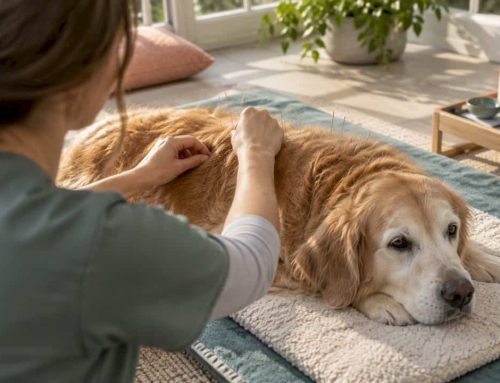
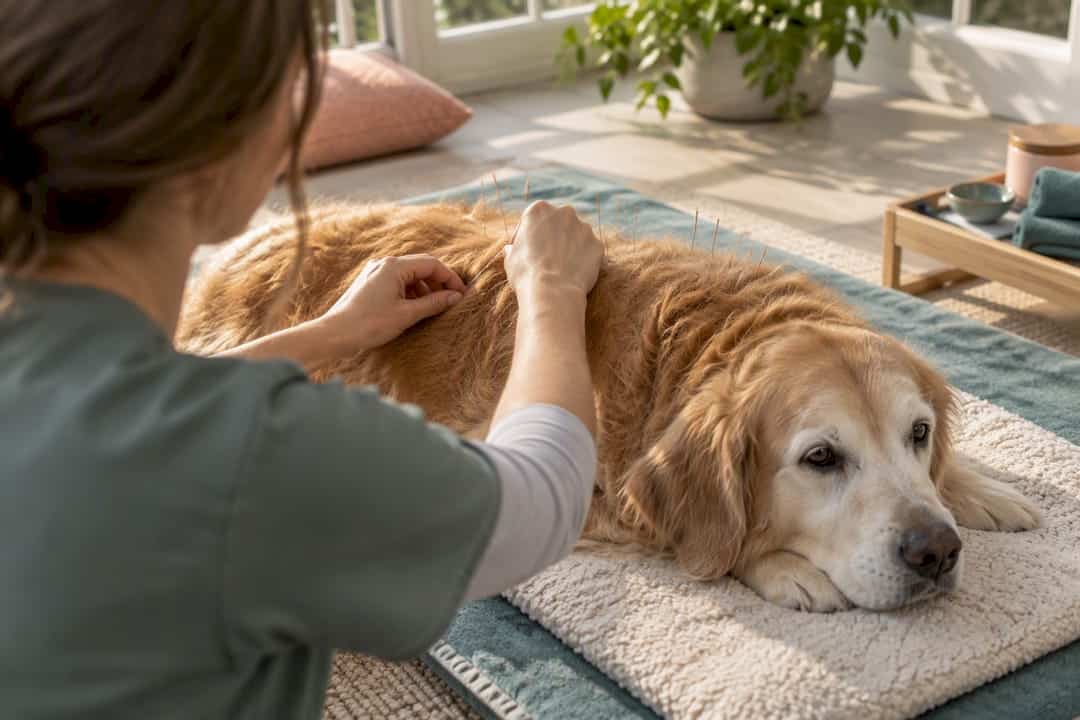
Veterinary acupuncture involves placing fine needles at specific points along the body to stimulate nerves, muscles, and connective tissue. Related techniques fall under the same umbrella: electroacupuncture adds a gentle electrical current for stronger effect, laser acupuncture uses light instead of needles for pets who won’t tolerate them, and aquapuncture injects a small amount of fluid, like vitamin B12, into acupuncture points.
Your vet might suggest acupuncture for pets dealing with:
- Osteoarthritis and degenerative joint disease, especially in senior dogs and cats
- Hip dysplasia and chronic joint pain
- Recovery after cruciate ligament (CCL) surgery
- Intervertebral disk disease (IVDD) and related nerve pain
- Post-operative healing and general rehabilitation
- Chronic musculoskeletal pain that hasn’t responded fully to medication
- Some anxiety-related behaviors, and select digestive, respiratory, or skin issues
Acupuncture works alongside your primary veterinarian’s diagnosis and treatment plan, not instead of it. A good acupuncture for pets program is built around what your vet already knows about your pet’s condition.
The Real Benefits of Pet Acupuncture, Backed by Research
Owners usually want to know one thing: will this actually help my pet feel better? The evidence says yes, often enough to matter.
-
Pain relief and lower inflammation. A prospective study of 181 dogs found owner-assessed improvements in pain and quality of life at 24 weeks when acupuncture was used alone or alongside pain medication.
-
Better mobility for arthritic and joint-diseased pets. Dogs with chronic joint pain frequently move more freely after a series of treatments, particularly when acupuncture is paired with weight management and rehab exercises. Our dog acupuncture arthritis guide covers what that looks like session by session.
-
Faster recovery from certain neurologic injuries. Dogs with IVDD who receive acupuncture alongside standard veterinary care tend to regain the ability to walk sooner than those receiving conventional treatment alone, according to clinical evidence summarized in a veterinary pain-management review.
-
Possible reduction in medication needs. Many owners in multimodal pain plans report their pet needing lower doses of anti-inflammatories over time, though this varies by case and should be adjusted only with your vet’s guidance.
-
Calmer, more cooperative pets. Anxious or handling-averse animals often relax noticeably during and after sessions, which makes ongoing rehab and vet visits easier on everyone.
-
Ancillary support for digestive, respiratory, and skin issues. The evidence here is thinner than for pain and mobility, so treat these as a possible bonus rather than a guaranteed outcome.
The number that matters: owner-reported success rates for pain and quality-of-life measures reached 78% to 84% at 24 weeks in that 181-dog study, whether acupuncture was used alone or combined with analgesics.
How Does Pet Acupuncture Work? A Simple Explanation
Needling a specific point triggers a chain reaction through the nervous system. It starts locally, at the site itself, then moves through the spinal cord (what practitioners call a segmental effect), and finally reaches the brain (a suprasegmental effect). Each level plays a role in dialing down pain signals.
- Endogenous opioids. Needling prompts your pet’s body to release its own natural painkillers, similar in effect to opioid medications but produced internally.
- Reduced inflammatory cytokines. Treatment appears to lower certain inflammatory chemical messengers, which helps explain the pain relief seen in reviews of acupuncture’s molecular mechanisms.
- Neuroplasticity. Repeated sessions may help “retrain” how the nervous system processes chronic pain signals over time.
Vets often choose electroacupuncture over dry needling when they want a stronger or longer-lasting effect, particularly for IVDD or severe joint pain. Research on bilateral electroacupuncture found it produced analgesia with shorter onset, greater intensity, and longer duration than treating just one side of the body. For needle-phobic cats or small dogs, laser acupuncture offers a gentler alternative, though it may work more gradually.
Pro Tip: If your pet tolerates needles well but isn’t responding quickly, ask your practitioner whether switching to electroacupuncture or bilateral stimulation might speed things along.
Is Acupuncture Safe for Pets? Candidacy and Limits
Acupuncture is safe for most pets when performed by a trained professional, but it isn’t right for every animal or every condition. Your practitioner should rule out these situations first:
- Infected or broken skin at the treatment site
- Bleeding disorders or uncontrolled coagulopathies
- Tumor sites, which should never be needled directly, especially with electroacupuncture
- Pacemakers, since electrical stimulation across the chest can interfere with the device
- Certain seizure histories, which need careful practitioner judgment
Mild, brief soreness or temporary tiredness after a session is normal and usually resolves within a day. Serious complications are rare when practitioners follow standard safety protocols. Before starting, your pet needs a proper diagnostic workup, and acupuncture should complement, not replace, your primary veterinarian’s care.
Pro Tip: Ask any acupuncture provider about their veterinary acupuncture certification, whether that’s CVA training, a background in Traditional Chinese Veterinary Medicine, or coordination with a board-certified rehabilitation specialist.
What to Expect: Sessions, Timeline, and Cost
Your first visit usually includes a full physical assessment, a discussion of your pet’s history and goals, and the initial treatment itself, often lasting 20 to 40 minutes total.
- Frequency. Most plans start weekly for four to six weeks, then taper to every two to four weeks as your pet improves.
- Timeline to results. Some owners notice subtle changes within the first two or three sessions, but measurable improvement in mobility or comfort typically takes several weeks of consistent treatment. Our guide on how many acupuncture sessions your pet needs breaks this down by condition.
- Tracking progress. Ask your practitioner about using an owner questionnaire like the Canine Brief Pain Inventory, alongside simple home observations: is your dog climbing stairs more easily, eating with more enthusiasm, or resting more comfortably at night?
- Cost factors. Pricing depends on the modality, your pet’s needs, and whether treatment happens in-clinic or at home. As one example, initial assessment and acupuncture visits start around $430, with add-ons like electroacupuncture and laser treatment priced separately, and a mobile visit fee applied for in-home care. Costs vary by region and practitioner experience, so treat any figure as a starting point rather than a fixed number.
What the Research Really Shows About Pet Acupuncture
The clinical picture is encouraging but not overstated. That 181-dog study reported owner-assessed pain and quality-of-life success rates between 78% and 84% at 24 weeks, a meaningful result for a chronic-pain population.
- Electroacupuncture tends to outperform dry needling in both experimental and clinical settings, particularly for IVDD and osteoarthritis cases.
- Human meta-analyses consistently show acupuncture beating sham treatment for osteoarthritis and chronic pain, and veterinary trends run in the same direction, even with smaller sample sizes.
- The honest caveat: companion animal research has fewer large, high-quality randomized controlled trials than human studies. That doesn’t erase the benefit, it just means acupuncture works best as part of a broader, multimodal pain-management plan rather than a solo intervention.
Why We Bring Acupuncture Into Your Pet’s Own Home
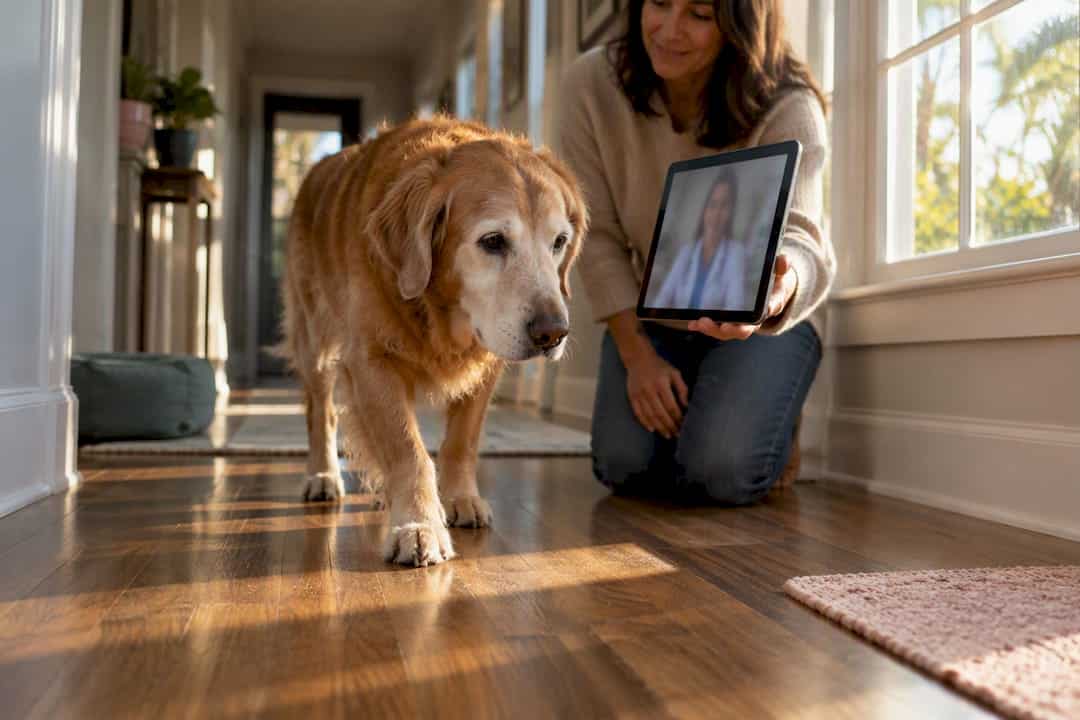
We built our practice around a simple observation: senior, disabled, and anxious pets often do worse with the stress of a clinic visit than with the condition we’re trying to treat. At-home treatment removes that travel anxiety entirely, which makes acupuncture, electroacupuncture, laser therapy, and herbal treatments easier for your pet to tolerate and easier for you to schedule. We always coordinate with your regular veterinarian to keep care consistent.
— Pet Acupuncture & Wellness
Booking Your Pet’s In-Home Acupuncture Visit
If your dog or cat is dealing with arthritis pain, recovering from surgery, or just seems slower and less comfortable than they used to be, an in-home evaluation is the most direct next step. Pet Acupuncture & Wellness brings the entire visit to your living room, so there’s no waiting room stress, no car ride anxiety, and no wrestling a painful senior dog into the back seat.

Your first visit includes a full assessment and an acupuncture session with a trained technician, priced from $430, plus a separate mobile visit fee for the house call itself. We build every plan around your pet’s specific diagnosis and your home environment, and we stay in contact with your primary veterinarian so nothing falls through the cracks, ensuring pet safe pest control and overall home safety. If your pet also needs pain management support beyond acupuncture, we offer laser therapy, herbal treatments, and rehabilitation therapy as part of the same integrative approach.
Ready to see what a calmer, at-home treatment plan looks like? Visit our pet acupuncture page in South Tampa to check availability and book your pet’s first assessment.

This article is general information, not a substitute for advice from a qualified doctor. Consult a qualified healthcare professional about your own circumstances before acting on anything here.
Sources
- Evidence-Based Application of Acupuncture for Pain Management in Companion Animal Medicine
- Effect of acupuncture on pain and quality of life in canine neurological and musculoskeletal diseases
- The scientific basis of acupuncture for veterinary pain management: A review based on relevant literature from the last two decades
- Veterinary acupuncture adoption and evidence limitations (PubMed)
FAQ
Is Dog Acupuncture Worth It?
For dogs with arthritis, chronic pain, or recovering from IVDD, acupuncture is often worth trying since owner-reported success rates for pain and quality-of-life measures reached 78% to 84% at 24 weeks in one prospective study. It works best as part of a multimodal plan alongside your primary vet’s care, not as a replacement for it.
How Long Does It Take for Acupuncture to Work on Dogs?
Some dogs show subtle changes after two or three sessions, but most owners notice real improvement in mobility or comfort after several weeks of weekly treatment. Chronic conditions like arthritis typically need a longer, tapered treatment schedule than acute injuries.
How Much Does Pet Acupuncture Cost?
Pricing depends on the modalities used and whether treatment happens in-clinic or at home. An initial assessment and acupuncture session starts at $430, with additional charges for a mobile visit fee, electroacupuncture, or laser therapy add-ons.
What Are the Pros and Cons of Acupuncture?
The main benefits are pain relief, improved mobility, and better tolerance of handling in anxious pets, supported by research on pain and inflammation reduction. The main limitations are the need for multiple sessions before seeing results and a smaller pool of large-scale veterinary trials compared to human studies, so it works best paired with conventional veterinary care rather than used alone.