If you're reading this, there's a good chance your dog isn't quite acting like themselves. Maybe the morning walk in South Tampa has gotten shorter. Maybe thunderstorms, fireworks, or being left alone turns a calm dog into a pacing, panting wreck. Maybe your older dog is recovering from an injury, slowing down with age, or needing more support than a standard medication plan seems to provide.
That's usually when owners start asking about dog herbal remedies.
The instinct makes sense. People want options that feel gentler, more supportive, and less like they're adding one more pill to an already long list. Herbs can play a useful role in veterinary care. They can also be misused, overhyped, or chosen without enough attention to the dog standing in front of us.
A Natural Approach To Your Dogs Wellness
Interest in herbal care for pets isn't fringe anymore. In 2023, the global pet herbal supplements market was valued at USD 935.5 million and is projected to expand at a 10.5% CAGR from 2024 to 2032, according to GM Insights coverage of the pet herbal supplements market. That kind of growth reflects what many veterinarians are hearing every day. Owners want natural options, especially for chronic discomfort, anxiety, skin issues, and aging support.
In South Tampa, that often looks practical, not trendy. A family wants their senior Lab to get up more comfortably. A rescue dog needs help settling during storms. A dog recovering at home needs support that fits daily life and doesn't add more stress.
Herbs can fit into that picture. But they work best when they're treated like medicine, not like harmless pantry ingredients.
What Owners Usually Mean By Natural
The aim is not to replace all conventional care. Rather, the questions being posed are more insightful.
They want to know:
- Can I support my dog without over-relying on medication?
- Is there something gentle for anxiety, skin irritation, or nausea?
- Can herbs be combined with acupuncture, rehab, or pain management?
- How do I avoid wasting money on products that sound good but aren't well chosen?
Those are the right questions. An integrative plan should respect both the appeal of natural care and the limits of it. Herbs may help some dogs feel steadier, calmer, or more comfortable. They won't fix every problem, and they shouldn't delay diagnosis when a dog is painful, weak, limping, vomiting, or declining.
Practical rule: “Natural” describes where something comes from. It does not guarantee that it's safe for every dog, in every dose, with every medication.
For owners who want a broader view of how herbs fit alongside other therapies, integrative veterinary care in South Tampa gives a clearer picture of that whole-patient approach.
Understanding What Herbal Medicine Means For Dogs
Veterinary herbal medicine means using plant-derived products therapeutically in animals. That can include dried herbs, powders, capsules, extracts, topical preparations, and combination formulas. It's not the same thing as casually adding “healthy” plants to food, and it's not a substitute for diagnosis.

The important distinction is this. Herbs sit in the same clinical conversation as diet, rehab, acupuncture, and medication. They're part of treatment planning. They aren't a shortcut around treatment planning.
Traditional Use Is Not The Same As Strong Canine Evidence
Some herbs have long traditional histories. That matters, but it doesn't answer every modern clinical question. We still need to ask whether the herb has been studied in dogs, whether the product is standardized, whether the preparation makes sense, and whether the dog has conditions or medications that change the risk profile.
The Merck Veterinary Manual discussion of herbal medicine in veterinary patients notes that evidence for herbal medicine in veterinary patients is often scarce and methodologically weak, which is why veterinarians are advised to review current literature before recommending any botanical product.
That's the balanced reality. Some herbs are useful. Some are plausible but poorly studied. Some are risky in the wrong context.
A Better Way To Think About Dog Herbal Remedies
Instead of asking, “What herb is good for arthritis?” ask a more specific question:
- What is my dog's actual diagnosis?
- What symptom am I trying to improve?
- Does this herb fit that symptom and this dog's health history?
- What form is appropriate, oral or topical?
- What else is my dog taking right now?
A dog with stiffness, anxiety, itchy skin, and liver disease doesn't need a generic herb list. That dog needs prioritization.
Good integrative care doesn't choose between herbs and conventional medicine. It uses each where it makes sense.
When owners understand that difference, they make better decisions and avoid the most common mistake in this space, which is assuming every “natural” product belongs in every dog's bowl.
Commonly Used Herbs And Their Supported Indications
The most useful conversation about dog herbal remedies isn't a top-ten list. It's matching the right herb to the right job, in the right form.

Calming Herbs For Stress And Reactivity
For dogs that are hypervigilant, restless, or noise-sensitive, certain herbs are used specifically for calming support. PetMD's overview of herbs for dogs notes that valerian and chamomile are used as natural relaxants for anxious dogs, while topical calendula has antiseptic and anti-inflammatory properties useful for skin irritations.
Chamomile tends to come up often because it has two common uses in owner conversations. One is calming support. The other is digestive soothing. That doesn't mean every nervous dog needs chamomile, but it does explain why it shows up in many formulas.
Valerian is different. It's typically thought of as a stronger calming herb, and in practice it requires careful dosing and product selection. A dog that already takes a sedating medication is not a casual valerian trial.
Topical Herbs For Skin And Minor Surface Irritation
Calendula is a good example of why route matters. It's commonly used topically for skin irritation, superficial inflammation, and wound support. If the target problem is on the skin, a wash, rinse, or topical preparation may make more sense than an oral product.
Chamomile can also be used topically in some settings for irritated skin or as part of a gentle wash. The point isn't to put herbs everywhere. The point is to match the herb to the tissue you're trying to help.
Consider the practical distinction:
- For hot spots or irritated skin: topical support may be more logical than an oral calming product.
- For stress-related pacing or storm anxiety: an oral calming herb may fit better than any topical option.
- For dogs that lick constantly: even a useful topical product can become unsafe if ingestion is likely.
Ginger And Other Commonly Discussed Herbs
Owners also ask often about ginger, milk thistle, turmeric, slippery elm, and similar products. Some have mechanism-based appeal or long traditional use. That doesn't mean they all have the same level of canine evidence.
Here's the honest framework I use with owners:
- Ginger: often discussed when nausea or digestive support is the goal.
- Milk thistle: often discussed in liver-support conversations.
- Turmeric: often marketed around inflammation and comfort.
- Slippery elm: often discussed for GI soothing.
Some of these may be reasonable in the right patient. Some are mostly extrapolated from tradition, mechanism, or non-canine use. That's why pet herbal therapy options for Tampa-area pets should be chosen based on the dog's diagnosis, medication list, and the quality of the product itself, not just on how often a herb is mentioned online.
A herb can be popular and still be poorly matched to your dog.
Navigating Herbal Formulations And Administration
Form matters almost as much as ingredient choice. The same herb can be appropriate in one preparation and inappropriate in another.

Powders Capsules And Chews
Powders are often easy to mix into food, especially for dogs that aren't suspicious eaters. The downside is that some dogs reject food if the smell is too strong. Powders also make dose consistency harder if the dog doesn't finish the meal.
Capsules can be cleaner and more precise. They're often a better fit for dogs on multiple therapies because you know the intended amount is being delivered. The trade-off is simple. Some dogs hate pills.
Chews look convenient, but they deserve a closer look. Many flavored products combine herbs with other active ingredients, fillers, or sweeteners. That isn't automatically a problem, but it means owners should read labels carefully rather than assuming a chew is gentler because it seems easier to give.
Tinctures Teas And Combination Formulas
Liquid extracts can be useful when a dog needs a small, adjustable dose. But not all tinctures are appropriate for pets. Alcohol-containing human tinctures are not my first choice for dogs unless they're specifically formulated and prescribed for veterinary use.
Teas and rinses can make sense for some topical or mild-support applications, especially when the goal is local soothing rather than systemic treatment. Still, they're less standardized than many owners realize.
Combination formulas add another layer. In Traditional Chinese Veterinary Medicine and other herbal systems, formulas may blend multiple herbs to target patterns rather than one isolated symptom. That can be helpful in experienced hands, but it makes self-prescribing much harder.
If you're comparing products, use a checklist:
- Look for clear ingredient labeling: every herb should be identifiable.
- Check the intended route: topical and oral products are not interchangeable.
- Avoid borrowing from your own supplement shelf: human formulations often contain ingredients, alcohol, or concentrations that don't fit dogs.
- Ask about product quality: sourcing, standardization, and testing matter.
For owners sorting through options at home, recommended veterinary products can help narrow the field to items chosen with pet use in mind.
Herbal Remedies In Action Real-World Examples
Herbs are most useful when they're part of a bigger plan. That's how they tend to work in real homes with real dogs.

The Older Dog With Arthritis
A senior Golden Retriever in South Tampa was struggling with the usual pattern. Slow rising, reluctance on slick floors, hesitation at the curb, and less enthusiasm for walks. The owner wanted help, but didn't want to keep escalating treatment by chasing symptoms one at a time.
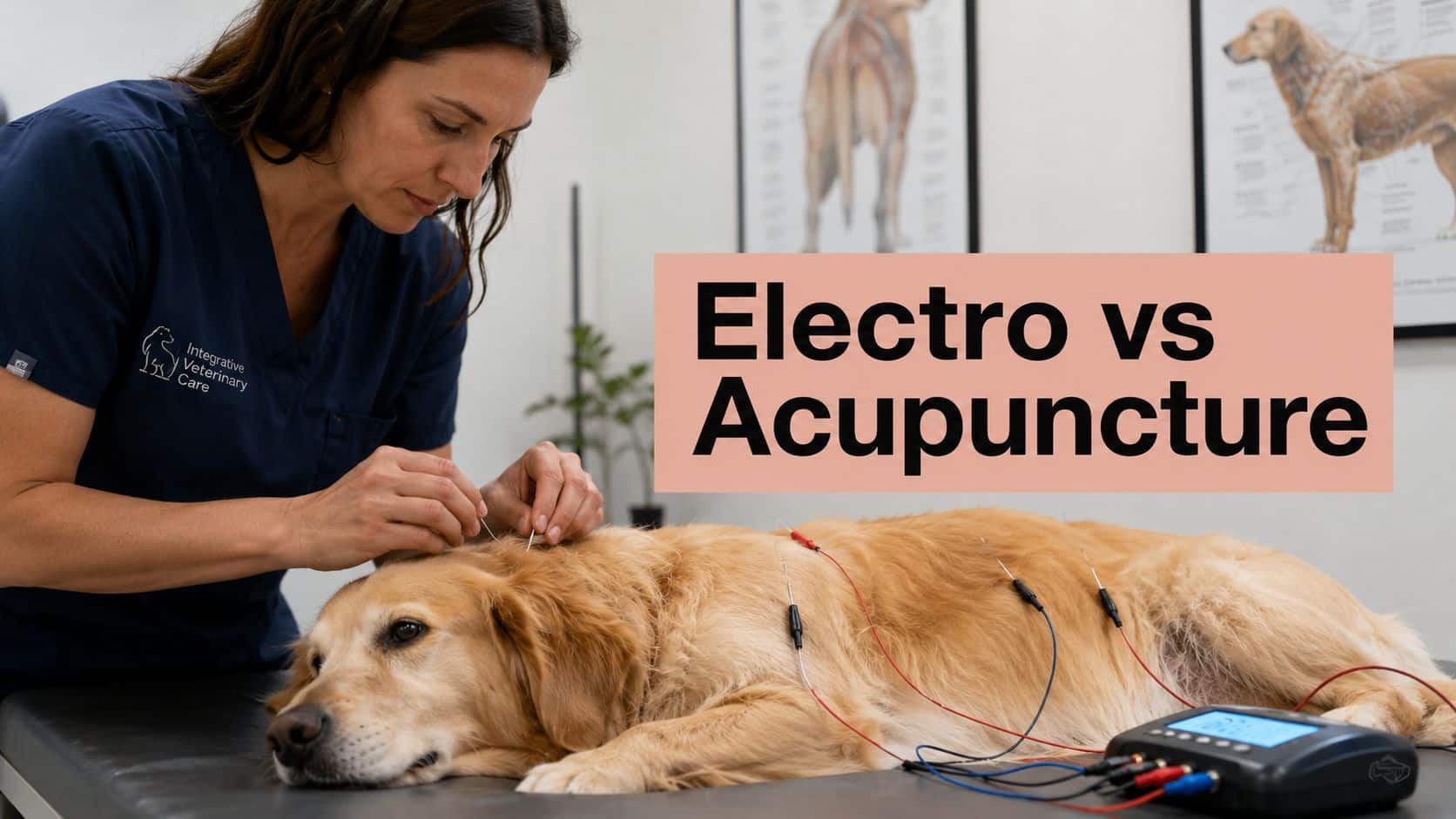
In that kind of case, herbs may support comfort, but they rarely carry the whole plan. The better approach is layered care: pain control when needed, acupuncture, laser therapy, home footing changes, targeted rehab exercises, and a carefully selected herbal formula if it fits the dog's medical picture. What usually works is the combination, not the herb in isolation.
The Rescue Dog During Storm Season
Another common South Tampa scenario is the rescue dog who unravels during thunderstorms. Pacing starts first. Then panting, trembling, hiding, vocalizing, or clingy behavior. Owners often ask for “something natural” because they want support without turning their dog into a zombie.
For some dogs, a calming herb can be part of the plan. For others, the answer is broader. Environmental management, predictable routines, behavior work, and medication when needed may matter more than the herb itself. A calming tincture or formula can help certain dogs take the edge off, but it isn't a substitute for a complete anxiety strategy.
This short video gives a helpful view of integrative support in practice:
Recovery After Surgery Or Injury
A post-op dog can also be a good candidate for integrative support. After orthopedic surgery or a significant musculoskeletal injury, owners often focus on incision healing and medication timing, which is appropriate. But recovery also depends on comfort, controlled movement, muscle use, and reducing the stress that comes with confinement.
That's where herbs may be considered as one piece of support, alongside rehab exercises, laser therapy, acupuncture, and home management. I'm cautious here because post-op dogs are often taking medications already, and that changes what can be added safely.
Recovery care works best when every item in the plan has a job. If an herb doesn't have a clear purpose, it doesn't belong there.
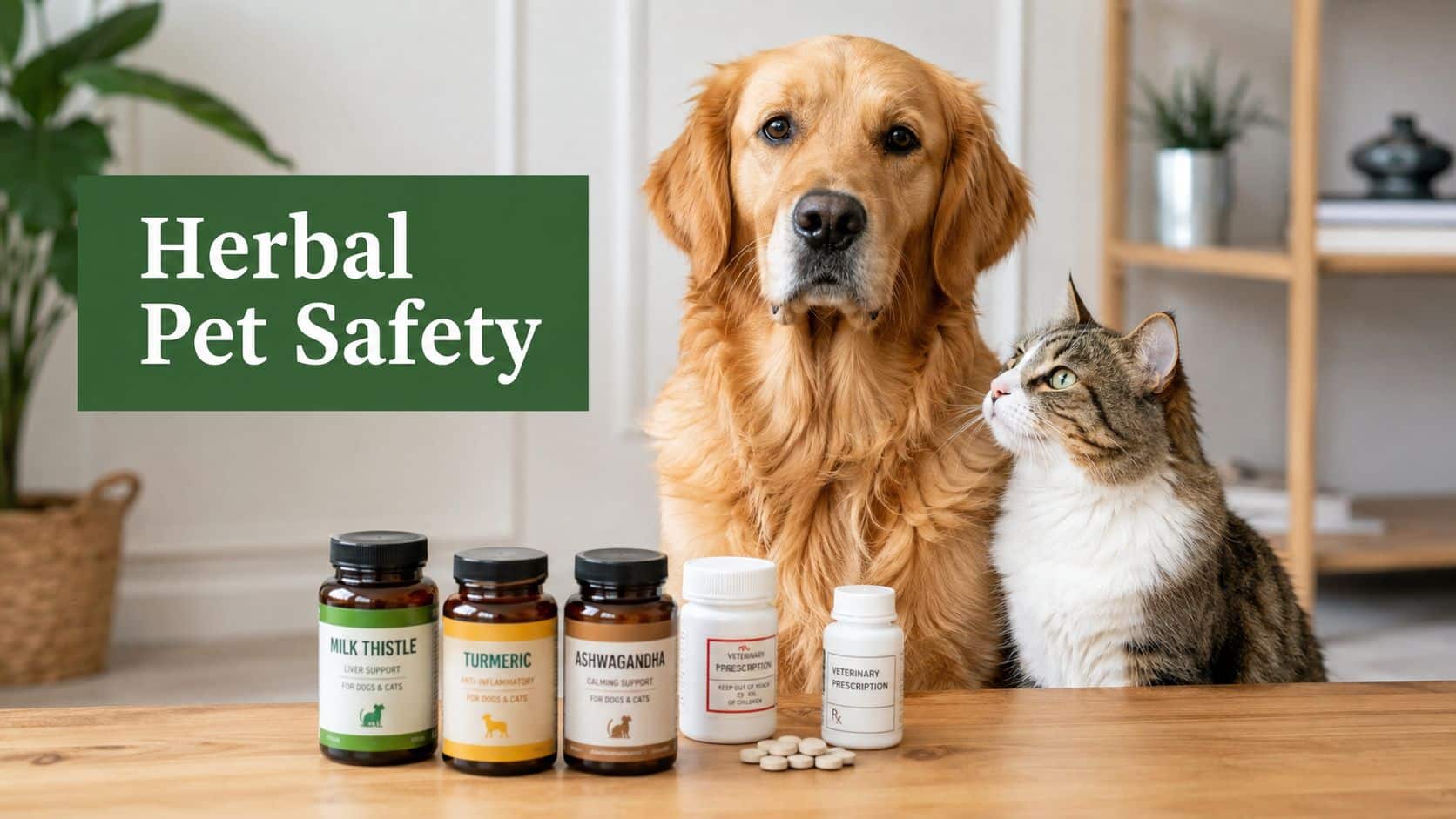
Safety First Dosing And Critical Drug Interactions
This is the part owners need most, because the internet often treats herbal products as if the only real risk is choosing the wrong brand. That's not true.
The bigger risks are poor dosing, mismatched herb selection, delayed diagnosis, and drug interactions.
Natural Does Not Mean Low Risk
Some dogs tolerate a new herbal product well. Others develop vomiting, soft stool, reduced appetite, agitation, or sedation. A dog with liver disease, kidney disease, seizure history, clotting concerns, or chronic GI sensitivity has less room for guesswork.
The Dog Remedy guidance on herbal remedies for dogs notes that herbal products can vary widely in concentration and may interact with NSAIDs, sedatives, anticoagulants, and seizure medications, making professional drug-herb interaction screening essential, not optional.
That one sentence should change how every owner approaches dog herbal remedies.
The Medication Review That Has To Happen First
Before adding an herb, I want a current list of everything the dog receives:
- Prescription medications: especially pain medication, anti-anxiety drugs, seizure medication, heart medication, or steroids.
- Supplements already in use: joint products, CBD products, fish oil, calming chews, or GI support products.
- Intermittent items: sleep aids, motion-sickness products, or event-based calming support.
- Topicals and shampoos: not because they all interact, but because the full picture matters.
Owners are often surprised by how quickly overlap happens. One product causes sedation. Another also has calming effects. A third affects the GI tract. A fourth is added because it was recommended in a social media group. Suddenly the dog is on a stack of products nobody has reviewed together.
Dosing Requires More Than Body Weight
Dose isn't just about pounds. It also depends on the extract strength, the formulation, the health condition being treated, and the dog's age and organ function.
A practical safety approach looks like this:
- Start only after a diagnosis or working diagnosis exists.
- Use one new product at a time.
- Start cautiously and monitor closely.
- Track appetite, stool, energy, sleep, and behavior.
- Stop and call your veterinarian if anything shifts in the wrong direction.
If your dog is already taking conventional medication, traditional medications used in integrative pet care should be reviewed alongside any herb you're considering. That review is where a lot of preventable problems are caught.
If your dog is a senior, takes multiple medications, or has a chronic illness, self-prescribing herbs is a bad gamble.
How To Integrate Herbs With Your Dogs Care Plan
The best use of dog herbal remedies is usually as a supporting therapy, not a stand-alone answer. That's especially true for chronic pain, mobility decline, anxiety, and recovery care.
A good care plan asks what the dog needs most right now. If the limiting problem is pain, pain control has to be addressed. If weakness and poor footing are the problem, rehab and home exercise matter. If stress is amplifying everything else, behavior support and calming strategies belong in the plan. Herbs can support those goals, but they shouldn't carry responsibilities they can't realistically handle.
Where Herbs Fit Best
The discussion of common herbal remedy gaps and evidence questions points to a challenge owners face all the time: distinguishing between traditional use and clinical evidence in dogs for herbs like turmeric or ashwagandha. That's where guidance on standardized extracts and quality testing becomes valuable.
In practical terms, herbs often fit well when:
- A dog needs multimodal support: such as mobility care that also includes acupuncture and rehab.
- An owner wants a more customized home plan: especially for chronic conditions managed over time.
- The goal is symptom support, not replacement of essential treatment: for example, calming support in an anxious dog that also needs behavior work.
I see the most sensible outcomes when the plan is coordinated. One option for that kind of coordination is Pet Acupuncture & Wellness (PAW Vet Practice), which offers in-home integrative services in South Tampa that may include acupuncture, rehab guidance, and herbal therapy as part of a broader veterinary plan.
When You Should Not Start Herbs On Your Own
Call before starting anything if your dog falls into one of these groups:
- Seniors with multiple diagnoses
- Dogs taking daily prescription medication
- Pregnant or breeding dogs
- Dogs with seizure history
- Dogs with liver, kidney, or clotting concerns
- Dogs recovering from surgery or injury
- Any dog whose symptoms are new, worsening, or unexplained
For South Tampa owners, telemedicine and tele-advice for pets can be a practical first step when you need help deciding whether a product is reasonable, risky, or the wrong fit.
Herbs can be thoughtful medicine. They can also be expensive noise. The difference is careful case selection, good product choice, and a veterinarian willing to say both “yes, that may help” and “no, that one doesn't make sense for your dog.”
If your dog in South Tampa is slowing down, recovering from injury, or struggling with anxiety, Pet Acupuncture & Wellness (PAW Vet Practice) offers in-home integrative veterinary care that can help you sort through the options safely. Dr. Monica works alongside your primary veterinarian to build practical plans that may include acupuncture, rehab, laser therapy, and herbal support when it's appropriate for your dog.