Your dog still wants to greet you at the door, but now he pauses before getting up. Your cat still jumps onto the couch, but not in one smooth motion anymore. Maybe your pet has already seen a veterinarian, had testing, started medication, and improved some, but not enough. You can tell something still isn't quite right.
That's where many families start asking about integrative veterinary care. Not because they want to replace their regular veterinarian, but because they want to help their pet feel better, move better, and enjoy life more fully.
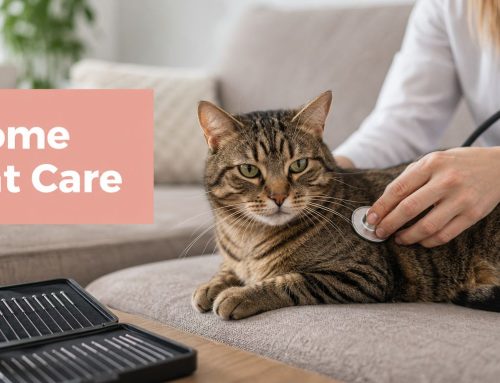
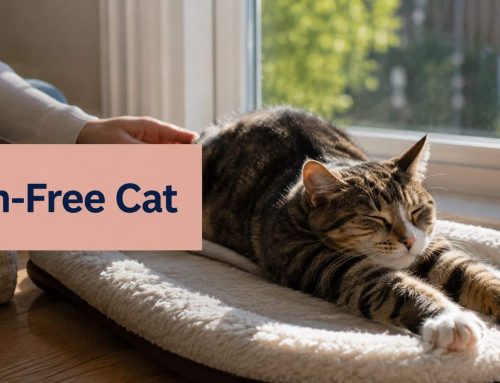
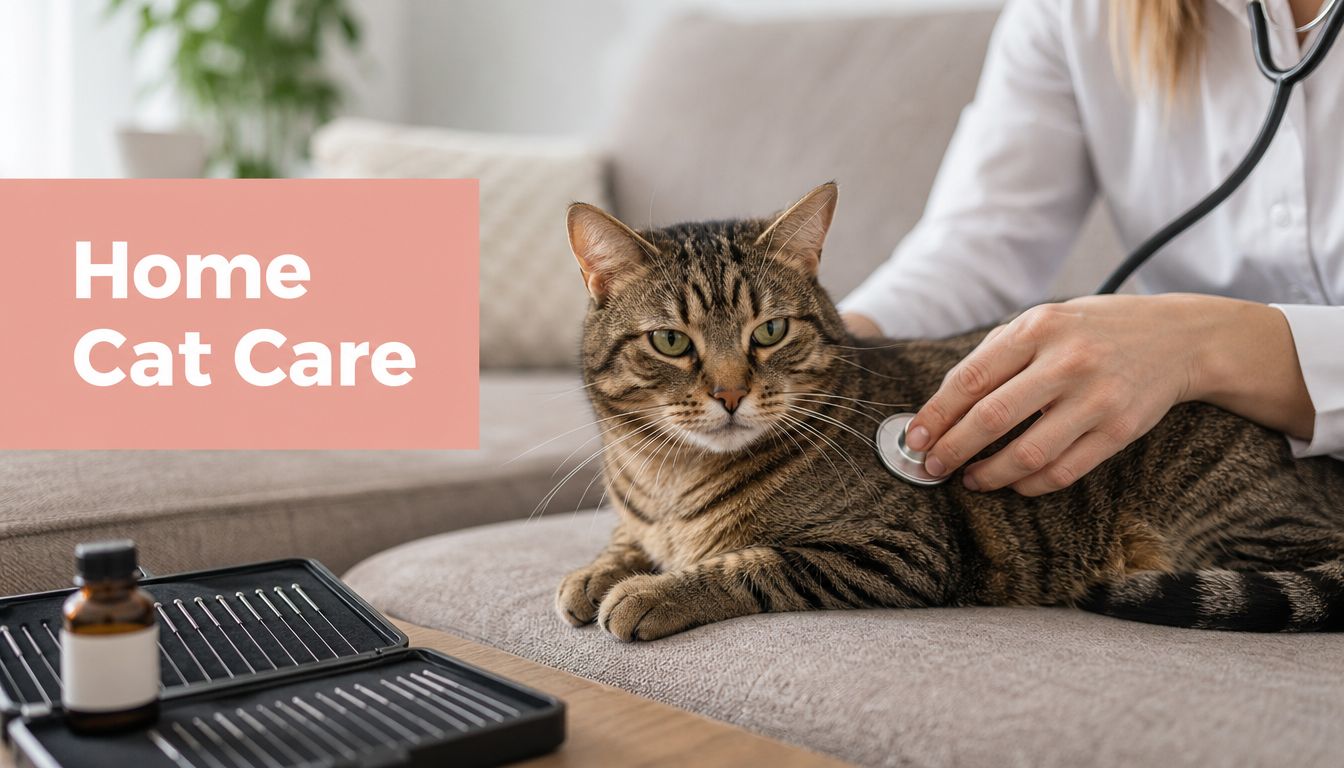
For many dogs and cats in South Tampa, especially seniors, anxious pets, and pets with mobility problems, care at home can make that process gentler. A familiar room, a favorite blanket, and less travel stress can change the whole experience.
When Your Pet Needs More Than Just Routine Care
Sometimes the problem isn't an emergency. It's the slow drift that worries you.
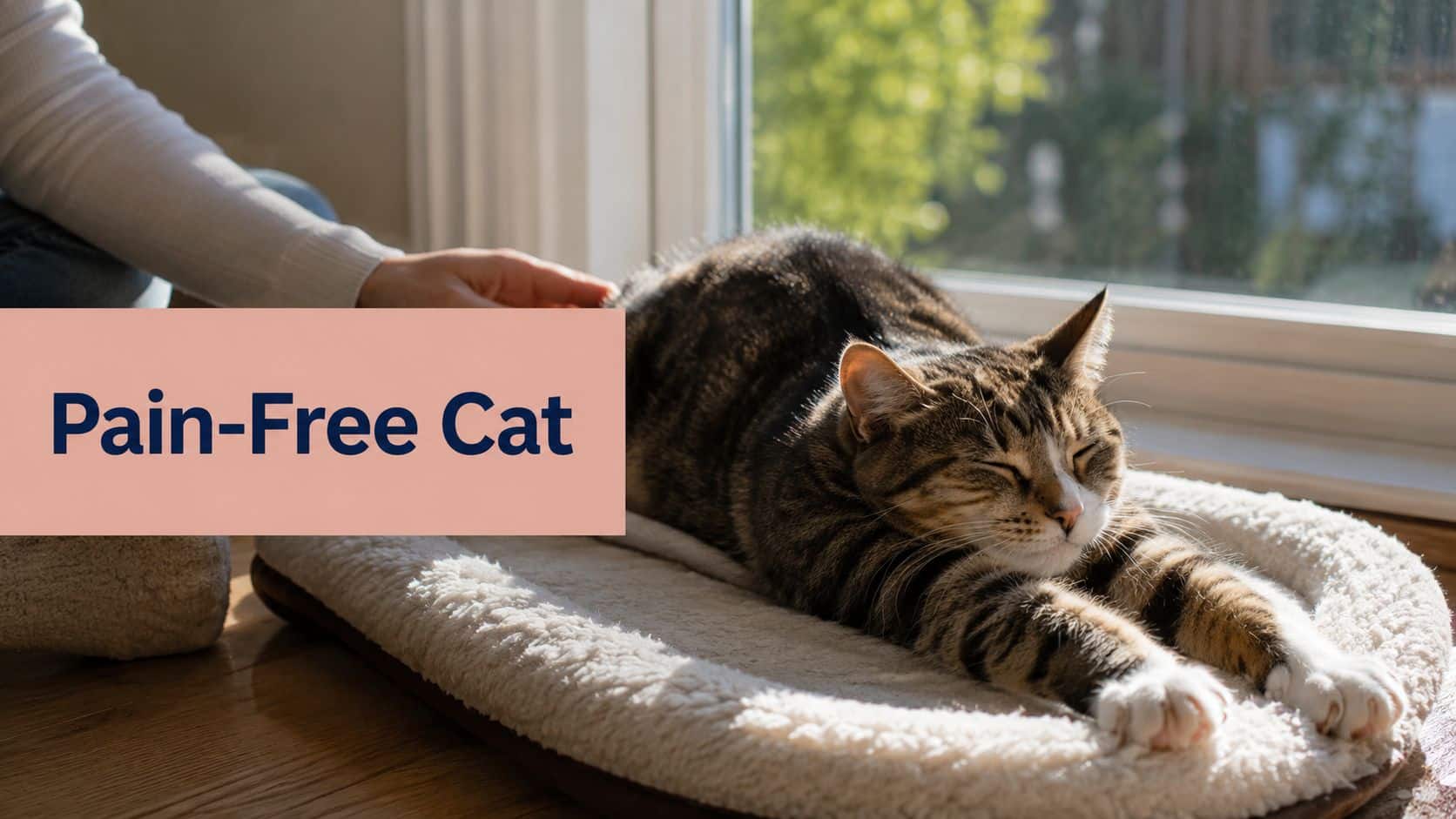
A dog with arthritis may still eat well and wag happily, yet struggle on tile floors or hesitate at the stairs. A cat with chronic pain may stop grooming as well, sleep more, or hide instead of sitting beside you. These changes are easy to dismiss as “just aging,” but they often mean your pet needs more support, not less.
Integrative veterinary care gives us another layer of care when routine medicine alone hasn't fully solved the problem. It's often helpful for pets with chronic pain, stiffness, neurologic weakness, recovery needs, or quality-of-life concerns. The goal isn't to promise a miracle. The goal is to improve comfort, function, and daily enjoyment.
What Pet Owners Usually Notice First
- Mobility changes: Slower rising, limping, reluctance to jump, trouble with stairs
- Behavior shifts: Hiding, irritability, clinginess, restlessness at night
- Recovery plateaus: Healing after surgery or injury, but not returning to normal function
- Clinic stress: Trembling, vocalizing, panting, or shutting down during veterinary visits
If that sounds familiar, it helps to think of care in layers. One layer is diagnosis and conventional treatment. Another layer may be pain relief support, rehabilitation exercises, acupuncture, laser therapy, or nutrition-based guidance. Together, those layers can make a meaningful difference in how your pet feels day to day.
Pets rarely tell us they hurt with obvious signs. They usually tell us with changes in movement, routine, and mood.
In South Tampa, this matters because many families are caring for aging pets who still have plenty of good life left in them. If you're trying to decide whether your companion is still enjoying daily life, this guide to pet quality of life can help you put your observations into words.
What Exactly Is Integrative Veterinary Care
The simplest definition is this. Integrative veterinary care combines conventional veterinary medicine with complementary therapies, guided by evidence.
That wording matters. Integrative care is not the same as rejecting standard medicine. It doesn't mean skipping diagnostics, ignoring pain medication, or replacing necessary treatment with something “natural.” It means using the best appropriate tools together.
In 2016, a peer-reviewed consensus paper formally defined integrative veterinary medicine this way, and reported that 47% of AVMA-accredited veterinary colleges already offered courses in this area, showing it had entered mainstream veterinary education (peer-reviewed consensus paper on integrative veterinary medicine).

Think Of It Like A Care Team
A helpful human analogy is this. If a person has back pain, they might see:
- A primary doctor for diagnosis and medical oversight
- A physical therapist for movement and strength
- A nutrition professional for weight and inflammation support
- A pain specialist for added comfort options
That doesn't create conflict. It creates a coordinated plan.
Integrative veterinary care works the same way. Your pet may need conventional diagnostics and medication, plus acupuncture for pain modulation, laser therapy for comfort, rehabilitation for strength and balance, or herbal and food therapy as part of a broader plan.
What Integrative Care Is Not
The term “integrative” often leads to misunderstanding. Many people encounter it and express concern that it suggests vague or unscientific treatment.
A better way to think about it is this:
- Not a replacement: It doesn't replace surgery when surgery is needed
- Not anti-medication: It can work alongside prescription treatment
- Not one-size-fits-all: The plan depends on diagnosis, risk, comfort, and goals
- Not marketing language alone: In good hands, it's a professional approach to coordinated care
Practical rule: If a therapy is presented as a cure-all or as a substitute for proper diagnosis, that's a red flag.
What most owners want is straightforward. They want their pet to be more comfortable, less stressed, and more able to do ordinary things like walking, resting, eating, grooming, and engaging with the family. Integrative care is one way to support those goals without losing the value of conventional veterinary medicine.
A Look At Common Integrative Therapies
When owners hear “integrative veterinary care,” they often picture only acupuncture. That's part of it, but not the whole picture. Most plans combine several tools based on what your pet is dealing with.

Acupuncture
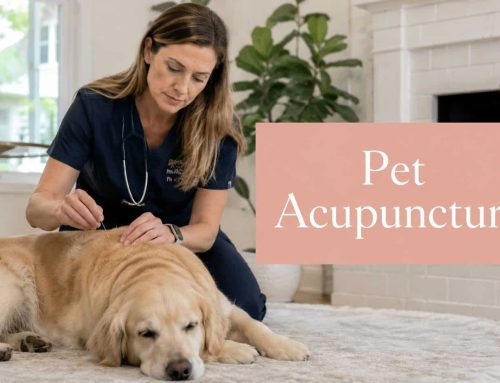
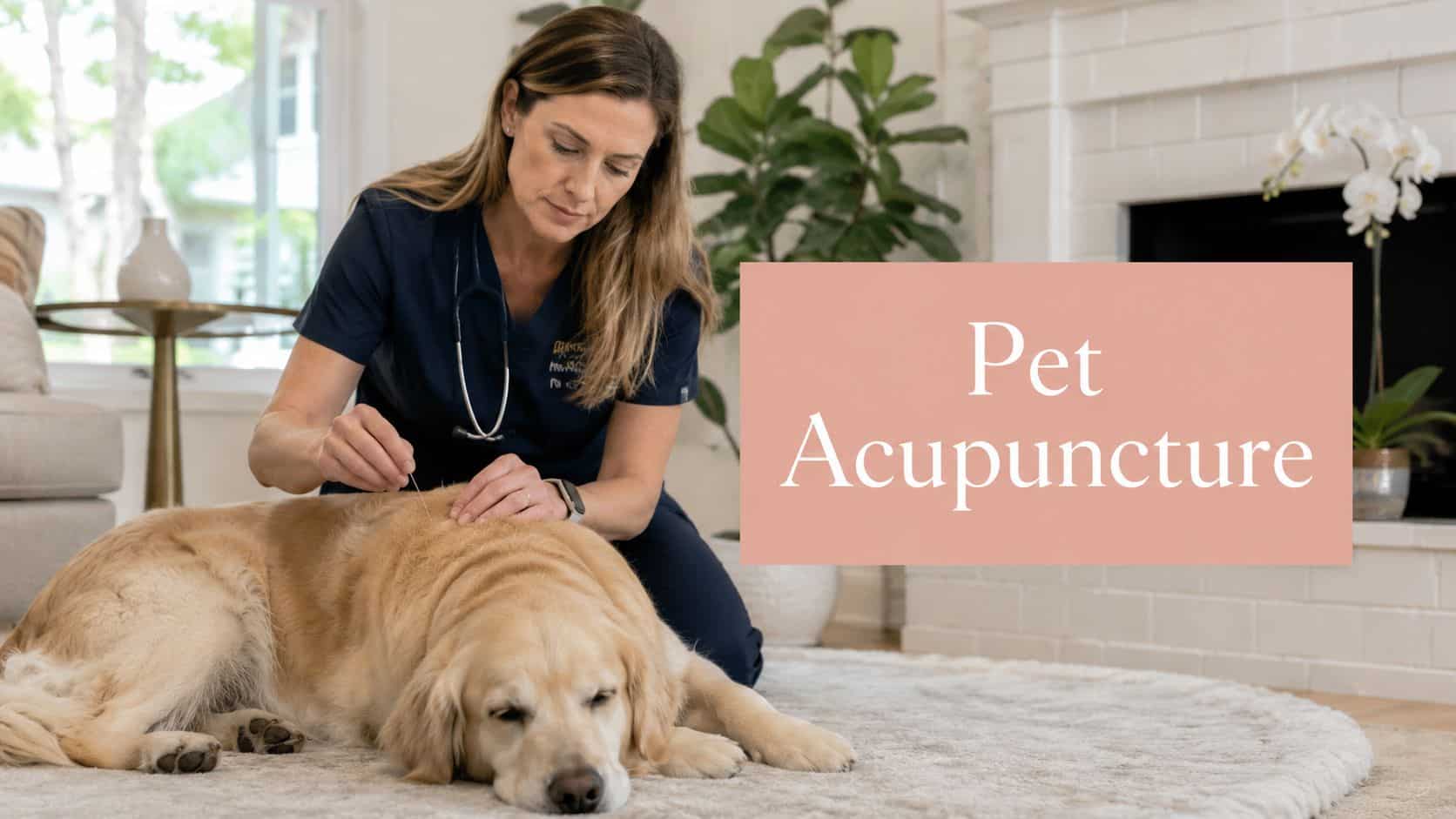
Acupuncture uses very fine needles placed at specific points on the body. For many pets, it's much calmer than owners expect. Dogs often relax during treatment. Cats may settle into a blanket or favorite spot if the environment is quiet.
It's commonly used to support pets with pain, stiffness, arthritis, neurologic issues, and recovery challenges. In practical terms, owners often notice that their pet moves more freely, seems less tense, or rests more comfortably after sessions.
For families exploring home-based recovery support, this overview of rehabilitation therapy for pets helps explain how acupuncture often fits into a broader movement plan.
Laser Therapy
Laser therapy, sometimes called photomedicine, delivers light energy to targeted tissues. You won't see your pet “feeling” the beam the way they might notice an injection. It's quiet, noninvasive, and usually very well tolerated.
Veterinarians often use it as part of a pain and inflammation plan, especially for sore joints, soft tissue discomfort, and post-injury support. It can be a good fit for pets who need something gentle and low-stress.
Rehabilitation And Home Exercise
This is the most hands-on part of integrative care. Rehabilitation focuses on function. How your pet stands, walks, turns, sits, bears weight, and transitions from one position to another all matter.
A rehab plan may include:
- Balance work: To improve body awareness and stability
- Strength exercises: To support weak muscles and protect joints
- Range-of-motion work: To reduce stiffness and maintain flexibility
- Home routines: Short exercises you can safely do between visits
This short video gives a feel for how movement-based support fits into recovery and comfort care.
Herbal And Food Therapy
This area often creates the most questions. Herbal and food therapy should never be casual add-ons. They work best when matched carefully to the pet's diagnosis, current medications, history, and overall constitution.
In practice, this may mean using Chinese herbal formulas or food recommendations as part of a larger plan for chronic discomfort, digestive balance, or overall support. The key point is coordination. Herbs and nutrition choices should fit with the rest of your pet's medical care, not compete with it.
Which Therapy Fits Which Pet
Not every pet needs every modality. A senior dog with arthritis may benefit from acupuncture, laser, and a home mobility plan. A cat recovering from a neurologic issue may need gentle rehab plus pain support. A dog that becomes frantic in the clinic may do best with calm, in-home treatment and simple exercises the family can continue.
That's why the best integrative plans don't start with a menu. They start with your pet's daily struggles.
How Integrative Care Supports Your Pet's Health
The easiest way to understand integrative veterinary care is to think in terms of everyday function. Not abstract wellness. Real life.
A senior Labrador with arthritis may not need to run like a puppy again. What matters is that he can stand up without so much effort, walk outside without looking guarded, and settle at night without constant shifting. Those are meaningful wins.
A cat with a neurologic problem may not show progress in dramatic ways. Improvement might look like steadier footing, fewer slips near the litter box, better ability to jump to a low surface, or more willingness to move through the house.
What Improvement Can Look Like
The Merck Veterinary Manual notes that combining integrative medicine with rehabilitation provides effective, nonsurgical options for neurologic and orthopedic ailments, and recommends tracking measurable outcomes such as gait, weight-bearing, and range of motion to confirm functional gains (Merck Veterinary Manual overview of integrative veterinary medicine).
That's a very practical idea. We don't judge progress by hope alone. We look at what your pet can do.

Three Common Examples
- The arthritic senior dog: He starts treatment because getting up is hard and walks have become short and stiff. With a coordinated plan, owners may notice smoother movement, better stamina, and less hesitation on slippery floors.
- The recovering neurologic cat: She's eating, but balance is off and her confidence is low. Gentle rehabilitation plus supportive therapies may help her participate more normally in daily life.
- The post-operative dog: Surgery addressed the main problem, but recovery still feels incomplete. Integrative support can help rebuild comfort and function during healing.
The best question isn't “Is my pet cured?” It's “Is my pet moving, resting, and engaging better than before?”
What Owners Can Watch At Home
You don't need medical training to notice useful signs. Keep an eye on:
- Transitions: Rising from bed, sitting, lying down
- Movement quality: Smoother walking, less limping, better footing
- Daily habits: Interest in walks, play, stairs, litter box use
- Comfort cues: Less panting, pacing, hiding, or nighttime restlessness
If your pet is dealing with pain or stiffness, learning more about the benefits of pet acupuncture in Tampa can help you understand why this modality is often paired with rehabilitation and other supportive care.
What To Expect From An In-Home Visit In South Tampa
For many pets, the hardest part of veterinary care isn't the treatment. It's getting to the clinic, waiting in a lobby, hearing unfamiliar sounds, and being handled while already stressed.
That's why in-home integrative veterinary care can be so helpful for senior pets, anxious pets, and dogs or cats with mobility limitations. Limited access to veterinary care is recognized as a barrier to animal welfare, and in-home integrative services can improve compliance and quality of life by delivering low-stress, noninvasive support where the pet is most comfortable (discussion of in-home integrative services and access barriers).
The Visit Usually Feels More Like A Conversation
At home, your pet can stay in a familiar environment. That may be a dog bed in the living room, a sunny patch on the floor, or the couch where your cat always naps.
The appointment often starts with observation. How does your pet walk across the room? How do they sit, turn, or lie down? What do you notice at home that maybe never shows up in a clinic setting?

What A House Call May Include
A typical in-home visit may involve:
- History review: Changes in appetite, sleep, movement, bathroom habits, and mood
- Gentle exam: Hands-on assessment, mobility observation, comfort checks
- Integrative assessment: This may include tongue and pulse evaluation, depending on the care model
- Treatment session: Acupuncture, laser therapy, rehab guidance, or another selected modality
- Home plan: Simple exercises, environmental adjustments, or follow-up recommendations
For local families considering this format, a mobile vet clinic in Tampa can be especially useful when transport itself has become part of the problem.
Why Home Changes The Experience
At home, many pets show their true movement patterns more clearly. Owners are often calmer too. That matters because stress can tighten muscles, change behavior, and make it harder to see what's really going on.
One option in South Tampa is Pet Acupuncture & Wellness (PAW Vet Practice), a mobile service that provides in-home integrative veterinary care for dogs and cats, including acupuncture, laser therapy, rehabilitation plans, and Chinese herbal or food therapy while coordinating with the pet's primary veterinarian.
A calm setting doesn't just feel nicer. It often gives us better clinical information and better cooperation from the pet.
Choosing The Right Provider And Preparing For Your Visit
If you're considering integrative veterinary care, qualifications matter. This field should be held to the same standards as any other part of veterinary medicine.
Major veterinary bodies including the AVMA and CVMA state that integrative veterinary medicine must meet the same scientific and ethical standards as conventional practice, including care within a valid veterinarian-client-patient relationship, or VCPR, to support safety and efficacy (CVMA position statement on integrative veterinary medicine).
What To Look For In A Provider
Start with the basics.
- Veterinary licensure: Your provider should be a licensed veterinarian
- Relevant training: Ask about specific education in acupuncture, rehabilitation, laser therapy, or herbal medicine
- Collaborative mindset: They should be willing to work with your primary veterinarian
- Clear communication: They should explain goals, limits, risks, and when a therapy isn't appropriate
- Valid VCPR: This is not optional. It's part of safe, professional care
Be cautious if someone offers sweeping promises, discourages diagnostics, or suggests that “natural” always means safer.
How To Prepare Your Home
A little preparation makes the visit easier for everyone.
- Choose a quiet area: Pick a room or corner where your pet already relaxes
- Bring records together: Gather medication lists, test results, and any recent veterinary notes
- Write your questions down: Owners often forget details once the visit starts
- Have small rewards ready: Treats, a favorite toy, or a soft blanket can help
- Notice the details: Think about when your pet seems worse, better, stiffer, or more anxious
If you're comparing logistics ahead of time, this page on the cost of services can help you plan practical questions before scheduling.
Frequently Asked Questions About Integrative Care
Is This Evidence-Based Or Just A Wellness Trend
That's the right question to ask.
The AVMA defines integrative veterinary medicine as the coordination of complementary and conventional care, and stresses that all practices should meet the same ethical standards. It also notes that the best-supported uses are for pain, mobility, and rehabilitation, and that “natural” does not automatically mean safer or more effective because evidence quality varies by modality (AVMA policy on integrative veterinary medicine).
So yes, some parts of integrative care are better supported than others. A good veterinarian should tell you that openly.
Will This Replace My Regular Veterinarian
No. It shouldn't.
Integrative veterinary care works best as a complement to your pet's existing medical care. Your regular veterinarian may diagnose the disease, manage medications, order imaging, or handle surgery. An integrative veterinarian can add tools that support comfort, movement, recovery, and quality of life.
How Long Does It Take To See Results
That depends on the problem being treated, how long it has been present, and which therapies are used.
Some pets seem more relaxed or comfortable quickly. Others improve more gradually as strength, mobility, and daily function build over time. For chronic conditions, owners often notice small changes first, such as easier rising, better sleep, or more interest in normal routines.
Ask your veterinarian what signs you should track at home. A good plan should come with clear markers of progress.
How Do I Know If My Pet Is A Good Candidate For In-Home Care
Home visits are especially helpful for pets that get distressed in clinics, struggle with travel, have chronic pain, or have trouble getting in and out of the car. They're also useful when your pet's behavior at home gives the clearest picture of the problem.
If you're in South Tampa and your dog or cat seems uncomfortable, slower, or harder to transport than before, an in-home evaluation can be a practical next step.
If you're looking for calm, evidence-informed support for a dog or cat in South Tampa, Pet Acupuncture & Wellness (PAW Vet Practice) offers in-home integrative care focused on pain relief, mobility, rehabilitation, and quality of life.